
Spain’s government is set to legalise the status of approximately 500,000 undocumented migrants, marking a significant shift in the country’s migration policy.
The initiative aims to integrate migrants into society, bolster the economy, and promote social cohesion.
Elma Saiz, Spain’s Migration Minister, told reporters, ‘This is a historic day for our country.’
‘We are talking about estimations, probably more or less the figures may be around half a million people,’ she continued. ‘We are strengthening a migration model based on human rights, integration, coexistence, and compatible with economic growth and social cohesion,’ she added.
The Spanish government’s new regularisation programme targets foreign nationals who have been living in Spain for at least five months before December 31, 2025.
To qualify, applicants must not have a criminal record. The process will begin in April, with applications open until the end of June. Successful applicants will receive an initial one-year residence permit, which can be extended further.
This move represents the first large-scale migrant regularisation in Spain in over two decades. Past initiatives between 1986 and 2005, under both socialist and conservative governments, legalised the status of an estimated half a million migrants.
The current measure is expected to formalise a significant portion of Spain’s undocumented population, which has grown substantially in recent years.
‘Providing rights is the answer to racism’
Recent estimates suggest a dramatic increase in Spain’s undocumented migrants. The think-tank Funcas reports that the number rose from approximately 107,000 in 2017 to nearly 838,000 in 2025.
The surge is largely attributed to migration from Latin America, especially Colombia, Peru, and Honduras. The influx reflects Spain’s attractiveness as a destination for migrants seeking economic opportunities and a better quality of life.
The increase in undocumented migrants has posed challenges for public services and integration efforts.
However, officials highlight that regularisation can help bring these individuals into the formal economy, enabling them to access social services and contribute more effectively to the country’s growth.
Irene Montero, Podemos Party, said, ‘Providing rights is the answer to racism,’ as she campaigned for this agenda between the government.
She said in comparison to US President Donald Trump‘s hardline immigration tactics, ‘If they kidnap children, murder and terrorise people, we give them papers.’
Migrants in Spain’s economic development
Spain’s economy has demonstrated resilience amid recent global uncertainties. The country is forecasted to grow close to 3% in 2025, outperforming many other European nations. Unemployment has fallen below 10% for the first time since 2008, signaling a positive economic trajectory.
The government, led by Prime Minister Pedro Sánchez, emphasises the importance of migrants for Spain’s economic development. Sánchez has described immigrants as sources of ‘wealth, development, and prosperity,’ noting their vital role in maintaining social security and supporting economic growth.
The coalition has positioned itself as more progressive on migration issues than many other European countries.
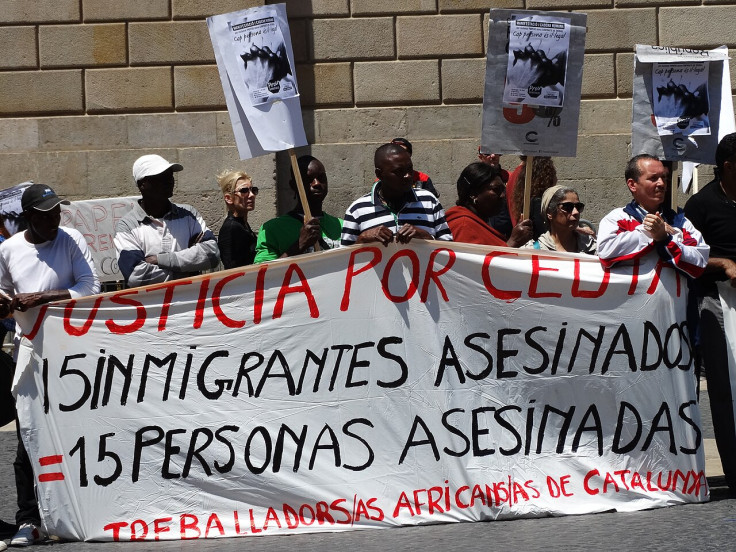
The current measure is expected to formalise a significant portion of Spain’s undocumented population, which has grown substantially in recent years.
Adam Jones/Wikimedia Commons
‘Absurd:’ resistance and opposition
Despite broad support from left-leaning parties, the initiative faces opposition from conservative and far-right groups.
The People’s Party (PP), led by Alberto Núñez Núñez Feijóo, criticised the measure, warning it could ‘increase the pull effect’ and strain public services.
The far-right Vox party has vowed to challenge the plan legally, claiming it ‘attacks national identity’ and plans to appeal to Spain’s Supreme Court.
‘Sánchez’s first response is a massive regularisation to divert attention, boost the pull effect, and overwhelm our public services,’ Feijóo wrote in X.
‘In socialist Spain, illegality is rewarded,’ he said. ‘Sánchez’s migration policy is as absurd as his railway policy. When we get into government, I’ll change them from top to bottom,’ he concluded.
The measure will be implemented via royal decree, bypassing parliamentary approval, reflecting its urgency and the government’s commitment to swift action. Supporters argue that regularisation is essential to address the realities of migration and ensure migrants’ rights. Critics, however, express concern over potential social impacts and resource allocations.