
After a year away from the contest, Moldova has returned to remind us all why it’s our favourite underdog Eurovision nation. With its biggest ever national final and a love story of all things Moldovan, here is our review of Selecția Națională 2026.
🇲🇩 Absence makes the Eurovision heart grow fonder
Last year, TRM sent shock waves around the Eurovision community when it announced its decision to withdraw from the Eurovision Song Contest 2025. After deciding the budgetary constraints and lack of song quality in the selection it had attempted, were too much to carry into Basel. The national broadcaster TRM went back to the drawing boarding and took a very forward thinking approach to the idea of a Eurovision return.
Instead of blindly doing the same thing with its national selection and expecting a different result. (A habit many other broadcasters are guilty of doing). TRM held a consultation meeting with its most famous singers of Eurovision past and present. This open dialogue enabled TRM to learn how to improve future selection formats and how it could attract more high profile talent to want to participate. As well as what resources the artists themselves require to present their songs in the best way. Not just in the national final, but also at the contest itself.
Not many broadcasters would willingly be so honest to hold a mirror to themselves in such a manner. However, it worked and with Moldova’s Eurovision return secured, the biggest national final Moldova has seen, was upon us.
🇲🇩 Selecția Națională 2026: Viva, Moldova!
Over the years, Moldova’s Eurovision entries have regularly featured in my personal top 10 come May. So, it only made sense to travel from rural Derbyshire to the rural outpost of the Chișinău Arena when TRM announced its first ever arena show for its Eurovision selection.
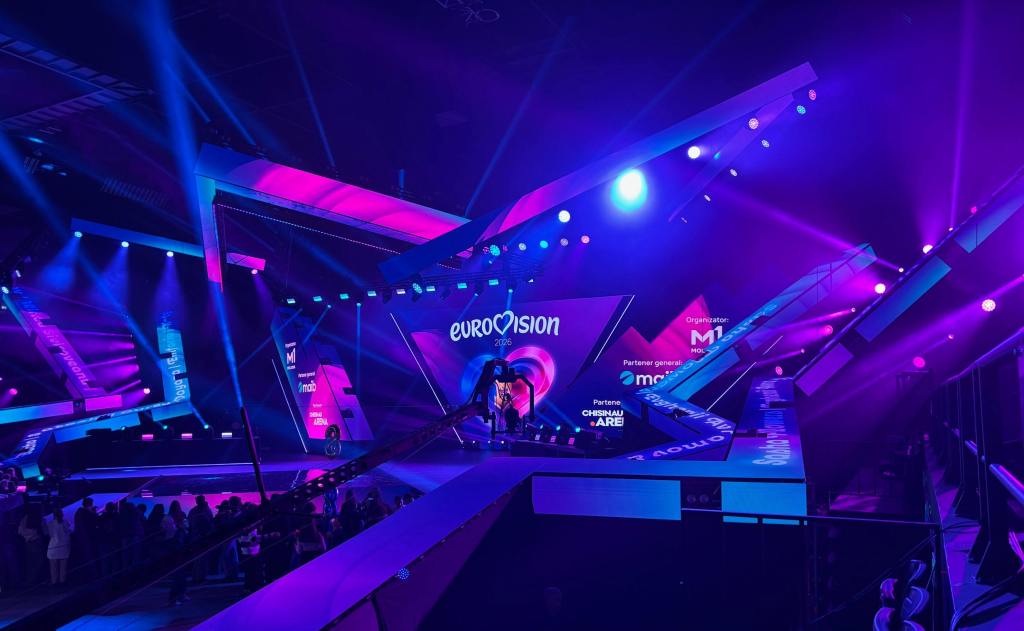
This was the first indication of its intent to make an impact and come back bigger. Long gone are the days of national selections of old. Held in a cupboard room in the TRM television studio, with the acoustics of a tin can on string. The 5,000 capacity venue completely sold out ahead of the show! As I climbed the stairs to find my seat, I heard American accents in front of me looking for their own seat number. The news of Moldova’s return had reached further than even TRM possibly anticipated. Not bad for a nation often seen as one of the poorest in Europe in terms of GDP and HDI.
Tickets were, to me, an absolute steal. Again a local Moldovan would think very differently on this. I paid £12.50 (including fees) for a seat close to the stage. Though the real bargain of the night was the Fan Zone. At a mind-blowing £8 (including fees) fans were treated to a stage-side view of the show. As the Fan Zone brought the party atmosphere all night, with spontaneous hora’s and cheers for all the acts, I was briefly taken to Melodifestivalen. With its more formal, fully seated stage floor. Where we’re told to be as still as possible for fear of getting walloped by an approaching crane camera and disturbing the Scandinavian perfectionism of crafting a TV show.
In order for TRM to craft its show and compete with the big boys of Eurovision selections, the broadcaster relied heavily on sponsors. Therefore maintaining its own small annual budget in a financially sustainable way. This has enabled TRM for the first time, to provide a Eurovision budget for the winning act. Previously, artists signed up to the national final on the condition that they had to pay their own way. This was one of the points of concern raised in the consultation meeting.
Similarly to Malta’s MESC selection that has also become a large scale event over the years, Moldova’s national selection was funded by the venue alongside the national bank. So, if Moldova want an example to follow in how to replicate Selecția Națională 2026 for years to come. Then look no further than what Malta has achieved for a nation that punches above its size.
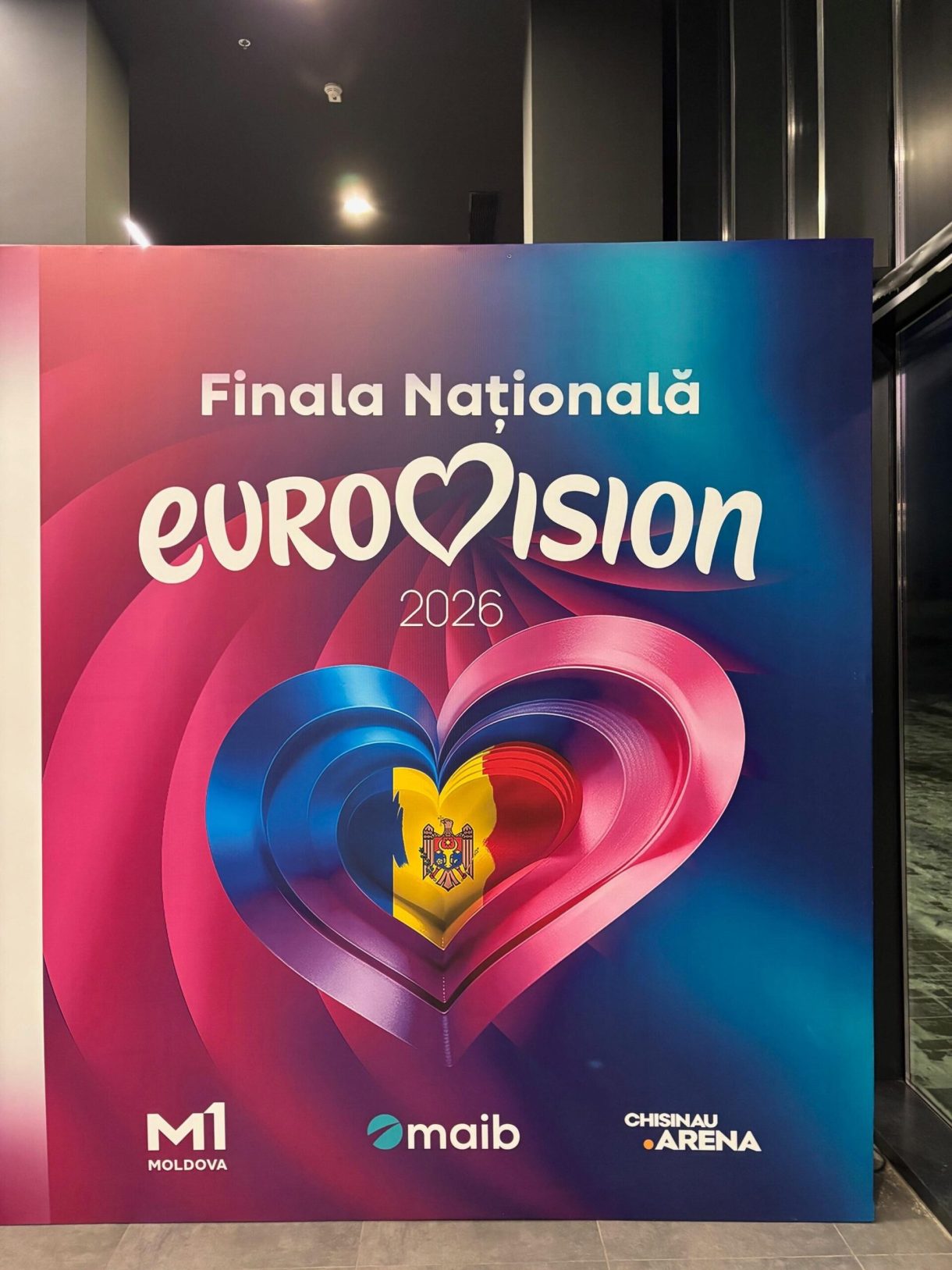 🇲🇩 Moldova’s expression of identity
Many years ago, I wrote an editorial on the cultural importance of ‘Hora Din Moldova’ to the people of Moldova. Now, when Moldova is facing global pressure from its proximity to Ukraine and Russia, as well as options on the table to take EU ascension or even seek reunification with Romania, it is even more important for Moldova to showcase its cultural identity on the biggest stage of all.
After a night that shined the brightest spotlights on the best of Moldova’s Eurovision history, there was no doubt what nation we were in! From Aliona Moon to Zdob și Zdub we experienced the full Moldovan music alphabet. Whoever on the production team decided we needed to have Epic Symphonic Guy make the interval orchestra do Moldova 2010, needs a pay rise. Easily among the all-time favourite national finals that I have personally attended.
Once again, Moldova has done what Moldova does best in its choice of Satoshi’s ‘Viva, Moldova’. A rap fusion of pulsating Moldovan beats mixed into a modern EDM melting pot, to give a fresh, three-minute tasting session of Moldova. It goes down as easily as the local wines, I must say. Eurovision is the biggest global platform for Moldova and they make the most of that opportunity. Clearly, the people agreed, with a record-breaking televote result FIFTEEN times greater than the second place entry in the national final. Overall that translated to 13,084 vs 861. Impressive, considering voting was limited to one vote per device.
🇷🇴 Chișinău>Bucharest! 🚆
Did you think I was going to leave this article without mentioning the famous Eurovision train song? Back in 2022 the three-time Moldovan Eurovision superstars Zdob și Zdub teamed up with the Advahov Brothers to bring us a jolly song about one of Eastern Europe’s most unusual train journey’s on the friendship train, Prietenia.
My lasting memory of this was during Turin 2022. At the time, we were still tentatively learning how to interact with people again, with this being the first close to normal contest following the COVID-19 pandemic. After a long run of ballads in that Grand Final, the percussion of, ‘Trenulețul’ hit and suddenly the arena erupted into a frenzy of hora’s and cheers that matched the scenes usually reserved for the performances of contest winners. Now I can’t go near a train without immediately hearing, “hey ho, let’s go!”
Away from that jolly facade, is an entry that reflects on its kinship with neighbouring Romania. Connected by a former Soviet train track, its turbulent history of unity and independence and a language.
However, the train journey itself is definitely worth the experience. If you like trains and want to time travel to the 1970s, then this is the trip for you. Of course the music video glamorises it slightly, but I couldn’t resist bringing the Moldova adventure full circle with the legendary Eurovision entry. Not least because the train worked out cheaper than flying direct back to the UK. An explanation the awaiting border guards seemed curious by.
A word to the wise. Book a two-person double cabin and book both seats, especially if you are a solo traveller at 39 euros each. This guarantees privacy and security. Otherwise you could end up sharing with a stranger or in a 4-person bunk cabin.
Definitely do this trip the ‘correct’ way around as given by the music video instructions. At 8pm local time, the heavy juddering of the train arriving at Ungheni and the knowing bang on the door from border control, signifies one of the more unique parts of this excursion. Do this from Romania to Moldova and you’re getting questioned and having your belongings searched at 4am instead.
While the border guards are working out what some strange person from the UK is doing in the wilds of Eastern Europe, the train is hoisted into the air to have its wheels changed. Yes, this genuinely happens! The Moldovan Soviet-era wheels are taken off, to be replaced by the Romanian standard for the narrower tracks at the border crossing.
During this time the toilets are closed. Another unique feature of this train, is its use of drop toilets with a pedal chute onto the train tracks – only slightly more humane than whatever those toilets were in the Turin EuroFansClub for those that remember the trauma.
Once the other side, the novelty of the night soon wears off, with a loud knock on the door to indicate imminent arrival in Bucharest. Upon which, all passengers are required to pack down their beds, to return the train to its daytime function.
Would I do this journey again, probably not, as a light sleeper that has more body heat than the coal fire heating system on the train. Would I go back to the national final? Absolutely! TRM has set the standard for what a small but very ambitious broadcaster can achieve. I salute them, as I chant ‘Viva Moldova!’ and await what 2027 brings.
Keep track of the latest news by following @ESCXTRA on Twitter, @escxtra.bsky.social on Bluesky, @escxtra on Instagram, @escxtra on TikTok, subscribing to YouTube and liking our Facebook page! Also, follow us on Spotify for the latest music from your favourite Eurovision acts.
Copy URL URL Copied