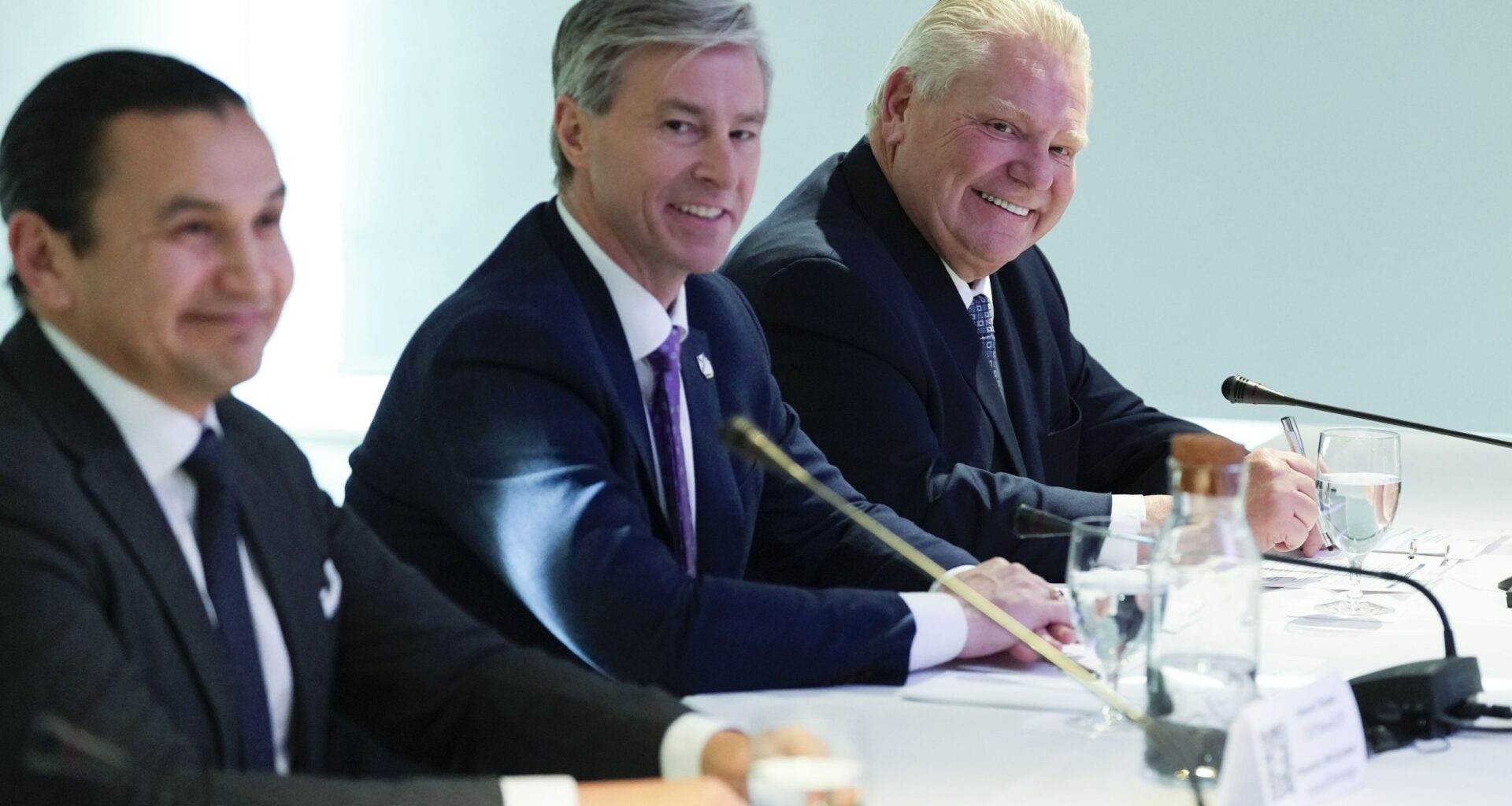
With the Parti Québécois riding high just months before the election, Ontario Premier Doug Ford believes Canada has a lot to lose if a sovereigntist party comes to power in Quebec City.
“It would be a disaster for our country if the separatists were elected. It’s as simple as that. We must be a united Canada,” he said at a news briefing in Ottawa on Wednesday, on the sidelines of a meeting of the country’s premiers.
Ford was asked how he viewed the prospect of the next Premier of Quebec sitting at the Council of the Federation table being a sovereignist.
“There has never been a more important time in our history to ensure that we stand together and remain united,” he insisted.
Nova Scotia Premier Tim Houston echoed Ford’s sentiments, agreeing with the Ontario premier’s view that the election of a sovereignist party in Quebec would be a disaster.
“I love this country as it is, and those who are trying to dismantle it or break it up, I am not on their side. So I think breaking up Canada would be a disaster,” he commented.
Ford argued that it would be beneficial for Quebecers to remain part of Canada.
“So, my friends, remember this: you want to prosper, you want to thrive. You will prosper much more as a united Canada,” said Ford.
At his side, New Brunswick Premier Susan Holt added that Canada is “much stronger” when it includes Quebec.
“Unity is strength,” she said.
No complete divorce, according to Blanchet
For his part, Bloc Québécois leader Yves-François Blanchet argued that a sovereign Quebec would maintain close ties with Canada.
“We would remain leading economic partners with Canada, all of the Canadian provinces, including Doug Ford’s Ontario,” he said in the foyer of the House of Commons.
Although they defend federalism, Saskatchewan Premiers Tim Houston and Scott Moe have shown signs of openness to listening to the frustrations of many Canadians.
“We have to recognize that there are people who have grievances,” Houston said.
Moe believes that former prime minister Justin Trudeau fuelled independence movements in the country, such as the one in Alberta.
With Mark Carney as Prime Minister, he says he has “hope.”
“We are seeing a change in tone with Prime Minister Carney, in how he is working with the provinces,” he said, citing as an example the agreement in principle reached with Alberta to promote the construction of one or more pipelines to the Pacific coast.
British Columbia Premier David Eby opposes such projects and therefore has a tense relationship with his Alberta counterpart, Danielle Smith.
Eby and Smith met with Carney on Wednesday afternoon. Shortly after the meeting, the Alberta premier described it to reporters as having made progress.
Eby did not respond to questions from the media, but is expected to do so later on Wednesday.
–This report by La Presse Canadienne was translated by CityNews