As US president Donald Trump seeks to extend his stranglehold over the international system, the latest shot from his armoury of power plays is the proposal to create an international Board of Peace. Initially envisaged as a temporary body that would monitor the implementation of the Gaza ceasefire agreement, it has now been extended into a multidimensional plan for a new international organisation for peace.
The board, branded by former Irish president Mary Robinson as “a delusion of power” in its structure and composition, reads like a playbook for a Bond villain. But given the substantive political and economic power still wielded by the US, as Europe reconfigures the transatlantic relationship, how should smaller states such as Ireland respond?
The proposed Board of Peace is laid out in an 11-page charter, over eight chapters and 13 articles, in which Trump presents a repackaged American worldview with himself at the centre. The structure would make him a permanent chairman for life, with exclusive veto power over the board and the ability to remove members.
Fortifying his central role, the board will be comprised of an executive council including members such as former UK prime minister Tony Blair, US secretary of state Marco Rubio and Trump’s son-in-law, Jared Kushner. As of last week, 35 states including Israel have joined, but many European states, including Britain and France, have declined. China and Russia have both been invited and may contribute $1 billion to acquire permanent membership. The proposed scheme of buying and selling membership is fundamentally at odds with the core tenets of the current system in which membership of the United Nations is based on sovereignty and equality between nations.
While the board declares the intention to preserve peace, and dependable and lawful governance, the similarities to the UN end there. The structure in fact takes the most divisive elements of the UN, especially the dysfunctional veto system, and centralises American power around them. The board is not a repackaging of the liberal world order based on American dominance funnelled through a system of checks and balances, but American supremacy led by a mercurial character who readily displays contempt for the values and principles of the international system.
Trump’s recent statements that he is guided by his own morality – of which there has been little evidence during his presidencies – rather than international law, is no basis for a system of power. American attempts to use the UN as a bully pulpit, not least to defend Israel’s genocidal regime, have reflected the devastating consequences for humanity when states cannot be held to account.
[ Trump rescinds Canada’s invitation to join his ‘Board of Peace’Opens in new window ]
That Trump seeks to institutionalise American power is the one positive aspect of this proposal. But any institution that would put him in command for life with impunity would establish a global precedent whereby the supremely powerful could shape the whole global system towards their personal preferences. This proposal should be a loud and resounding clarion call for countries including Ireland to act to preserve the current system based on liberal values and the protection of human rights.
One of the core features of the UN is the impartiality of the organisation. What Trump proposes is another club for the elites, which would have no accountability, limited functionality and little public credibility.
This most recent power play read more like the articles of incorporation for a “Global Trump Inc” rather than the reasoned basis of an international organisation for peace. But it will take equally ambitious leadership from other states, not least European powers, to nullify this initiative before it gains traction.
Justine McCarthy in The Irish Times last week argued that the time has come to dissolve the UN and replace it with a new organisation. Trump’s proposal demonstrates exactly the perils of this idea. Any new organisation that is not based on the principles of sovereignty and equality only offers further succour to a corrupt elite to manipulate global order towards their preferences. What followed from abandoning the League of Nations was not a stronger international institution. It is well established that the UN lacks the teeth to tackle many of the world’s most pressing challenges. But it preserves the rules and principles that protect our freedoms through a system of state oversight.
We are at a Chamberlain moment that requires progressive and commanding leadership, without which the future is bleak. The Irish Government is hesitant to join but its reticence to speak out on this issue – which seems like a fig leaf to preserve the highly valuable trade relationship with the US – is unacceptable. Recent Irish declarations of support for Europe need to be crystallised into commitments towards reforming the UN. As Mary Robinson noted, Ireland should openly pledge its support for a charter review conference, as mandated by Article 109 of the UN Charter. This provision, which has never been invoked, would be an appropriate response to blunt Trump’s initiative by making the UN more resilient and effective.
Failure to rise to the challenge is shameful from a country that knows better than most the consequences of smashed sovereignty, war, hunger and suffering – historical claims the Irish Government likes to assert as part of Ireland’s global profile.
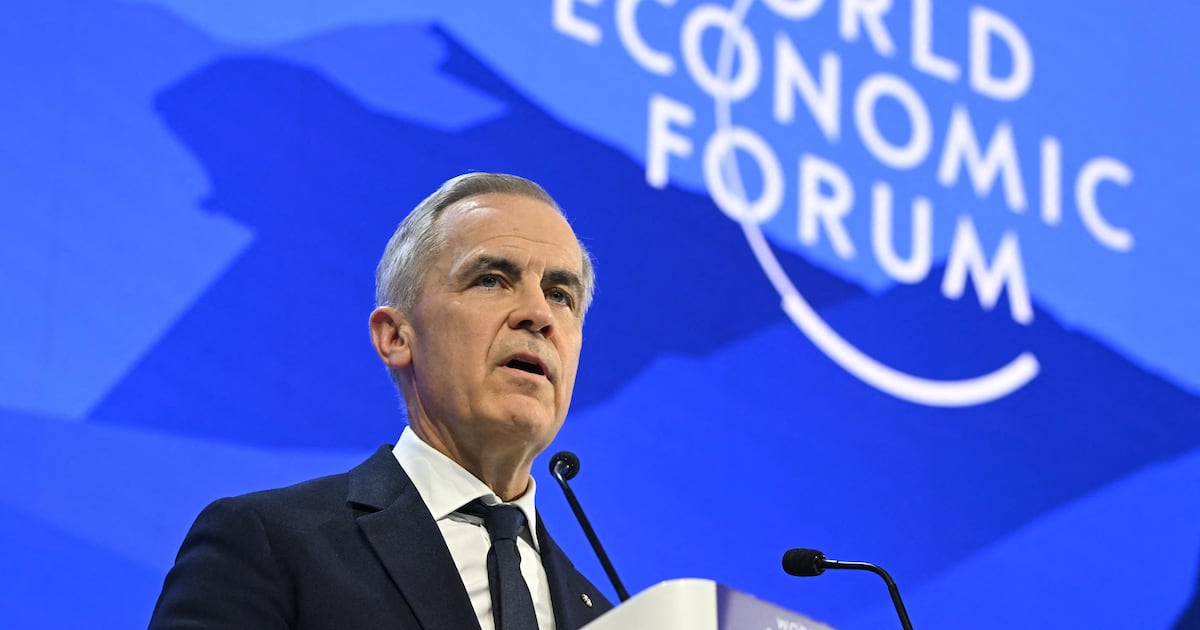
Now is the time to present a clear-eyed vision for the future of the UN. As the Canadian prime minister Mark Carney put it succinctly at Davos last week, “The old order is not coming back. But from the fracture, we can build something better, stronger and more just.”
Alanna O’Malley is professor of global governance and wealth at Erasmus University