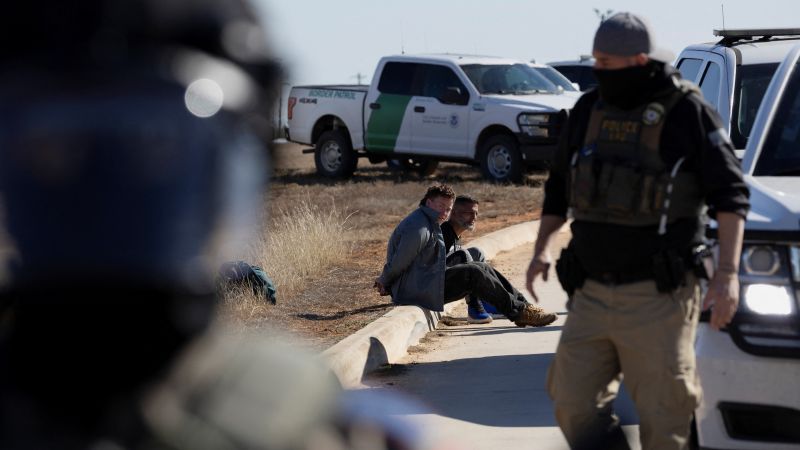
What happens now in Minnesota depends on whether President Donald Trump concludes he simply has an optics problem or whether he’s ready to change unpopular deportation policies that are central to his political identity.
Trump on Wednesday was as good as his word. He did de-escalate “a little bit” after the shooting of ICU nurse Alex Pretti by federal agents last weekend drove Minneapolis and the country toward a dangerous crisis.
But it was only a little bit. Fault lines between the administration’s aggressive deportation operation and a Democratic state and city fundamentally opposed to its methods and ultimate goal have not narrowed.
And he’s back to flinging inflammatory rhetoric at local leaders getting in his way.
Any de-escalation may be short-lived unless Trump is ready to absorb a serious political defeat or Democrats offer acquiescence to at least some federal deportation activity.
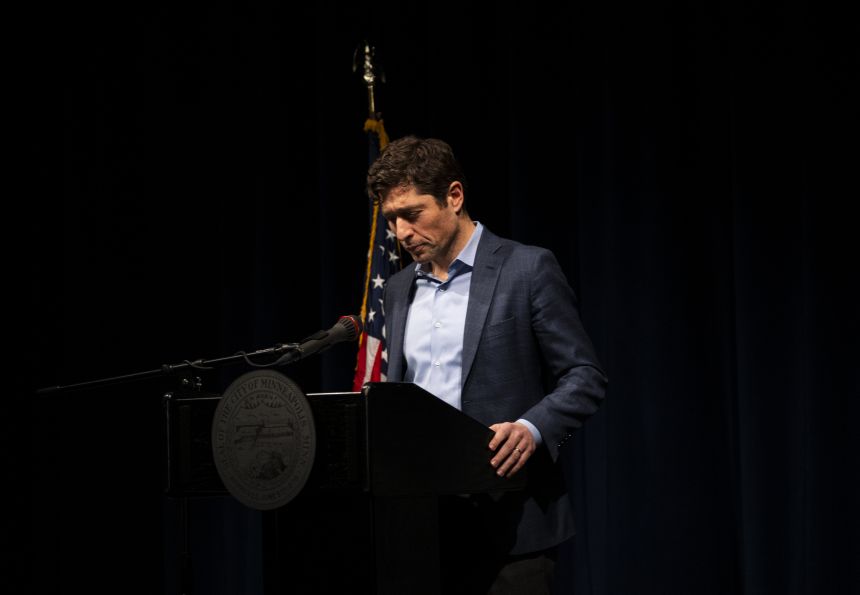
“I don’t want them spending a single second hunting down a father who just dropped his kids off at daycare, who’s about to go work a 12-hour shift, who happens to be from Ecuador,” Minneapolis Mayor Jacob Frey said at a CNN town hall on Wednesday. “That guy. He makes our city a better place. We’re proud to have him in Minneapolis.”
Minnesotans mourning two of their own citizens gunned down by federal agents won’t settle for a cosmetic agreement.
But deportation sweeps are endemic to MAGA philosophy, Trump’s appeal to his supporters and the president’s zeal to apply strongman power.
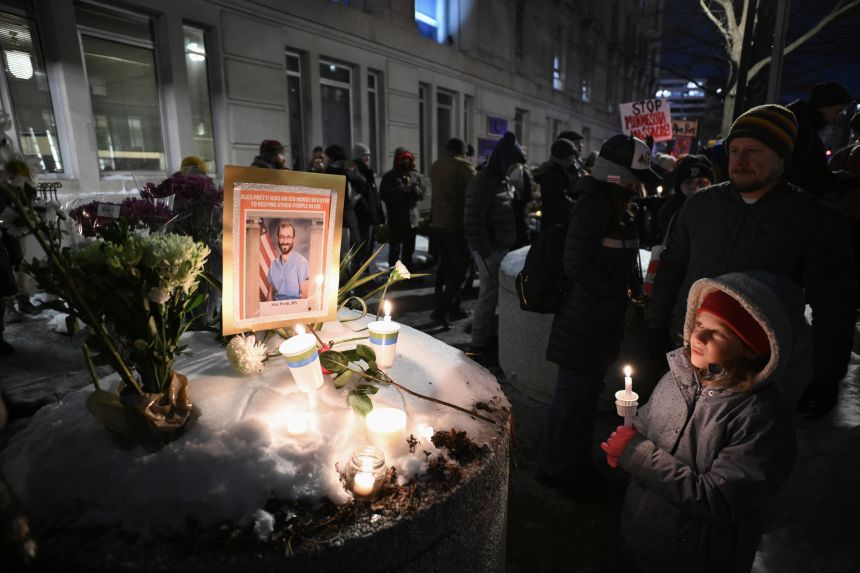
Political tensions were still acute on Wednesday amid fresh reverberations over Pretti’s killing, less than three weeks after Renee Good was shot dead. Some reports said that federal enforcement operations went ahead but were more targeted than in previous weeks.
► Tom Homan, the border czar sent by Trump to oversee Operation Metro Surge, which sent 3,000 federal agents to Minnesota, held talks with local officials described by a source as “precarious” to CNN’s Priscilla Alvarez and Kristen Holmes.
► After a short hiatus, Trump cranked up the rhetoric again in a way that seemed incompatible with a search for a good-faith solution by Homan. The president warned Frey he was “playing with fire” if his city fails to enforce federal immigration law. Frey is refusing to cooperate with federal agents.
► The Department of Homeland Security said officers involved in the shooting of Pretti on Saturday were on administrative leave per procedure. But there is no clarity on investigations or whether there will be accountability for Pretti’s death beyond a DHS investigation that many Minnesotans won’t trust.
► A new video emerged of Pretti in a physical clash with Customs and Border Protection agents over a week before he was fatally shot.
► Senate Democrats laid out their demands for a curtailing of federal enforcement policies as they seek to use their limited political leverage to block spending. Without an agreement by Friday, the government will partially shut down.
► Republican discomfort over the killing of Pretti and the unpopularity of Trump’s tough approach left GOP senators dancing, once again, on the head of a political pin. In a break with the administration, Senate Majority Leader John Thune said he’d like to see an independent investigation. Many Republicans seemed cool toward Homeland Security Secretary Kristi Noem, who maligned Pretti after his death, but most are still unwilling to openly cross Trump by calling for her dismissal. Democrats have pledged to push for Noem’s impeachment if she’s not fired.
► The dire possibilities of continued political tensions were underscored when a man sprayed a foul-smelling substance (now believed to be apple cider vinegar) on Minnesota Democratic Rep. Ilhan Omar Tuesday night. Trump’s callous reaction dented any hopes he’d react to the tragedies amid an operation he ordered by calling for calm.
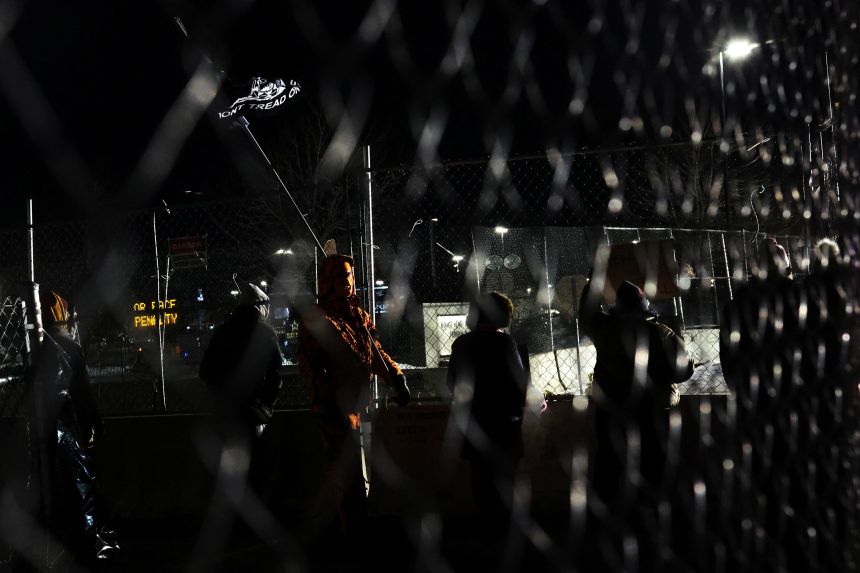
National outrage over the killing of Pretti forced Trump’s hand in withdrawing the bombastic Border Patrol chief Greg Bovino from the state and sidelining Noem by sending Homan. Trump and several other senior officials also tempered their rhetoric, albeit temporarily.
But a fundamental political divide lies behind the Minneapolis crisis. If the tactics designed to meet ambitious administration deportation targets appear sufficiently draconian, they may encourage other migrants to self-deport or not to attempt to enter the country at all.
The administration accuses Democratic jurisdictions including Minnesota and Minneapolis of refusing to cooperate with federal operations and of actively hampering them through political speech that encourages demonstrations.
This approach is a pillar of Trump’s domestic project, even if it’s unpopular with Americans outside his base. That’s one reason it will be so hard for the White House to fold.
“Trump ran and won on fixing this. It wasn’t some minor footnote in his platform. It was one of the fundamental, defining policies of his 2024 campaign,” Missouri Sen. Eric Schmitt said on Wednesday. “That promise was one of the key reasons the American people sent him back to the White House.”
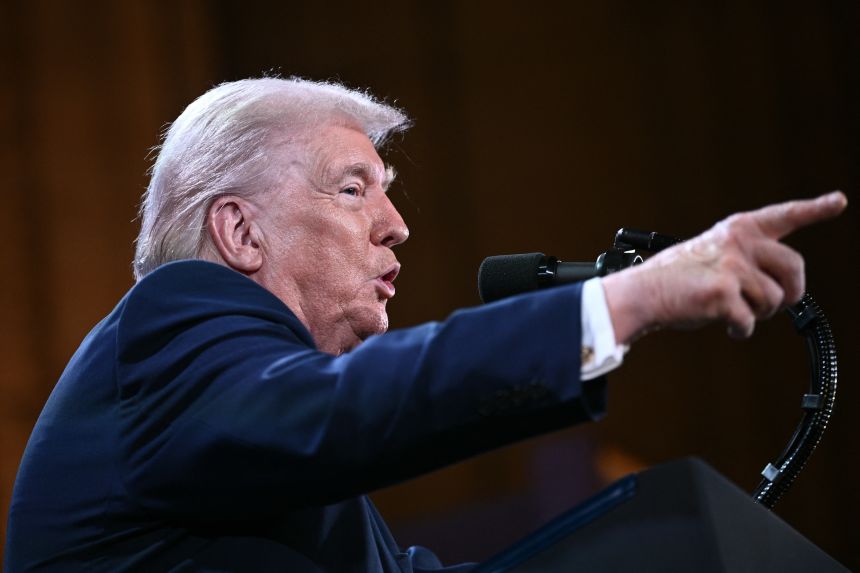
In addition, many Republicans perceive a fleeting moment to implement policies that they’ve long championed.
“This is something that has to be accomplished, and if it can’t be accomplished with President Trump’s presidency, then are we ever going to be able to get it done?” Florida Gov. Ron DeSantis, who has cooperated with federal officials, said on Fox News’ “Ingraham Angle” on Tuesday.
Public anger may force Trump to adopt a less aggressive approach. But it’s also possible this administration — especially under the influence of immigration hardliners like deputy White House chief of staff Stephen Miller — may be prepared to ignore the president’s tanking approval ratings and GOP lawmakers’ anxiety ahead of the midterms to achieve a generational goal.
Democrats believe they are on firmer political ground, since many Americans wanted tougher border security but dislike blanket deportations. Some local Democratic officials, like those in Minneapolis, refuse to allow their police forces to cooperate with federal agents on deportations.
And Trump has gone far beyond his administration’s stated intent of mainly targeting undocumented migrants with violent convictions. Many law-abiding migrants have been swept up who may lack legal status but have lived in the US for years. Aggressive ICE operations have also mistakenly arrested some US citizens. There’ve been un-American scenes of people asked for their papers by masked agents.
“Legally, the actions that have taken place in our street are unconstitutional,” Frey said at the CNN town hall. “You can’t randomly yank off the street a person because they happen to look Somali, or they happen to look Latino. You can’t detain United States citizens, rip them away from their family, and they don’t even know where they went.”
Democrats see Pretti’s death as directly attributable to the administration’s political choices. “He was killed by two CBP agents. They pulled the trigger,” Virginia Rep. James Walkinshaw said at a vigil in Washington. “But he was actually killed by the Trump administration. He was killed by Donald Trump and Kristi Noem and Greg Bovino and Russ Vought. … And Stephen Miller … I could go on.”
The inhumanity of the administration’s approach is also weakening its political position. One case in particular has touched many hearts — that of backpack-wearing 5-year-old Liam Conejo Ramos, who was arrested with his father in Minneapolis and sent to detention in Texas. Democratic Rep. Joaquin Castro met Liam on Wednesday and shared his father’s assessment that his son was “very depressed.”
A “little bit” of de-escalation won’t placate Minnesota Gov. Tim Walz, who said as he visited a makeshift memorial for Pretti on Wednesday that “I’m not so interested in shifted tone, we just need them out of here and we need accountability for what has happened.”
The tone doesn’t seem to have shifted that much.
Trump on Wednesday rebuked Frey for saying he would not enforce federal immigration laws. The president warned on Truth Social, “Could somebody in his inner sanctum please explain that this statement is a very serious violation of the Law, and that he is PLAYING WITH FIRE!”
Attorney General Pam Bondi wrote on social media during a visit to the North Star State on Wednesday: “We will NOT tolerate lawlessness in Minnesota. Nothing will stop us from continuing to make arrests and enforce the law.”
Vice President JD Vance asked Frey on X: “How about federal law enforcement. Should they feel safe calling 911? Right now, they don’t, because you’ve told your police officers not to help them.”
Sometimes harsh political rhetoric can be used to give cover for a political retreat. But this does not sound like an administration about to shelve its tough line.
The potential for detente may become clearer when Homan holds a scheduled press conference in Minneapolis on Thursday. CNN’s Alvarez and Holmes reported that possible compromises could lie in a federal pledge for more targeted operations against undocumented immigrants with criminal records and the use of Border Patrol agents to support ICE operations instead of in broad sweeps.
Senate Democrats want far more to avert a partial government shutdown. Minority leader Chuck Schumer stipulated three conditions, including tightening the use of warrants and roving patrols for ICE agents; the enforcing of codes of conduct comparable to those followed by state and local law enforcement; and for ICE agents to remove their masks and to wear body cameras.
This might constrict a major plank of Trump’s domestic agenda. But Democrats may come up against a familiar problem. Since the DHS and ICE got a funding windfall in Trump’s “big beautiful bill” legislation, their operations may not be hampered in the short term. Republicans might be able to wait out Democrats in a shutdown, as happened last year.
But a shutdown might clarify this issue. Is Trump willing to give ground on his policy on deportations, or does he simply hope to make superficial adjustments that change how it is perceived?