Several years ago, I was serving as pastor of a church in rural Oklahoma. A group of women felt led to provide a baby shower for a young woman who attended our church. It was a tough situation for the soon-to-be mom. She had little means, and the father was nowhere to be found. But she was doing her best and was extremely faithful to our congregation despite some bad choices.
I supported the women as they worked hard to make the event special. A week before the shower, I had another church member schedule an appointment. She was concerned about the precedent we were setting.
In her words: “This will just tell the world we are OK with sin. What if we are flooded with single mom’s looking for free stuff?!”

Derek Crawford
To which my reply was: “I would praise God if we are flooded with more single moms. Think of all those beautiful babies.”
You will not be shocked to find out the church member in question did not appreciate or approve of my response.
The church regularly has to navigate tough issues because the church is full of people. And people make mistakes. In an ideal world, the single mom mentioned above would be paired with a doting husband eager to care for her and the baby on the way. But that is not always the reality. Sin gets in the way.
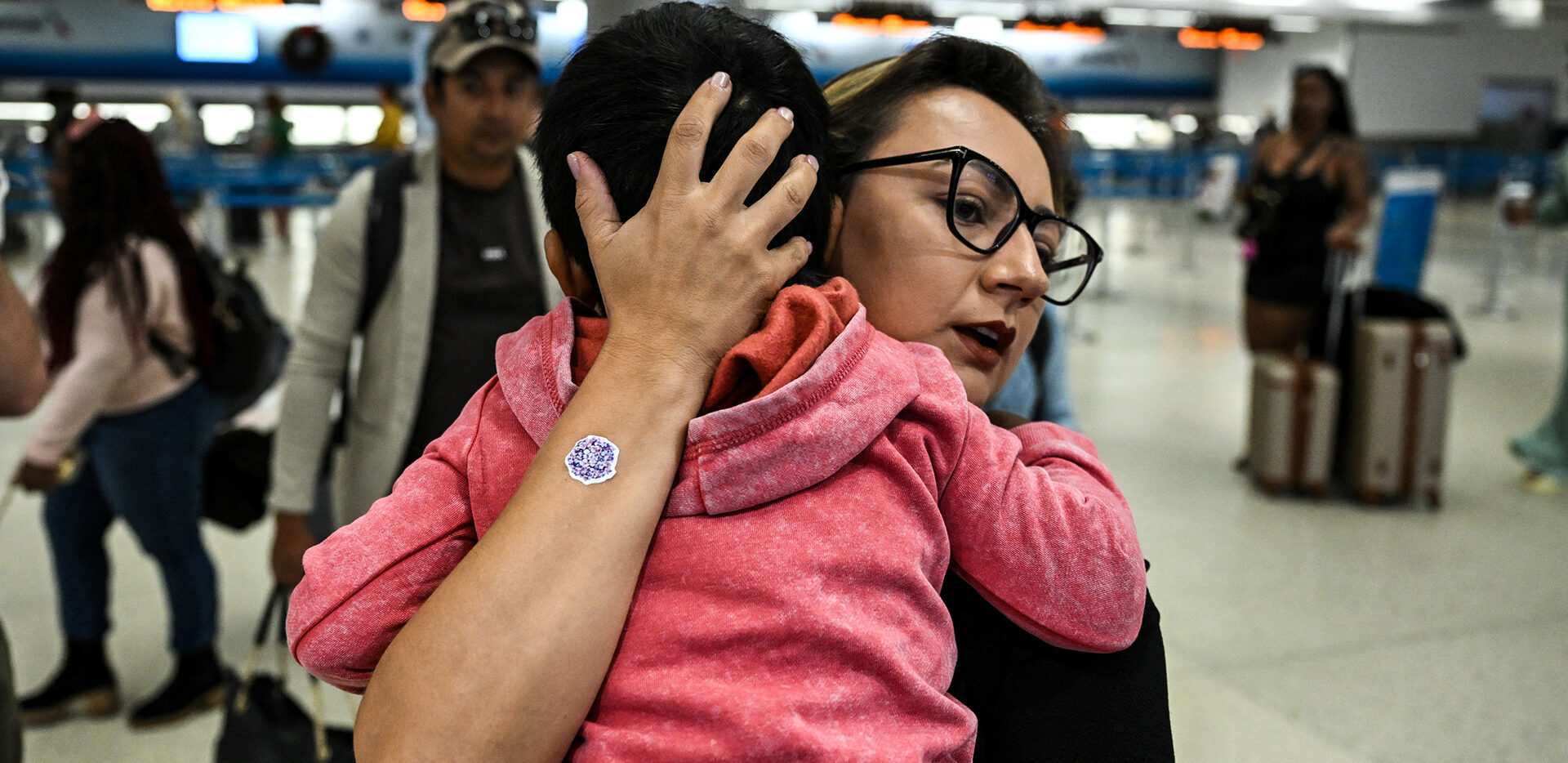
But we must find ways to minister to the broken, to the least of these. Based on front page news across our nation, right now the least of these for our churches are immigrants.
“We must find ways to minister to the broken, to the least of these.”
This past week, children were highlighted regarding the demonstration targeting Cities Church in the Minneapolis area. Southern Baptists leaders eagerly described the terrifying conditions imposed on children and teenagers as the worship was interrupted. And in full disclosure, I agree this protest never should have happened. Local churches are not the place for such demonstrations.
However, I have a good friend who points out that when you need to leverage your position it’s always advantageous to play the children card: “What about the children!!!”
I have an interesting vantage point when it comes to the immigration issue.
I teach at a large urban high school. Roughly half my students are Hispanic — and they are scared. They are scared to be targets of ICE despite their legitimate legal status. They are fearful for their friends and parents. Many of them know someone who has been detained or deported. I see firsthand the effects as I attempt to teach them American history.
The immigration narrative is often conveyed with broad strokes, labeling undocumented immigrants as criminals and a determent to our communities. When walking with our Hispanic families with ties to my campus, I experience another story. Most of my students’ parents long for their kids to receive a good education and find opportunities they never dreamed of at an early age. Many of my students leave school and work long hours in the evening to help support the family but faithfully make their way to class the next morning. This is remarkable character for teenagers!
I rarely have been in a position to see fear of this nature up close. I have no idea what it’s like to live with the chance my father or mother may not come home from work. Furthermore, I have no perspective on the need to leave my homeland out of fear of economic collapse or general anarchy. Yet I can guarantee this truth: If I needed to cross a river to take care of my family, I would do it in a heartbeat.
“If I needed to cross a river to take care of my family, I would do it in a heartbeat.”
The challenge is navigating complex social issues in a broken world and framing that correctly with Scripture. I honestly believe many Southern Baptists long to see families of any color and race treated with dignity and care. I’ve sat in the convention hall when racist and mean-spirited motions were made. The murmuring in those moments reveals the heart of the masses.
Jesus addresses this issue in Matthew 25 in the passage often titled “The Sheep and the Goats.” This passage directly discusses the nature of relationship one shares with God. As Jesus’ words continue through the passage it becomes impossible to separate the way we treat others from our connection to Almighty God. In other words, we cannot claim to know God and treat those in need with complete disregard.
The implications are crucial in understanding our role in the current state of the immigration discussion.
Despite the shouting voices on each end of the extreme fringes, we need Christians in the middle who concede the give and take of each position to stand and speak for those with no voice. There must be a process to become a United States citizen; open borders are not sustainable. But we must also give humanity to the undocumented, understanding many are simply trying to do the best they can for their families.
We are in desperate need of Christian men and women willing to stand for these families. We need Christians draped in humility to be peacemakers. The Bible provides a consistent narrative of the need for order; our God is a God of order. I cannot argue with this reality. Yet, it is impossible to deny the systematic thread of justice that goes from the first chapter of Genesis and loops through the final passage of Revelation.
It is time for Christians to come together and unify around the dignity we all possess as children of God. The children of Cities Church are as near and dear to Jesus as those who are here illegally.
And I am convinced officials in the United States government who follow Christ have the power to solve the challenges facing our border. It’s time for Christian leaders to stop using children as a means of manipulation and utilize our influence as salt and light to protect and care for the least of these.
Derek Crawford is a former director of missions and pastor in Oklahoma who currently serves as an educator in South Carolina.