ZAGREB, 29 January 2026 (Hina) – Croatia’s Parliament has adopted amendments to the Law on State Border Control, bringing national legislation into line with the European Union’s new Schengen regulation (EU 2024/1717) and granting authorities greater flexibility to respond to security, migration and health-related challenges.
Although technically complex, the changes are politically significant. They provide Croatia with a clearer and faster legal framework for managing borders within the Schengen Area at a time of heightened pressure across the European Union.
Targeted controls instead of full border closures
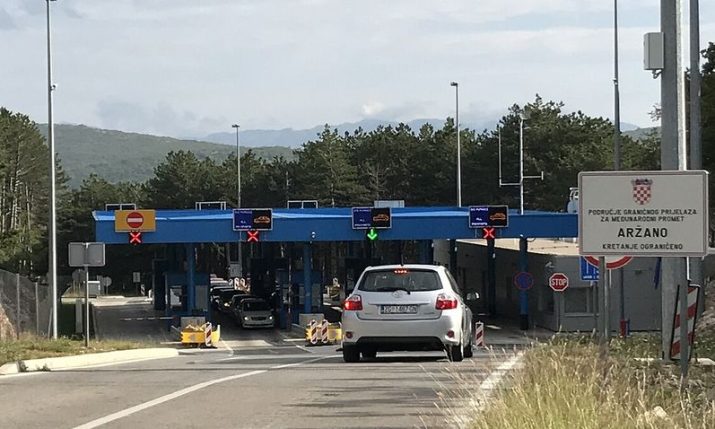
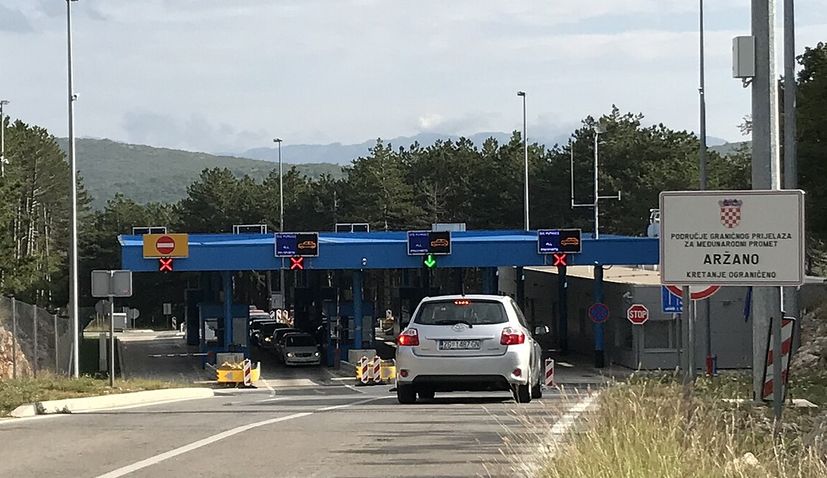
The most important change allows Croatia to temporarily reintroduce controls on specific sections of its internal borders, rather than along the entire border.
This enables targeted responses to concrete threats without resorting to blanket border closures or comprehensive checks.
Decisions can be taken at the proposal of the Minister of the Interior, streamlining procedures in crisis situations and allowing for faster action when circumstances require it.
Until now, Croatian law primarily allowed the reintroduction of border controls for serious security threats, such as terrorism or threats to public order.
The amendments expand the grounds to include public health risks, reflecting lessons learned during the COVID-19 pandemic and preparing the legal system for future epidemics.
This means Croatia will have a clear legal basis to limit traffic at certain border points if a serious infectious disease emerges in neighbouring countries.
The revised law also allows for the temporary closure of individual border crossings, shortened opening hours or the redirection of traffic.
All such measures must be proportionate, time-limited and clearly justified, ensuring that restrictions remain exceptional rather than routine.
A key institutional change formally designates the Ministry of the Interior as the authority responsible for initiating and conducting consultations with the European Commission regarding the reintroduction of internal border controls.
Under the new EU regulation, Croatia must notify the European Commission, the Council of the EU and the European Parliament of any decision to reintroduce controls.
This increases transparency and reduces the scope for arbitrary or politically motivated restrictions on freedom of movement.
If a Member State introduces internal border controls, the European Commission may assess whether the decision is justified.
This scrutiny can be initiated by the Commission itself or by another Member State with a legitimate interest. In Croatia, responsibility for these procedures lies with the Ministry of the Interior.
The amendments come as several EU Member States, including Germany, Austria, Italy, France and Slovenia, continue to apply temporary internal border controls, largely in response to migration flows and security assessments.
Croatia has so far avoided using this measure, but the new law provides a clear legal framework should circumstances change.
At EU level, tensions have intensified in recent years between the principle of free movement, which underpins Schengen, and growing demands from Member States for stronger border controls.
The new regulation seeks to address this by introducing stricter rules, clearer time limits and enhanced oversight of national decisions.
The reform is part of a broader overhaul of the Schengen Borders Code adopted by the European Parliament and the Council of the EU in summer 2024, following months of negotiations and political agreements earlier that year.
While some civil society organisations and civil rights groups warned the reform could lead to more restrictive migration policies and increased surveillance within the EU, the regulation was ultimately supported by a large majority of political groups in the European Parliament.
Croatian MEP Karlo Ressler, a member of the European Parliament’s Committee on Civil Liberties, Justice and Home Affairs, said the nature and intensity of migration had fundamentally changed over the past decade.
“To ensure Schengen can function without internal barriers, the external border must be secure, police cooperation intensified and information exchanged in real time,” Ressler said. “Internal controls should remain a last resort and a temporary measure.”
What it means for citizens
For citizens, little should change in everyday travel under normal conditions. Journeys within the Schengen Area will continue without permanent border checks.
However, in extraordinary circumstances, travellers may encounter occasional document checks, brief delays or redirected traffic at certain crossings.
Importantly, the law increases legal certainty by clearly defining who can make decisions, under what conditions and for how long controls may be reintroduced. This strengthens state capacity in crises without permanently reinstating “hard” borders.
A balancing act within Schengen
Overall, the legislation represents an attempt to balance European obligations, national security concerns and the preservation of free movement, at a time when Schengen has once again become one of the EU’s most sensitive political issues.