
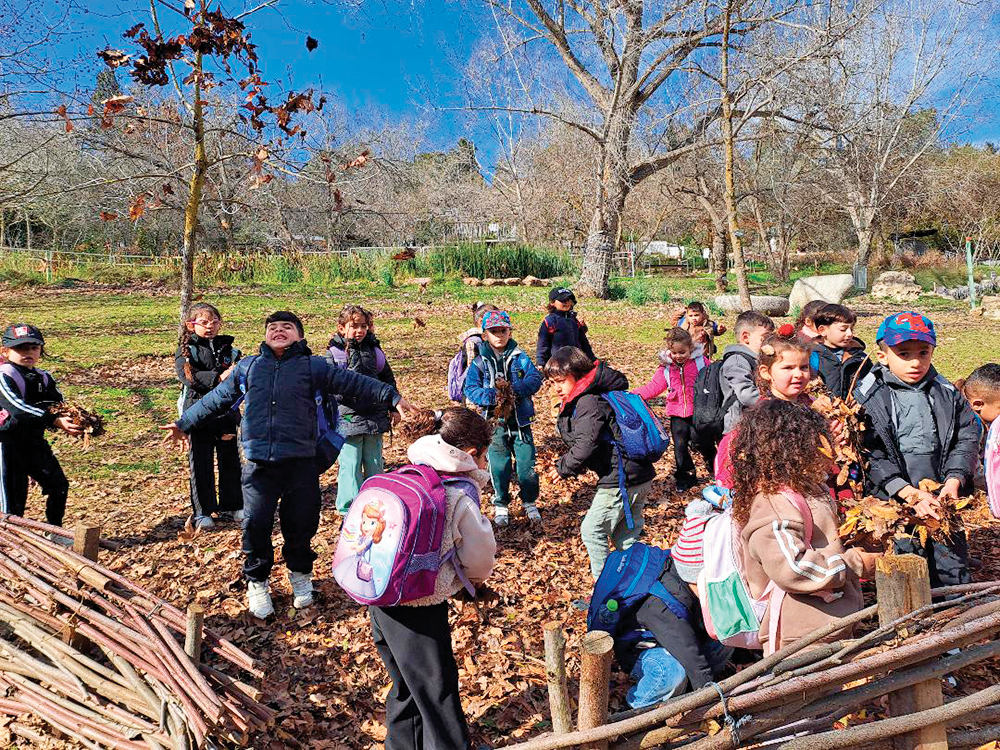
 Arab schoolchildren on a trip sponsored by the Keren Kayemet L’Yisrael, playing in the leaf pool.
The Jerusalem Botanical Gardens are always growing, in every sense of the word.
In the heart of Jerusalem, in Givat Ram, close to the Hebrew University campus, on 120 dunams (30 acres) of land, the Jerusalem Botanical Gardens contain a wealth of local and international flora and ecosystems—7,300 different species of plants, and constantly expanding projects and exhibits.
One new pavilion is the Japanese Culture House made out of 150 year-old Japanese wood and donated by the Agon Shu community in Japan. It is surrounded by cherry trees and bamboo and the Bonsai Collection display. These miniature trees weren’t only created for art. When Japanese healers went into remote villages, they couldn’t take the large trees whose leaves they used for their medicinal properties, so they grew smaller ones that they could more easily transport.
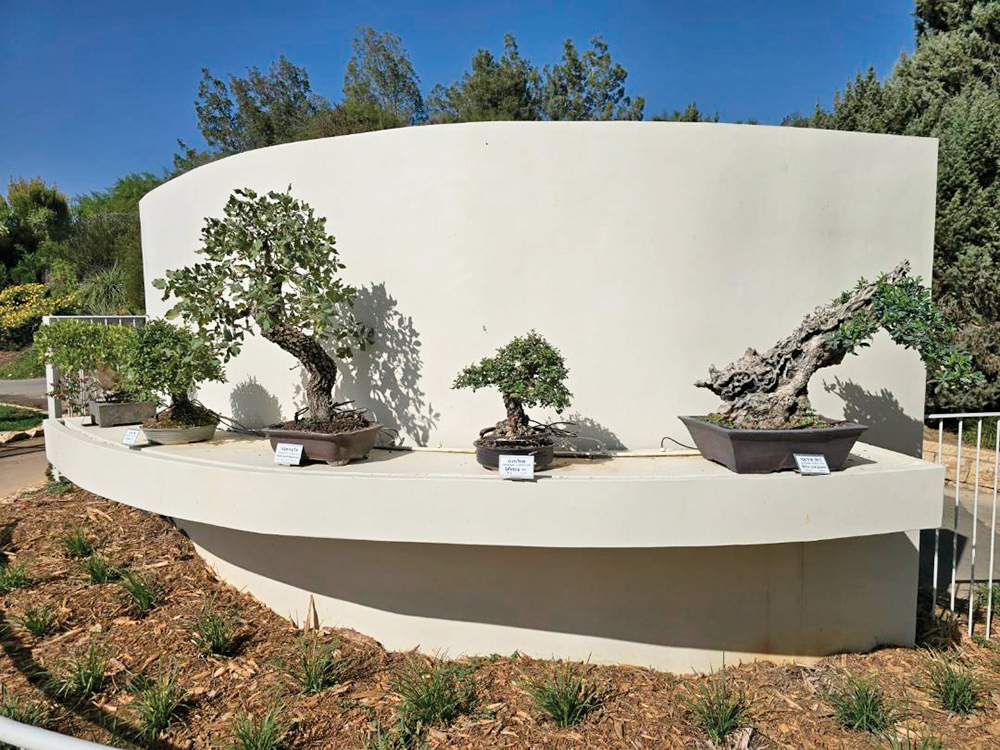 Bonsai Collection display. (Credit: Adir Yogev)
The opening of the Japanese Culture House featured a festival that featured workshops in Japanese calligraphy, flower arrangement, sumo wrestling, martial arts, culinary arts, music, art and theater. In deference to its location, the Japanese house has a mezuzah on each of its doors.
The Botanical Gardens were established by six partners: The Hebrew University, Keren Kayemet LeYisrael, the Jerusalem Municipality, The Jerusalem Foundation, The Kaplan Family and The Friends of the Jerusalem Botanical Gardens, in order to research what kind of plants could be grown in Jerusalem. Phytogeographically speaking—phytogeography is the branch of botany concerned with plant communities and landscapes—the Jerusalem climate is ideal. Its location is critical. Jerusalem receives rain, is at the edge of a mountain, and is a 25-minute drive from the Dead Sea. The Botanical Gardens have been able to grow many plant species, making it one of the most important botanical gardens in the world.
It later was opened as a recreational site for the public. Tom Amit, the Gardens’ CEO, speaks about its strong connection with the community. “The biological diversity of the plants and the diversity of the people in Jerusalem make for a pure connection.”
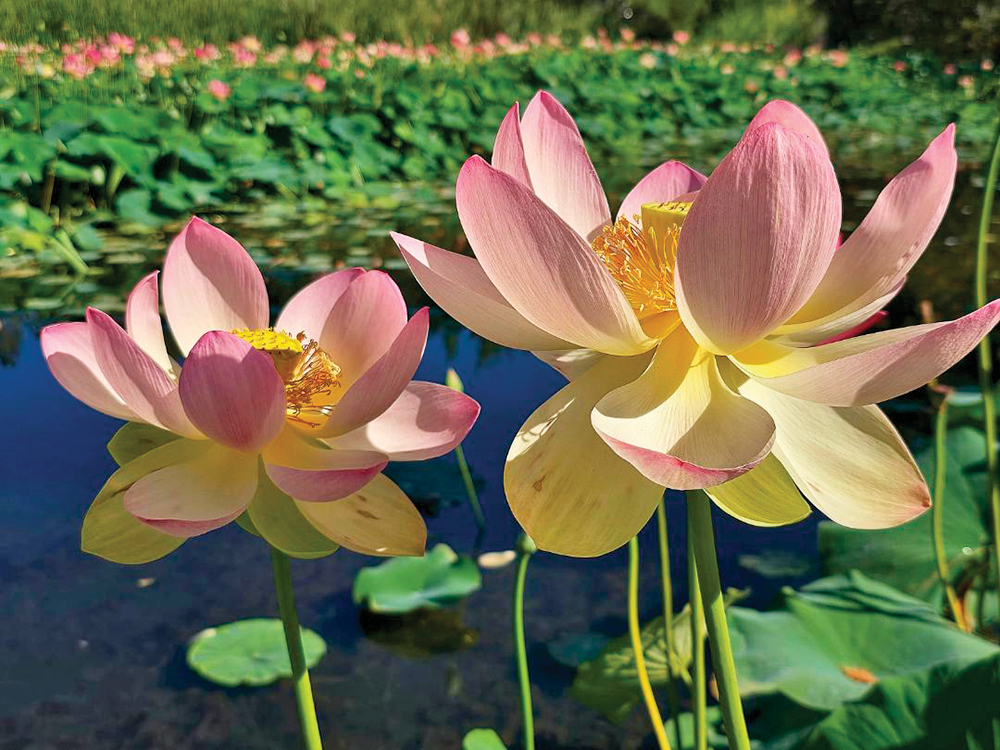 Summer lotus blossoms in the lake. (Credit: Adir Yogev)
Amit is passionate about the Botanical Gardens’ educational role. Although Jerusalem is surrounded by the lush and green Judean Hills, Jerusalem itself has few green spaces relative to its population. Jerusalem schoolchildren can come to the Botanical Gardens and have hands-on experience with plants, even growing their own vegetables. The park also has its own school and gives school tours (free for Jerusalem children), as well as programs for people with autism and special needs.
The Botanical Gardens look after hundreds of the endangered species in Israel and beyond. They are propagated and grown in a special nursery with regulated temperatures. Sometimes it takes more than one try to get the seeds to take. These plants are from all over the country, from the Hermon to the Negev, and include wetland plants as well. Many of these species, even if not pretty, can serve important purposes.
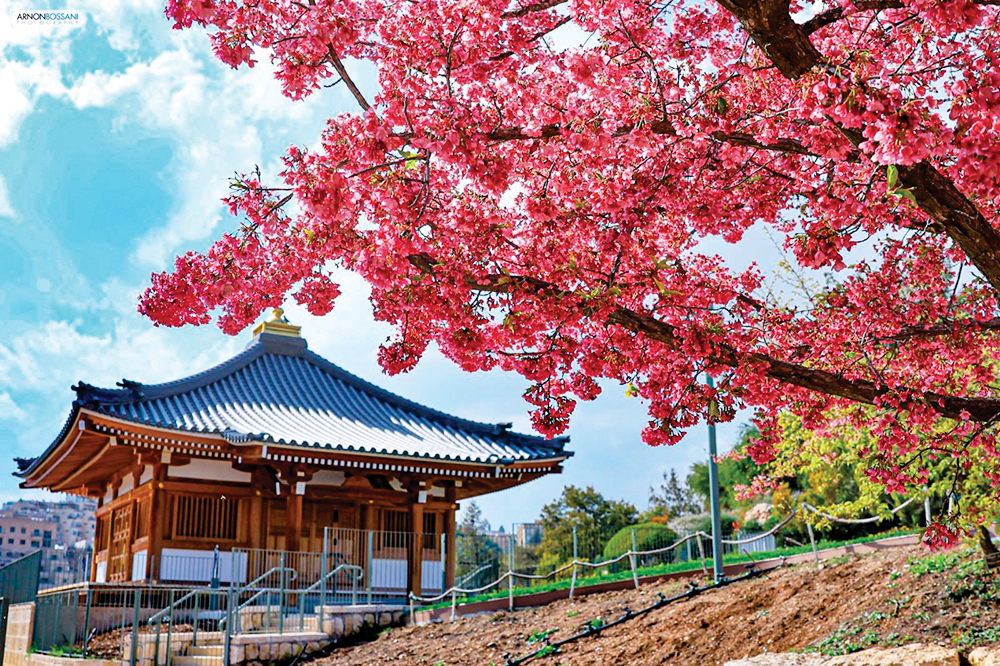 Japanese Culture House with cherry tree. (Credit: Arnon Bosani)(
Maya Abutbol, a manager in the nursery says that the gardens support researchers from Israel and beyond. For example, an Alzheimer’s researcher has been coming in regularly for years to take leaf material from the Ramon Oregano (Origanum ramonense), an endangered local desert plant, for her research. “We don’t know what the next discovery is going to be,” Abutbol said.
About 300,000 people visit the Gardens every year and, Amit estimates, this will increase to 500,000 when a new entrance is built linking up to the Light Rail and the new entrance to the city. In advance of that, three new hothouses have been built to house unique and special flowers from all over the world.
“I have always wanted to connect nature and people,” said Amit, the CEO. This is not surprising as he was raised in the forest near Amuka in the north of Israel. His mother is a legendary gardener, and he began his career working for the National Parks Authority.
“Community is the most important thing,” Amit added, constantly emphasizing the connection between the Jerusalem Botanical Gardens and the people of Jerusalem; and the biodiversity and human diversity that seem to take care of each other in a natural symbiotic relationship. And with the environment such an important topic, the Gardens are the perfect place to get an education and enjoy the best that nature has to offer.
 Tom Amit, CEO of the Jerusalem Botanical Gardens with a sculpture from “Winter Dreams.” (Credit: Sivan Farag)
The Gardens are divided into seven zones, each with its own flora from Europe, South Africa, North America, the Mediterranean, Australia and Central Asia. The Tropical Conservatory, with both tropical and desert ecosystems, features some plants you won’t see anywhere else. The tropical jungle features gigantic bamboo and banana trees, and there is one plant—the Grewia villosa—which was collected from the very few shrubs left in Israel in the wild, near the Dead Sea.
The Gardens were recently gifted an electric train, which makes navigating the slopes of the park much easier and allows more access than ever before.
As the Botanical Gardens are within the techum Shabbat of the city, it’s possible to visit on Shabbat with pre-purchased tickets. Amit tells me that many Charedi families make this a Shabbat outing. And on long summer Shabbatot, it’s a good option for tourists as well.
For everyone, the Jerusalem Botanical Gardens are an oasis in the city—beautiful and tranquil. It is undeniably peaceful and relaxing to walk on the paths, admiring the scenery. Aside from all the impressive foliage and interesting exhibits, it is sheer pleasure walking down a road in this pastoral setting, surrounded by beautiful flowers, trees, plants and unusual vegetation.
Amit works in cooperation with other botanical gardens all over the world. In March, he will be traveling to New York with a delegation to work on mutual cooperation and joint research.
The Gardens feature a coffee shop, Rabbanut Yerushalayim (I highly recommend the desserts), a gift shop and a nursery. You can buy seeds of local and endangered flowers and sow them in your garden. The project was initiated in memory of Nechama Rivlin, the late first lady of Israel and it is hoped it will help prevent their extinction. Unfortunately, the seeds cannot be taken out of the country.
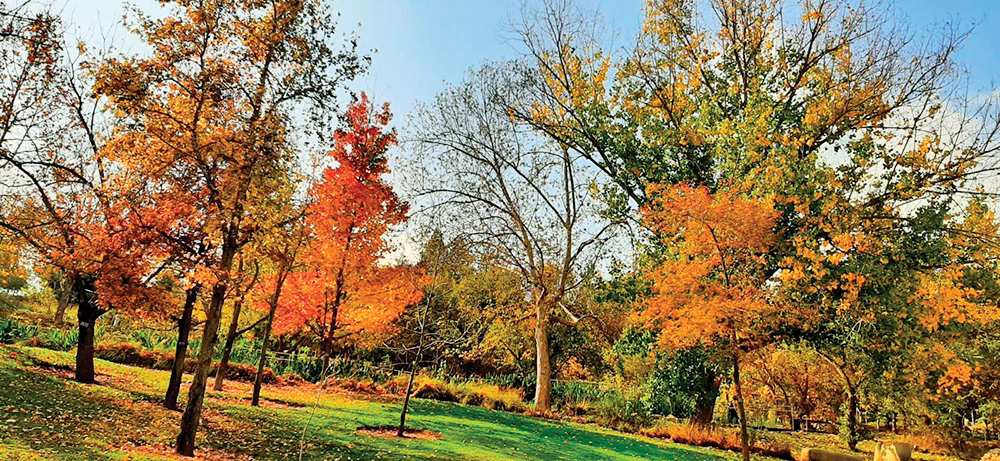 The Brilliance of fall in winter. (Credit: Adir Yogev)
Whatever the season, the Botanical Gardens have something to offer. The winter features a festival of lights called Winter Dreams. In the summer, the lake resembles a Monet painting of lotus flowers. In the early spring the park has a cherry blossom festival. Cherry trees are closely related to almond trees—the Israeli Shekadia that blooms after Tu B’Shevat.
Next week, on Tu B’Shevat we celebrate the New Year for Trees. But at the Jerusalem Botanical Gardens, every day is a celebration of nature and nurture.
For visitor information, upcoming events or to make a donation: https://www.botanic.co.il/