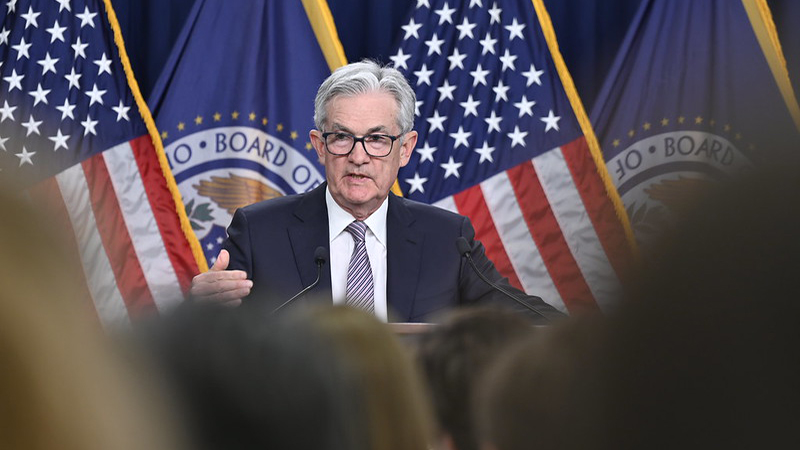
Outgoing Federal Reserve Chair Jerome Powell defended the central bank’s independence in a press conference following its decision to pause interest rate cuts last night.
The majority of the Federal Open Markets Committee members voted to hold interest rates at 3.5-3.75% after cutting three times in 2025. Two of the 12 voters preferred a 25 basis points cut.
Following the meeting, Powell said the US economy was on a ‘firm footing’.
See also: Gold hits $5,000 as geopolitics defines global markets
He declined to comment on a recent criminal investigation opened into a testimony he gave to the Senate about renovations to Fed buildings. However, Powell has previously criticised the probe, suggesting it is anger from President Trump over the Fed’s refusal to cut interest rates more quickly.
During last night’s press conference, the outgoing chair also defended Federal Reserve independence.
“It’s just an institutional arrangement that has served the people well – to not have direct elected official control over the setting of monetary policy,” he said.
“If you lose that, it first of all would be hard to restore the credibility of the institution.”
Commenting on the latest Fed meeting, Syz Group chief economist Reto Cueni said a further rate cut is not expected before June, which coincides with the end of Powell’s term as chair. He will be replaced by a Trump-nominated successor.
“Whether Powell and Cook stay on the board could determine the seven governor balance and a potential pro-Trump majority, as their departure would allow new nominations for President Trump.”
“The Fed’s decision to leave interest rates unchanged supports the USD, maintains the interest rate differential between the USD and the euro (slightly above 1.5%) and reduces pressure on the ECB and SNB to follow suit and cut interest rates,” Cueni added.
“According to Powell’s statements, the FOMC continues to lean towards cutting interest rates as its next move.”
PA Event: Spring Congress 2026
Ed Hutchings, head of rates at Aviva Investors, said while the pause was expected by markets, the real signal lay in how confidently the committee defended its decision and in how politically focused questions were handled.
“With inflation still uncomfortably above target yet labour markets no longer clearly deteriorating, the Fed appears to have earned the luxury of patience — a position not all central banks can yet claim,” Hutchings said.
“For UK rates markets, the implications are subtle but important. A steady Fed helps underpin a firm dollar, tightening global financial conditions at the margin and constraining how far and how fast others, including the Bank of England, can diverge.”