President Trump’s renewed talk of acquiring Greenland has reignited concerns among Nato allies over whether Europe can defend itself without relying on the United States, raising fresh questions about the continent’s weapons production, military readiness, and long-term strategic independence.
According to The Wall Street Journal report, defence analysts and lawmakers broadly agree Europe could eventually fight independently — but not yet.
While Europe’s defence industry is expanding at its fastest pace in decades amid Russia’s war in Ukraine and growing strains with Washington, major capability gaps remain and replacing US military support would be costly.
The International Institute for Strategic Studies estimates the price tag of substituting US equipment and personnel in Europe at roughly $1 trillion, added the report.
Europe is rapidly producing drones, tanks, ammunition, and armored vehicles, and has sharply increased defence spending. Still, analysts say the region lacks key capabilities such as stealth fighter jets, long-range missiles, and satellite intelligence, and its fragmented defence industry remains less efficient than that of the US, backed by the world’s largest military budget.
Despite those limits, Europe’s push toward greater autonomy is accelerating. In late 2024, Clemens Kürten founded a German drone company without staff or a finished design. Within a year, it had sold hundreds of drones to European militaries.
“There is growing urgency to find a response to what the US intends to do, not just in Greenland, but with the broader security alliance that has bound it to Europe since the end of World War II,” The Wall Street Journal quoted analysts as saying.
“If Americans will start to diminish their presence on the European continent…of course, we need to start to plan how we shall build what we can call a European pillar of Nato,” Andrius Kubilius, the European Union official overseeing defence industrial revitalisation, said on Wednesday at the World Economic Forum in Davos.
That shift would require Europe to replace “strategic enablers,” including space-based assets, that it currently depends on the US to provide, Kubilius said.
Trump has long pressed European allies to boost defence spending, and a US increasingly focused on Asia and Latin America is expected to redeploy assets away from Europe. Tensions over Ukraine and Greenland have heightened fears that Washington could restrict weapons supplies or limit access to US-made systems already in European inventories.
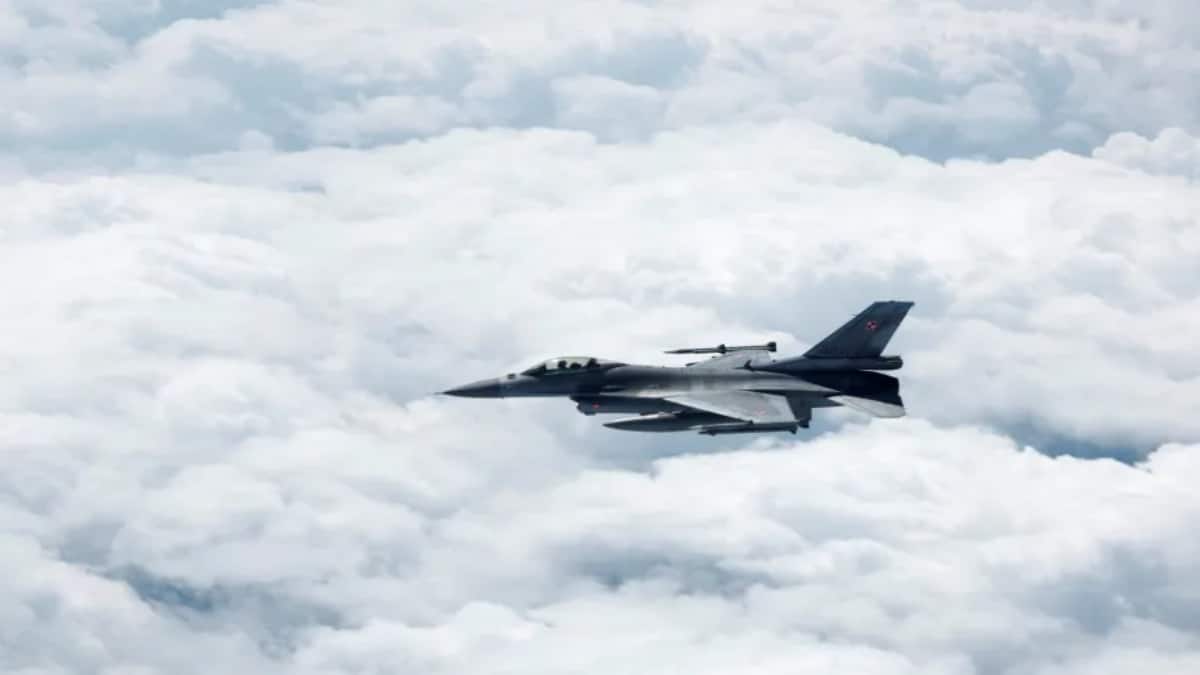
Finland’s President Alexander Stubb said Wednesday that his country’s fleet of US-made fighter jets cannot operate long-term without American spare parts and software updates, underscoring Europe’s continued dependence on Washington.
Industry executives argue that momentum toward self-sufficiency is real.
“That wouldn’t have been possible five years ago,” Kürten, now CEO of Twentyfour Industries, told The Wall Streer Journal, citing increased investor interest, available talent, and faster government procurement.
Arming up
Europe spent an estimated $560 billion on defence last year — double its outlays a decade ago, according to the report, citing Bernstein analysts. By 2035, Europe’s equipment spending is projected to reach 80% of the Pentagon’s, up from less than 30% in 2019.
The shift could hit US defence firms, which derive up to 10% of revenues from Europe, according to Agency Partners.
Germany’s Rheinmetall has opened or is building 16 factories since Russia’s 2022 invasion of Ukraine, while Italy’s Leonardo has expanded its workforce by nearly 50% to 64,000 employees.
In some areas, European output now rivals or exceeds that of the US. Rheinmetall is expected to produce 1.5 million artillery shells annually — more than the entire US defence industry combined. Europe manufactures nearly all of its armored vehicles, ships, and submarines, many of which dominate global export markets.
Yet analysts caution that a decisive break from US defence reliance has not occurred.
“Some European defence companies aren’t moving fast enough, particularly in aerospace,” The Wall Street Journal quoted Pieter Wezeman of the Stockholm International Peace Research Institute, as saying.
France’s Dassault Aviation faces a backlog of 220 Rafale fighters, producing just two aircraft a month last year.
“The fact that Poland buys arms from South Korea shows that Europe, along with the U.S., isn’t ramping up defense production as fast as needed,” Nato Secretary-General Mark Rutte said in Davos.
Leonardo CEO Roberto Cingolani pointed to fragmentation as a major obstacle.
“Every country wants to have its own tank, its own aircraft, its own ship, and of course the dispersion in terms of investment, R&D [and] procurement does not favor” European rearmament, he said.
Europe remains at least a decade away from producing its own stealth fighter and continues to rely heavily on US satellite intelligence, cloud computing, and long-range missile defences. Patriot air-defense systems remain indispensable, particularly for Ukraine.
Some gaps are beginning to close. Several European programmes aim to develop missiles with ranges exceeding 1,000 miles after 2030, and the UK has launched its own military satellite constellation. France says it now supplies two-thirds of Ukraine’s satellite intelligence.
“Could Europe arm itself? Yes, but over time,” Matthew Savill of the Royal United Services Institute was quoted as saying.
“The volume is not there yet, and we need to accept that in some areas the stuff is not as good,” Savill added.
With inputs from agencies
End of Article