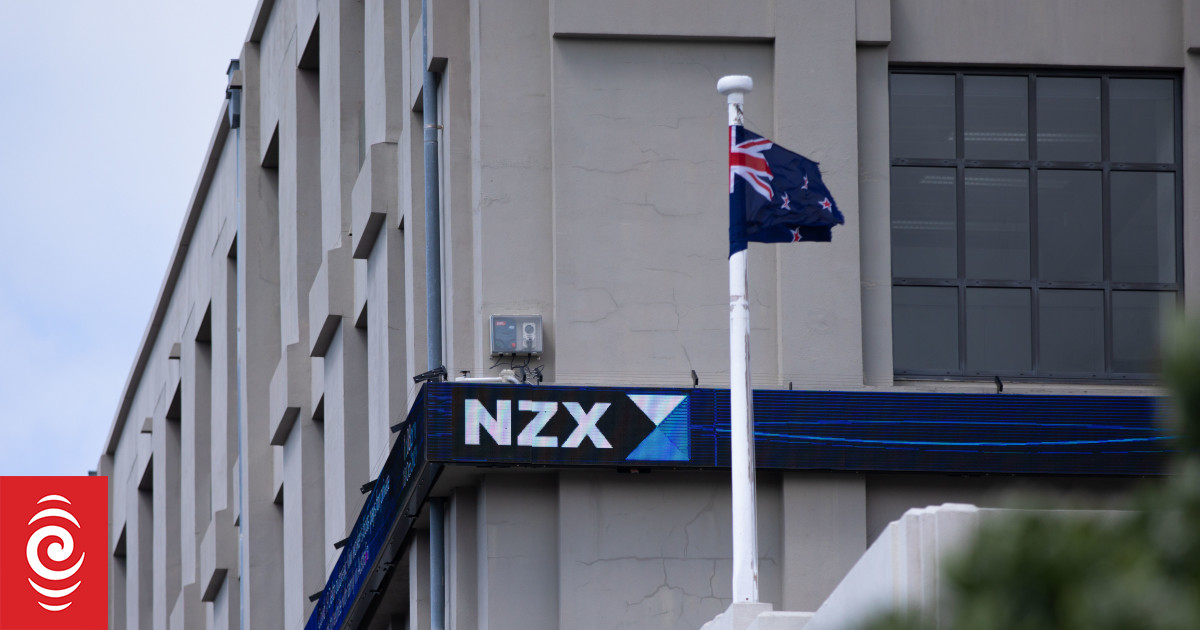
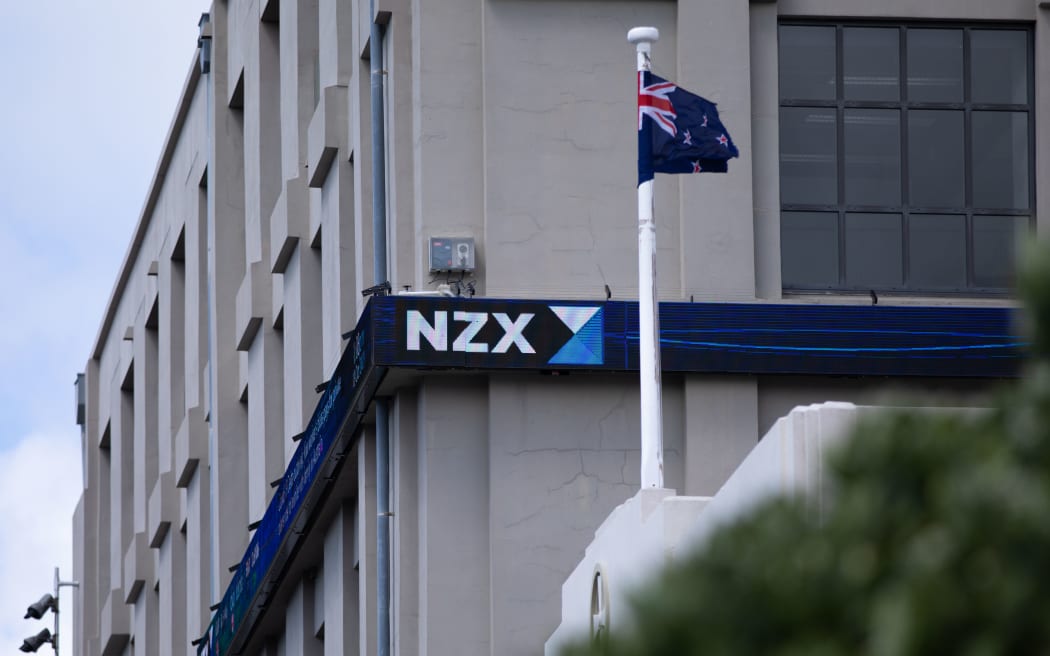
Investment experts say 2026 could be the year the New Zealand share market bounces back.
Photo: RNZ / Angus Dreaver
2026 could be a year in which the New Zealand share market shakes off the underperformance that has weighed it down since Covid hit, investment experts say.
For the decade until 2020, the NZX was one of the best performing share markets globally. But since 2020, it has lagged.
Mark Lister, investment director at Craigs Investment Partners, said it was well positioned for change.
“Last year we were up about 3 percent and many other markets were up much more than that, between 10 percent and 30 percent depending which market you’re looking at.
“We’ve been a major laggard and it wasn’t just last year, either. Since Covid, we’ve been flatlining which is in part due to our economy being in recession for a fair degree of that time while other parts of the world have not been in recession and have been ticking over nicely.
“Part of it is also the strength in the tech sector and so forth overseas, we don’t really have a tech sector so we’re never going to be able to ride that wave.”
Over the last five years, the NZX50 was up 1.69 percent, compared to 82.53 percent for the Nasdaq and 87.87 percent for the S&P500.
“Would I go as far as saying we will do better than some of those international markets over the next couple of years? Probably not, but I do strongly believe we will at least close that performance gap with other international peers. We’ll have a much better year in my opinion than we have had for the last four or five years.”
But he said markets were cyclical and the NZX could outperform again.
“You look at the 10 years leading up to the start of 2020, we, the New Zealand market, outperformed international shares in seven out of 10 years. So if you and I were having the same conversation on the 1st of January 2020, and we wouldn’t know that Covid was about to hit at that point, but if we were having this conversation then, we would be talking about how the New Zealand market has been so much better than international markets, and is there any point investing overseas? That was the story for the whole decade.
“When I cast my mind back to those years it was actually quite hard to get investors to have more international stocks because they were like but New Zealand’s been doing really well, why should I bother?”
He said if the tech sector hit trouble, New Zealand might look like a good alternative.
“We’re not as hyped up and frothy as other markets. I still think in a long-term sense, international markets look more inviting because they’re bigger, they’re more innovative, there’s more happening and the growth from outside New Zealand is probably stronger than it is here.
“But I think our market looks interesting to me at the moment and dividend yields are attractive. with term deposit rates and the OCR [official cash rate] lower than it has been for some time. So, and our market is a very tax efficient place to invest.”

Mike Taylor, founder of Pie Funds.
Photo: Supplied / Pie Funds
Mike Taylor, founder of Pie Funds, said it made sense to expect more from the NZ market.
“But markets trade on sentiment as much as earnings. The election later this year may have an impact. I’d like to think a turn in the NZD is a signal that things are improving for NZ Inc, albeit off a very low base.”
At Generate, investment specialist Greg Smith said there were now signs of “genuine green shoots” coming through in the economy.
“As activity begins to turn, parts of the local share market could also start to perform better in the year ahead. It won’t be uniform, but the backdrop is gradually becoming more supportive than it was a year ago.”
Dean Anderson, founder of Kernel, said there were already bright spots in investment markets.
“The Emerging Opportunities Index, which is looking at smaller companies outside the large top 20 listed on the index and how they’ve performed, is actually up 17 percent in the past 12 months versus the S&P 500 in New Zealand dollar terms … which is up 9.2 percent.
“So what was driving that, though, and what’s been really interesting is that there have been a lot of smaller companies on the NZX over the past year that often fly under the radar of analysts, too small for the very large KiwiSavers who are so big they’re forced to basically only invest into the big names. And these companies have existed and they’ve had quite attractive ratios and look comparatively cheap. And what we’ve seen is they’ve now started to come on the radar of others for acquisition targets.”
That could generate very strong returns for investors in those companies, he said.
Sign up for Money with Susan Edmunds, a weekly newsletter covering all the things that affect how we make, spend and invest money.