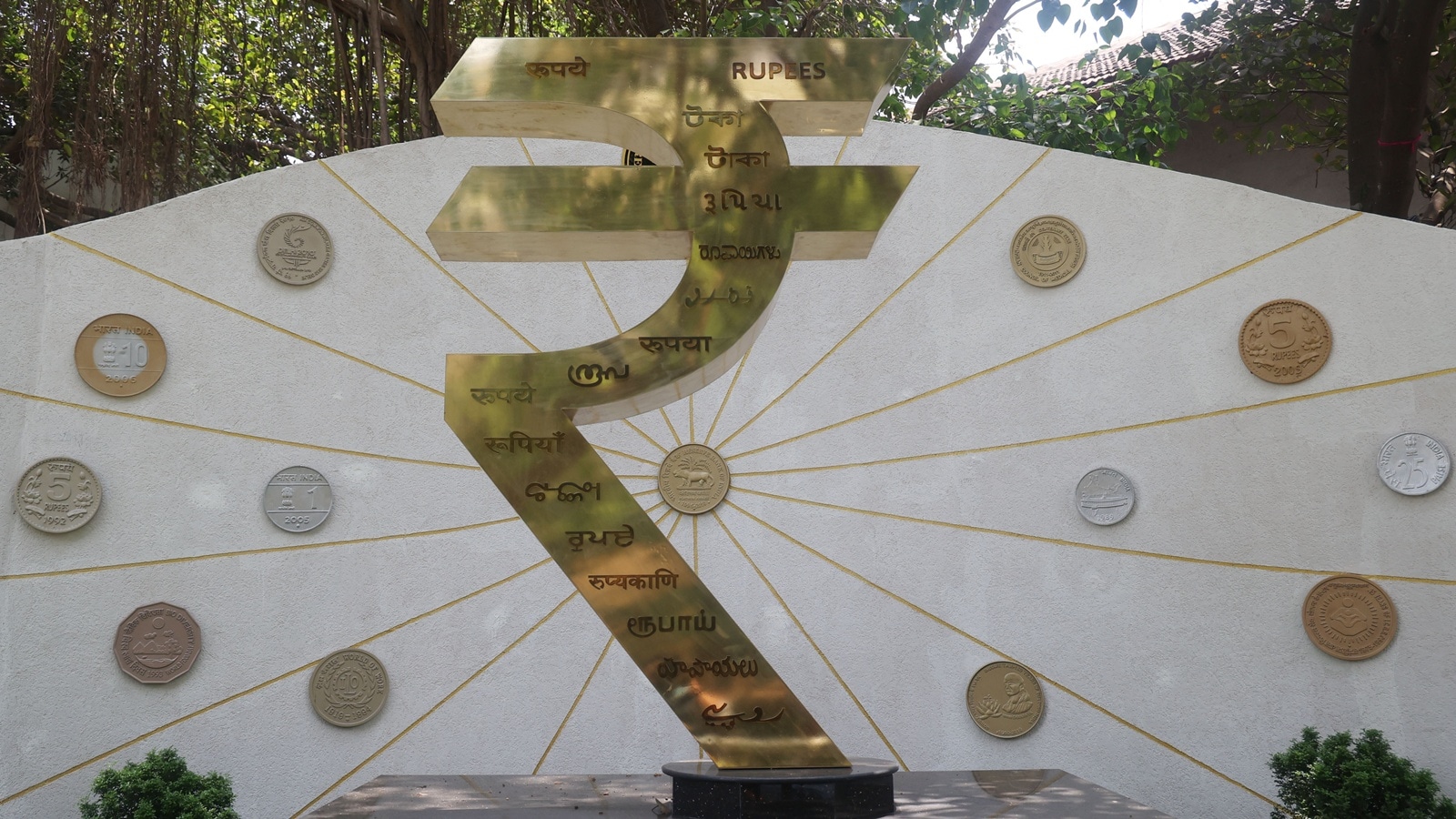
The negative effects of the ongoing global political and economic turmoil may manifest with a lag, and India runs the risk of contraction in liquidity, disruption of capital flows, and a consequent impact on the rupee, the Economic Survey for 2025-26 tabled in Parliament on Thursday said. As a country dependent on global capital flows, India has to plan for liquidity and external capital buffers in the coming year, the Survey said, adding that capital flight, including with the advent of the US stablecoins, is another risk to watch out for.
Proactive reforms are essential to attract more foreign investment, it said. India also needs to generate sufficient investor interest and export earnings in foreign currency to cover its rising import bill, as, regardless of the success of indigenisation efforts, rising imports will invariably accompany rising incomes, the Survey said.

The Survey also noted that India is a victim of geopolitics. The rupee’s valuation does not accurately reflect India’s “stellar economic fundamentals”, which causes investors to pause. “…it does not hurt to have an undervalued rupee in these times, as it offsets to some extent the impact of higher American tariffs on Indian goods, and there is no threat of higher inflation from higher-priced crude oil imports now. However, it does cause investors to pause. Investor reluctance to commit to India warrants examination,” it said.
Detailing three possible scenarios of global crises — ‘business as in 2025’, disorderly multipolar breakdown, and a systemic shock cascade in which financial, technological, and geopolitical stresses amplify one another rather than unfolding independently — the Survey said the common risks for India will be “disruption of capital flows” and the “consequent impact on the rupee”. “Only the degree and the duration will vary,” it said.
FDI flows, incentives required
Citing political stability and strong macroeconomic fundamentals as the key drivers of FDI (foreign direct investment), the Survey said India excels in this area but could better leverage its strengths as FDI inflows remain below their potential, especially for infrastructure needs, despite a clear government intent and proven economic management.
The Survey listed several cross-country examples of tax holidays, customs exemptions, investment missions, tailor-made tax incentives, low-interest loans, visa concessions, R&D tax incentives, project approvals with interventions at the PM level in the emerging FDI destinations of Vietnam, Thailand, Malaysia, Taiwan, and Australia.
While India has what it takes to attract FDI, the Survey said, citing the example of Invest India, the integration of efforts, culminating in a structure led by the highest levels of the government with robust Centre-State coordination, is what would make large investors believe in India’s intention to host them. India needs a targeted strategy that identifies a specific set of GVC (global value chains) anchors and establishes a state apparatus that collaborates directly with them as partners, the Survey said. “The direct engagement will help resolve cross-agency issues and provide customised and time-bound solutions. Additionally, it is crucial for India not only to offer compelling incentives but also to ensure these incentives are reliably implemented,” it said.
Story continues below this ad
Creating a task force to engage top global companies and promote India’s advantages — stability, macroeconomic strength, sustained growth and market size — could boost FDI, especially in targeted sectors. Proactive diplomacy can help offset tariff challenges. “Efforts to improve the investment environment by simplifying processes and procedures to attract FDI will need to be kept up,” it said.
The Survey’s remarks come amid the challenge to sustain FDI inflows in an environment of heightened global volatility. As per latest data, India’s FDI flows saw a net FDI outflow for the third consecutive month in November at $446 million. This comes on the back of $1.67 billion of outflow in October and $1.66 billion in September. August had seen a minor net inflow of $215 million. The Survey said the rising trend of repatriation suggests that India is not only attracting foreign capital but also delivering strong returns, which enhances its reputation as a reliable investment destination.
Greater competition for capital for emerging economies
India’s external sector outlook is being shaped by a fundamental reordering of the global economic landscape where trade, investment and capital flows are increasingly influenced by geopolitical alignments, industrial policy and strategic considerations, the Survey said. This implies that the external environment is likely to remain volatile and less supportive than during the earlier phase of hyper-globalisation. For emerging market economies, this shift entails greater competition for capital, slower expansion of global trade volumes and heightened sensitivity of external flows to policy and geopolitical developments, the Survey said.
India’s economic policy must focus on the stability of supply, the creation of resource buffers, and the diversification of routes and payment systems. “2026 may mark the point at which policy credibility, predictability and administrative discipline cease to be mere virtues and instead become strategic assets in their own right, with lasting relevance. The appropriate stance for 2026 is therefore one of strategic sobriety rather than defensive pessimism,” it said.
Story continues below this ad
There global scenarios for 2026
Of the three possible global scenarios for 2026, the Survey said under the first scenario, which is the best-case scenario, it would be ‘business as in 2025’, but that may become increasingly less secure and more fragile. As the margin of safety is thinner, minor shocks could escalate into larger reverberations. “This scenario is less about continuity and more about managed disorder, with countries operating in a world that remains integrated yet increasingly distrustful. One could attach a subjective probability of around 40%-45% to this scenario unfolding in 2026,” it said.
In the second scenario, the probability of a “disorderly multipolar breakdown” rises materially and cannot be treated as a tail risk, the Survey said. Attaching a 40%-45% probability to this scenario as well, the Survey said under this outcome, strategic rivalry could intensify, the Russia–Ukraine conflict remains unresolved in a destabilising form, and collective security arrangements could unravel. “Trade becomes increasingly explicitly coercive, sanctions and counter-measures proliferate, supply chains are realigned under political pressure, and financial stress events are transmitted across borders with fewer buffers and weaker institutional shock absorbers. In this world, policy becomes more nationalised, and countries face sharper trade-offs between autonomy, growth, and stability,” it said.
Under the third scenario, with a residual probability of 10%-20%, there is a risk of a systemic shock cascade in which financial, technological, and geopolitical stresses could amplify one another rather than unfolding independently. “The recent phase of highly leveraged AI-infrastructure investment has exposed business models that are dependent on optimistic execution timelines, narrow customer concentration, and long-duration capital commitments. A correction in this segment would not end technological adoption, but it could tighten financial conditions, trigger risk aversion and spill over into broader capital markets. If such developments were to coincide with geopolitical escalation or trade disruption, the resulting interaction could produce a sharper contraction in liquidity, a sudden weakening of capital flows, and a shift toward defensive economic responses across regions,” the Survey noted.
While this remains a lower-probability scenario, its consequences would be significantly asymmetric and the macroeconomic consequences could be worse than those of the 2008 global financial crisis, it said.