Terry Gerton You’ve got a lot of great background and a really important topic. Specifically, this administration’s recent executive orders and espoused policy are putting energy dominance and resilience really front and center. And that has a specific implication for the military. Talk us through why energy resilience is such a critical issue on military installations right now.
Tom Holm I was actually born on a military base and raised on military bases around the country. And one thing I saw at an early age was just inefficiency with the grids on the bases and basically the infrastructure on those bases. Within the last five years, I’ve been visiting many of what I consider mission critical bases, Coronado, Pendleton and others throughout the country. And really, talking with the energy folks at those bases it becomes a little bit unnerving just how inefficient the grid systems are on those bases and just how antiquated, old those systems are. And so as we’re entering into times where we’re seeing some conflicts around the world and concerns in other places, really stepping up our resiliency on those bases is mission critical. It’s a matter of national security. And so my job is to try to evaluate the systems on different bases and try to come up with some solutions. Fortunately, as you mentioned, there’s an administration that’s backing that right now with executive orders. And by the way, the previous administration also had similar types of executive orders, and so as these are being planned, there’s support across the aisle to actually get things done on these bases So that we can maintain energy resiliency and mission readiness.
]]>
Terry Gerton I think there’s an important part in that answer that I just want to pull out and make clear for our listeners. Military bases are often kind of out in the middle of nowhere and their grids are independent. Is that correct? They’re not connected to the local communities, right?
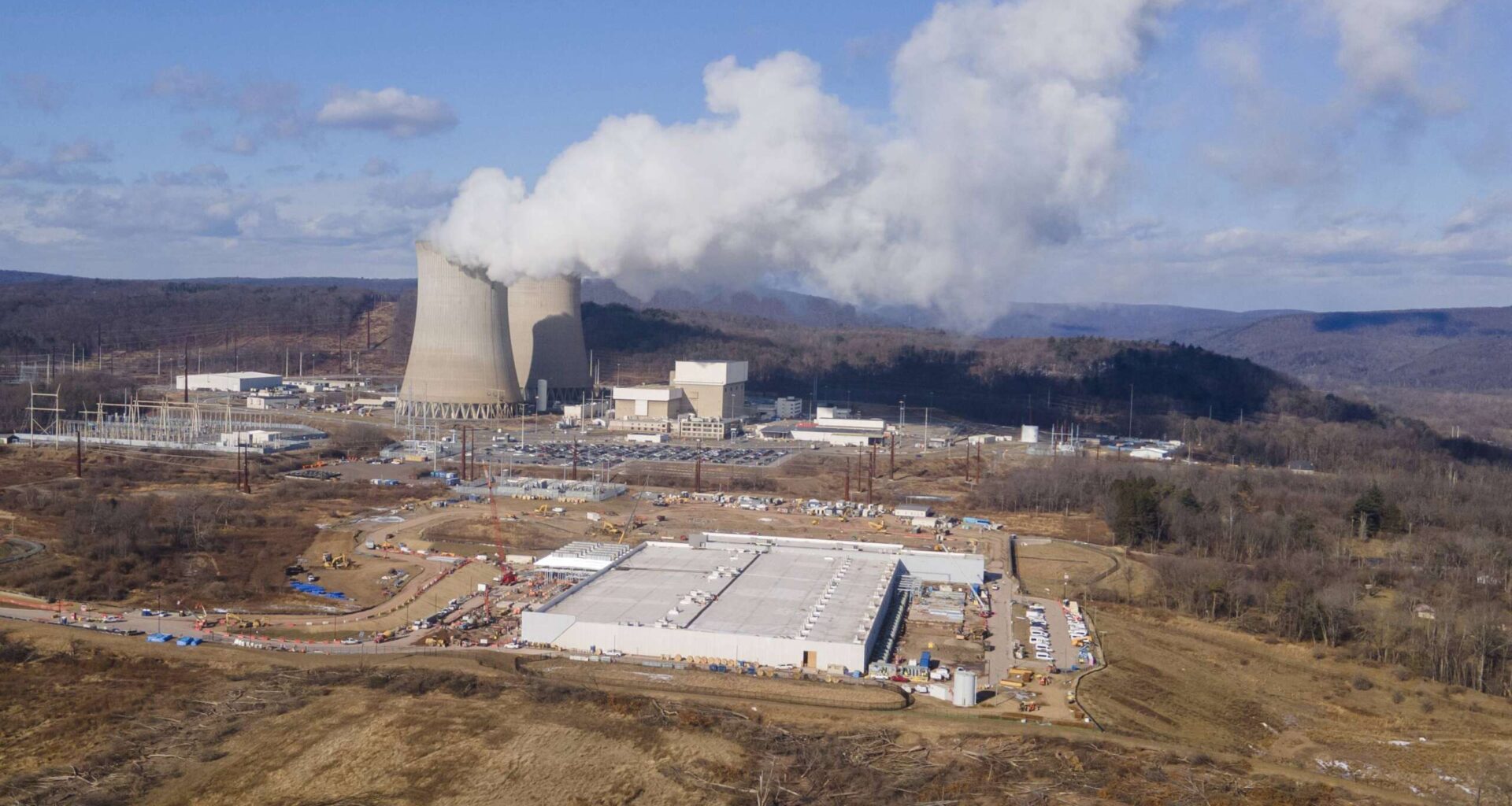
Tom Holm They are connected to the local communities, and that makes it even more frightening. I grew up in Ventura County, and Navy base Ventura County is actually comprised of two bases, Point Mugu and Port Hueneme. As a kid, I saw right in between those two bases, the Edison energy plant, where the electricity was generated and supplied to both bases. And even as a kid I thought to myself, if the enemy were to attack this area, the first thing that they probably would aim at is that power plant. And that model has continued around the country. So one of the executive orders right now is that we island the military bases, we island the grid systems on those bases. And so that is really a breath of fresh air for me, having been concerned about this for decades. Going along with that are supporting factors. So there are executive orders to place nuclear generators on military bases. Well, how do we pay for that? Those are expensive. And if we can get it through the court of public opinion, are we going to, logistically, can we get that done? And economically, can get that done? Well, there are precedents being set where data centers are paying power purchase agreement and land leases to connect with energy generators, especially those involved with micro-reactors. So we have almost a perfect combination that’s happening right now. If you’ve got a military base that is being required to put a nuclear power plant on it. Well, that’s a good thing because then we can isolate, we can island, that base with its own energy generation system. How do we pay for it? Well, there’s executive orders to put data centers on the bases. These data centers are not being factored in as contributing to the economic cost of the reactors. And by placing the data centers on the base, it provides them security as well and the added value of having nuclear power. So win-win in that situation. And then by placing these reactors on the bases along with other technologies that have come up like energy storage systems, vehicles that can be actually used as moving batteries, electric vehicles that have bidirectional charging can be used as mobile batteries. Every vehicle on the base can be use for power. The battery systems that we’ll be using can be moved to critical places on the based. The micro-reactors, we don’t necessarily have to have just one on a base. We could have two or three of them to decentralize power generation so that if there is any type of conflict, There’s more than one target.
Terry Gerton I’m speaking with Tom Holm. He’s the executive director of the Energy Defense Council. That environment you’ve just described seems to me both futuristic and complicated, and it also seems like there’s got to be a much tighter coordination level between the military and the government and industry that can deliver these kinds of capabilities. What are you doing in terms of facilitating public-private partnerships?
Tom Holm You know, my job really is connecting dots. I’m a connector. And so I visit military bases and then I also go visit different companies, different industries. Right now there’s a boom, you know, with the manufacturing or planning for micronuclear reactors. There’s something like 80 companies in America that are planning to manufacture these reactors. So you gotta weed them out. You gotta find out who’s legit. And so I work a lot with Ryan Smith over at Idaho National Labs, who’s in charge of certifying the reactors. So he can tell me which ones are going to be viable. Okay, so now we got guys that can actually make these generators. Who’s going to pay for them? As I mentioned, we’ve got data centers and other VCs are now involved in partnering with the military on these type of projects, private monies coming in like never before. Federal government is accelerating funding programs and certification programs so that things get done much, much more quickly. We’ve learned lessons that we’re getting our tails whooped by our adversaries. We’re seeing, you know, China, Russia already using micro reactors. And so I wouldn’t say that we’re in a stage of catch up, but I think that we are in a state of realization that we gotta get moving quickly and that is happening right now.
Terry Gerton Construction of these kinds of facilities has often been problematic on military bases, a combination of regulatory reviews, environmental reviews, permitting process. Are there changes that are happening there that are going to make this easier and faster?
Tom Holm Terry, I love that you have 20 years of service because you understand the complications that go on when trying to get this done. Absolutely. And it takes people like myself, and not to boast, but it takes like myself and others that are looking at this from outside of the fence line. What can be done? How can we serve while not in uniform? How can support making this happen? And so what that requires is taking a look at, you know, what resources are available beyond the fence line, off the bases, but understanding what’s happening on the bases. You can’t dig a hole on a Navy base without talking to NAVFAC. Well, I just spoke with some of the leaders at NAVFAC. No one’s spoke with them yet. And so again, I’m a connector. I connect dots. Okay, we need to get NAVFAC involved with these construction companies and these developers who work with data centers, they need to talk. And at the same time, what regulatory bodies are going to oversee these reactors? The, the DoD has not had to go through NRC in the past for the reactors that are on aircraft carriers and submarines. Well, if we’re putting reactors on military bases, do they now have to work with DoE and the Nuclear Regulatory Commission to get things done? All of that is being formulated and worked out right now. And we’re bringing people together now so that we can hammer out these issues that are very complicated, but vital for national security. And with the understanding of how critical it is to get this done, there’s a level of collaboration that I’ve never seen in my lifetime.
Terry Gerton That’s really good to hear. But even if you got agreement tomorrow, it’s not going to be the day after when a nuclear reactor gets built. So in the short run, what are some things that military installations could be doing to either fortify their grids or reduce the demand and boost mission readiness through increased energy reliability?
]]>
Tom Holm I’m gonna take two approaches with this, the nuclear approach and the non-nuclear approach. For the last 10 years, we’ve been looking at different forms of energy that we can use on the military bases. And every military base has different resources available to them. Maybe geothermal, it may be solar, maybe wind. Now those aren’t as popular with this administration as they were in the past. And so there is a shift. Without overlooking those things, because it really does need to be a mix of all resources, all hands on deck, all resources on deck right now. That’s how critical it is. Okay, now you’re right. We’re not going to get new reactors certified. We’re gonna get them fueled. We’re going to have a plan in place to service those reactors, but the Navy has been doing this for over 70 years. There are two nuclear reactors on each aircraft carrier. Some of those aircraft carriers are being taken out of, out of the war, out of the fight. Well, they can be placed in different places in the country that may be considered mission critical that need that energy. And we’re looking into ways to off-board that power from the reactors as well as the submarines. Now think about that. If I’m gonna buy a brand new nuclear reactor right now, it might cost me $5 billion or more. And I really don’t know what the price tag is, especially when you consider fuel and all the other factors that go into that. But the reactors on those vessels, the submarines and the aircraft carriers, they’ve already been paid for. They’ve already funded. They’ve been fueled. There’s already a crew and an ecosystem in place that can service, maintain those reactors. So this could happen a lot quicker than people think.
Terry Gerton That’s an interesting approach. You’ve got a conference coming up here in April. Will you be talking about these kinds of solutions?
Tom Holm We are talking about all of those solutions. We are bringing together Nuclear Regulatory Commission, DoE, DoW, Department of Homeland Security, Department of Justice, Idaho National Laboratory, all the national labs will be there. And we’re bringing together the companies that make battery storage systems, the developer Westinghouse, BWXT, companies that are making the reactors. And we’re, maybe not literally, but we’re gonna lock ourselves into a room and try to hammer out some of these solutions. It’s gonna take involvement and collaboration, as I mentioned, from industry, from the private sector, private funding, as well as the government, all the agencies coming together. And we do that by bringing them together at our Technology Energy Vehicle Conference, or TEVCON. We hold that in April, April 14th, 15th, and 16th this year. And we hold it in downtown San Diego on the Broadway Pier. The beauty of our venue is that it’s a massive pier. So we can drive electric vehicles. We can set up models of micro-reactors. We can have unmanned ships in the harbor, driving in unison with new AI systems. And we can have. Drones flying in the air in some cases. And so the venue is perfect. San Diego is really becoming a hub, a major hub for maritime innovation. So we have Defense Innovation Unit coming, Office of the Secretary of Defense. There’s a new group that was set up by the Army called the FUZE Program, which accelerates funding and approval for energy equipment for all branches of the military. So we staged TEVCON in a manner that day one, we have the military leadership go up on stage and state their problems. I’ll say state challenges. Day two, we have innovators from industry go up and state solutions. And then on day three, we get the money. We have DIU, we Defense Innovation Unit, We have OSD, we’ve got private equity companies coming in. And the groups that we have coming in this year represent over $2 trillion in available defense funding. $2 trillion with a T. So the private sector is really upping their game in their involvement in funding defense projects.
Terry Gerton Sounds like a way to really advance the conversation.
Tom Holm You know, we have an unofficial motto for TEVCON that I don’t think I can say it on your show. We get stuff done. That is the PG version of what we do. With my sailor military friends, we get a little more gritty with what we do. We get stuff done at the show. I’m not wasting anyone’s time and waiting in line to try to talk to an admiral. You know, that’s not what TEVCON is all about. TEVCON is about stating the problem, stating the solution, get funding on the floor of the show. And so all the people that are coming, the show’s small, it’s less than 2,000 people, but everyone there has a voice in this program, in the sector. And so we actually have contracts and memorandums signed on the floor to get stuff done.
Copyright
© 2026 Federal News Network. All rights reserved. This website is not intended for users located within the European Economic Area.