
European Union foreign ministers on Thursday agreed to include the Islamic Revolutionary Guard Corps on the bloc’s list of terrorist organizations, putting the powerful Iranian military force in a category similar to that of Islamic State and al Qaeda and marking a symbolic shift in Europe’s approach to Iran’s leadership.
“Repression cannot go unanswered,” European Union foreign policy chief Kaja Kallas wrote on X. “Any regime that kills thousands of its own people is working toward its own demise.”
Foreign Minister Gideon Sa’ar praised the decision as “historic,” and an Israeli official argued that the designation would make it easier to prosecute members of the IRGC.
Set up after Iran’s 1979 Islamic Revolution to protect the Shi’ite clerical ruling system, the IRGC has great sway in the country, controlling swaths of the economy and armed forces. The guards were also put in charge of Iran’s ballistic missile and nuclear programs.
While some EU member states have previously pushed for the IRGC to be added to the EU’s terrorist list, others have been more cautious, fearing that it could hinder communication with Iran’s government and endanger European citizens in the country.
Get The Times of Israel’s Daily Edition
by email and never miss our top stories
By signing up, you agree to the terms
But a brutal crackdown on a nationwide anti-regime protest movement earlier this month, killing thousands, increased momentum for the move.
“It’s important that we send this signal that the bloodshed that we’ve seen, the bestiality of the violence that’s been used against protesters, cannot be tolerated,” Dutch Foreign Minister David van Weel said on Thursday morning.
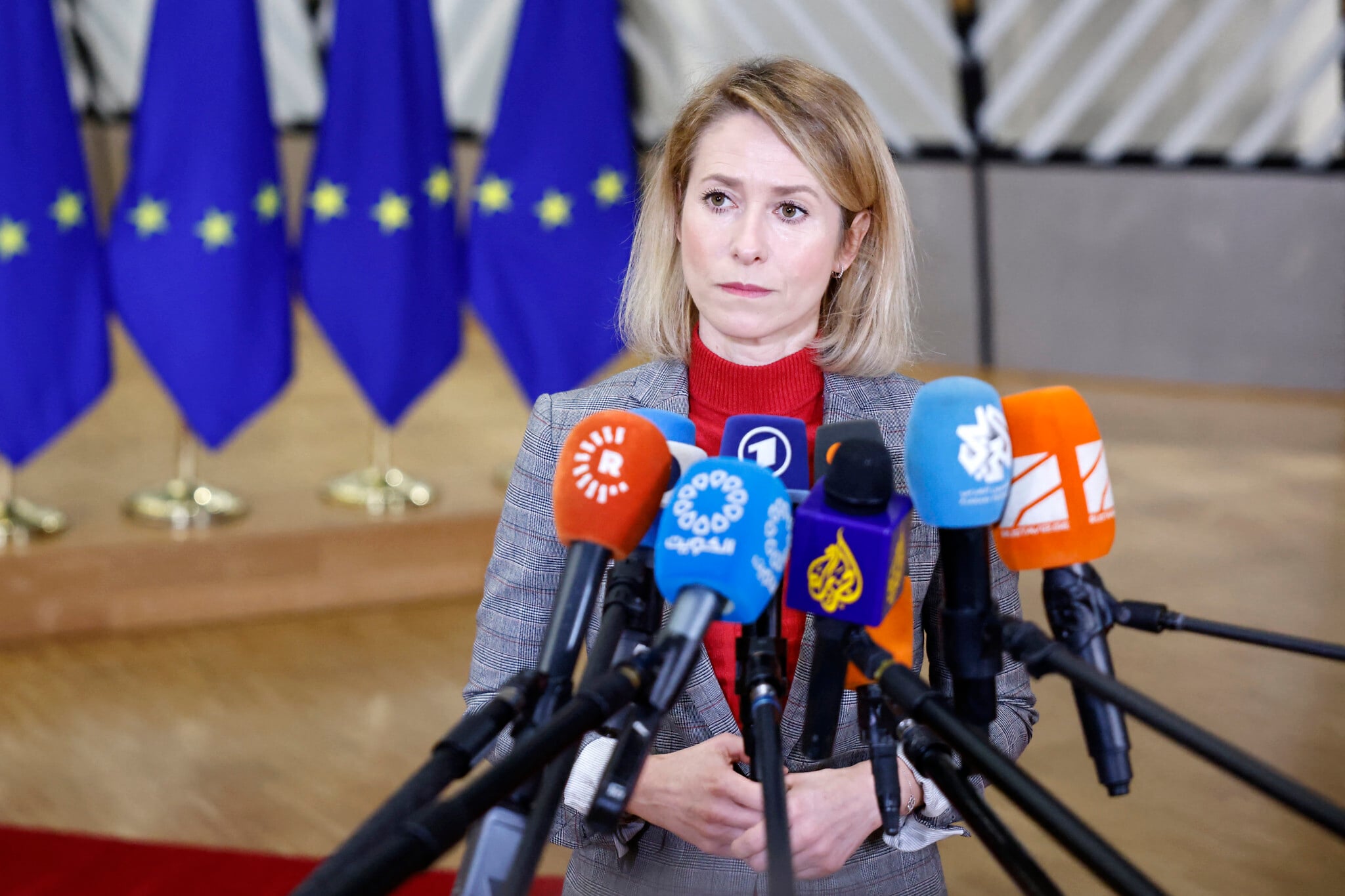
EU High Representative and Vice-President for Foreign Affairs and Security Policy Kaja Kallas talks to journalists upon arrival for a EU Foreign Affairs Council meeting at the EU headquarters in Brussels on January 29, 2026. (SIMON WOHLFAHRT / AFP)
France and Italy, which were previously reluctant to list the IRGC as a terror group, lent their backing this week. And Israel hailed the achievement of a goal it had long sought.
“For years Israel has worked toward this outcome, and in recent weeks with even greater intensity,” Sa’ar wrote on X on Thursday, calling the IRGC “the number one force behind the spread of terror and the destabilization of the region,” asserting that the move will thwart such activities in Europe and send “an important message to the men and women of the Iranian people who are fighting for their freedom.”
Meanwhile, Tehran’s top diplomat slammed the EU decision as a “major strategic mistake” that will foment conflict.
“Several countries are presently attempting to avert the eruption of all-out war in our region. Europe is instead busy fanning the flames,” Foreign Minister Abbas Araghchi said in a post on X.
“After pursuing ‘snapback’ at the behest of the US, it is now making another major strategic mistake by designating our National Military as a supposed ‘terrorist organization,’” he added, referring to the return of UN sanctions on Iran related to its nuclear program and triggered by key European powers last year.
Israeli official: Makes it far easier to build cases against IRGC
Speaking to Israeli reporters following the EU decision, an Israeli official said it will give the bloc additional tools to act more forcefully against Iran.
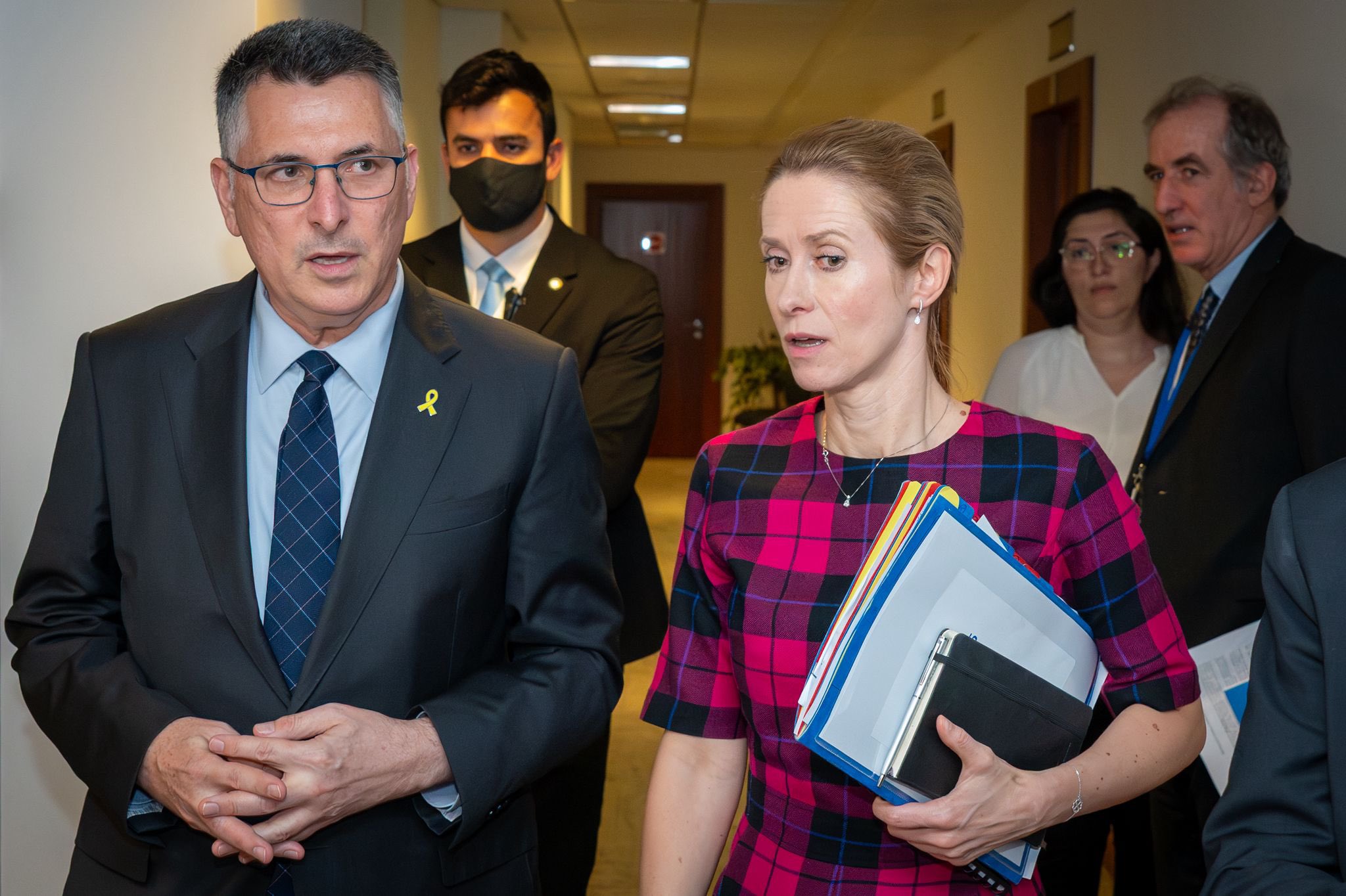
Foreign Minister Gideon Sa’ar and EU foreign policy chief Kaja Kallas in Brussels on July 15, 2025. (Gideon Sa’ar/X)
The IRGC and individuals within the organization are already under heavy EU human rights, weapons of mass destruction, and drone sanctions. Additional sanctions were added on Thursday against individuals, including Iran’s interior minister.
Beyond the demonstration of support, the listing will make it easier to build the legal case to take action against IRGC members, the Israeli official claimed.
To take legal action, a state must present an evidence-based case to the court, where many forms of classified intelligence don’t often stand.
Following the designation, the burden on the state is not to prove that an individual is involved in a specific terror plot, but only that they belong to or are operating on behalf of the IRGC. The same applies to assets that the state can freeze.
“The linkage between law-enforcement bodies within Europe —sharing information and cooperating through Europol— will be easier,” noted the official.
The official also argued that the IRGC will have a harder time using European criminal networks for terror attacks once gangs “realize that all the eyes of European law-enforcement bodies are on them.”
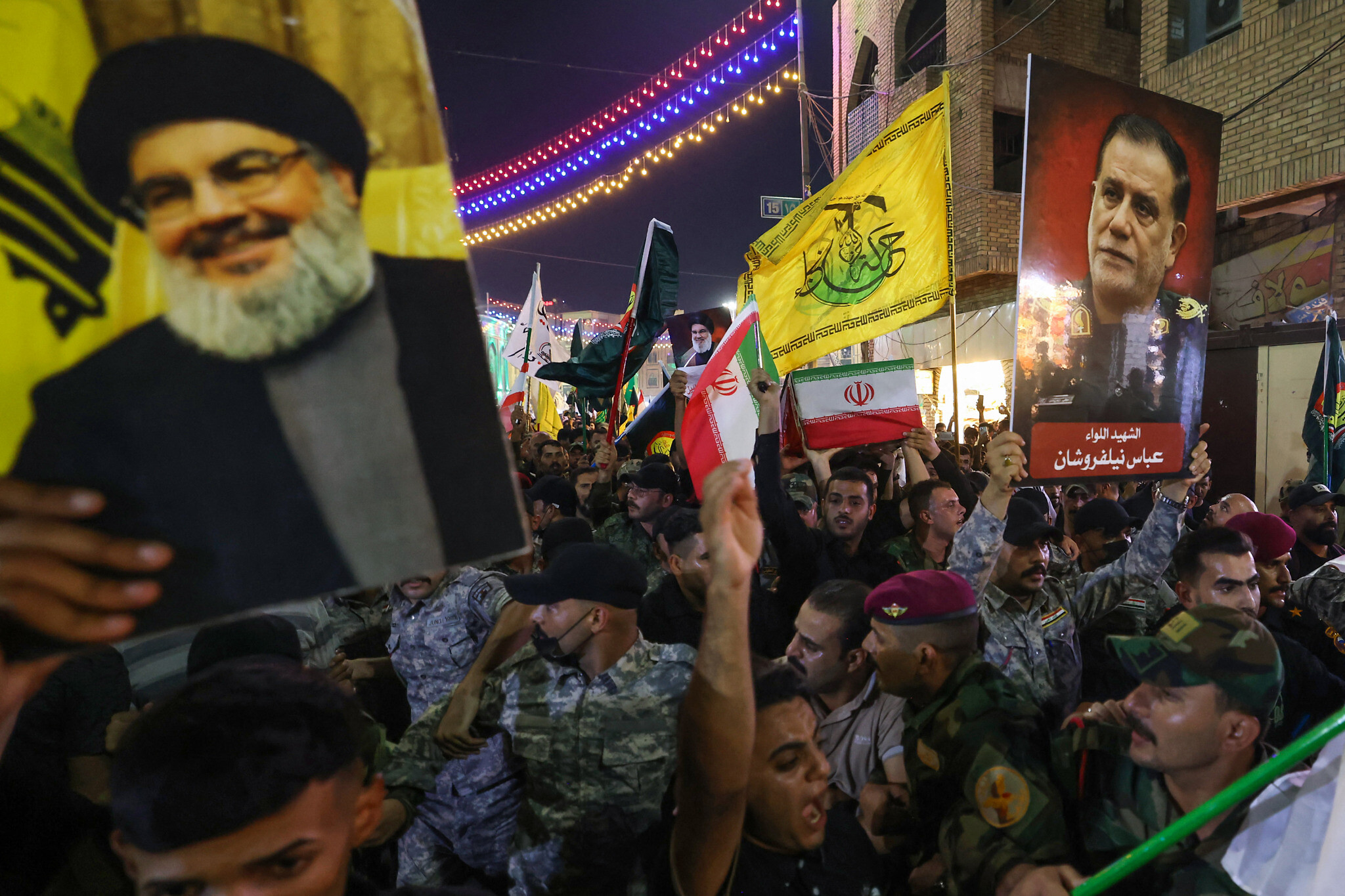
People carry the coffin of Iran’s Islamic Revolutionary Guards Corps (IRGC) commander Abbas Nilforoushan during his funeral procession near the Imam Hussein shrine in Iraq’s city of Karbala on October 14, 2024. (Ahmad AL-RUBAYE / AFP)
Germany led the effort within the EU to convince Italy, France, Spain, and Portugal to agree to back the move, the official says, adding that there were many other European states that joined in as well.
“We tailored our messages,” said the Israeli official of the years-long effort to get all 27 EU states to agree.
“The IRGC portfolio allowed us to speak about wide-ranging terror activity across many fields: terror within European states, arms transfers to the front in Ukraine, proxy activity and human rights violations. Through our missions, we tailored the message to what most resonated in each country, and we can point to concrete shifts.”
“That doesn’t mean everything happened because Israel acted,” the official clarified. “It means there was willingness, and we served that willingness with the right messages.”
A January 14 phone call between Foreign Minister Gideon Sa’ar and his French counterpart Jean-Noël Barrot was a key element in convincing Paris to change its mind and support the designation, claimed the official.
There was also a seminar on the IRGC hosted by the US in Budapest last week that many countries attended, according to the Israeli official.
EU expects dialogue with Iran to continue
Despite concerns from some capitals that a decision to label the IRGC a terrorist organisation could lead to a complete breakdown in ties with Iran, Kallas told reporters on Thursday morning that “the estimate is that still the diplomatic channels will remain open.”
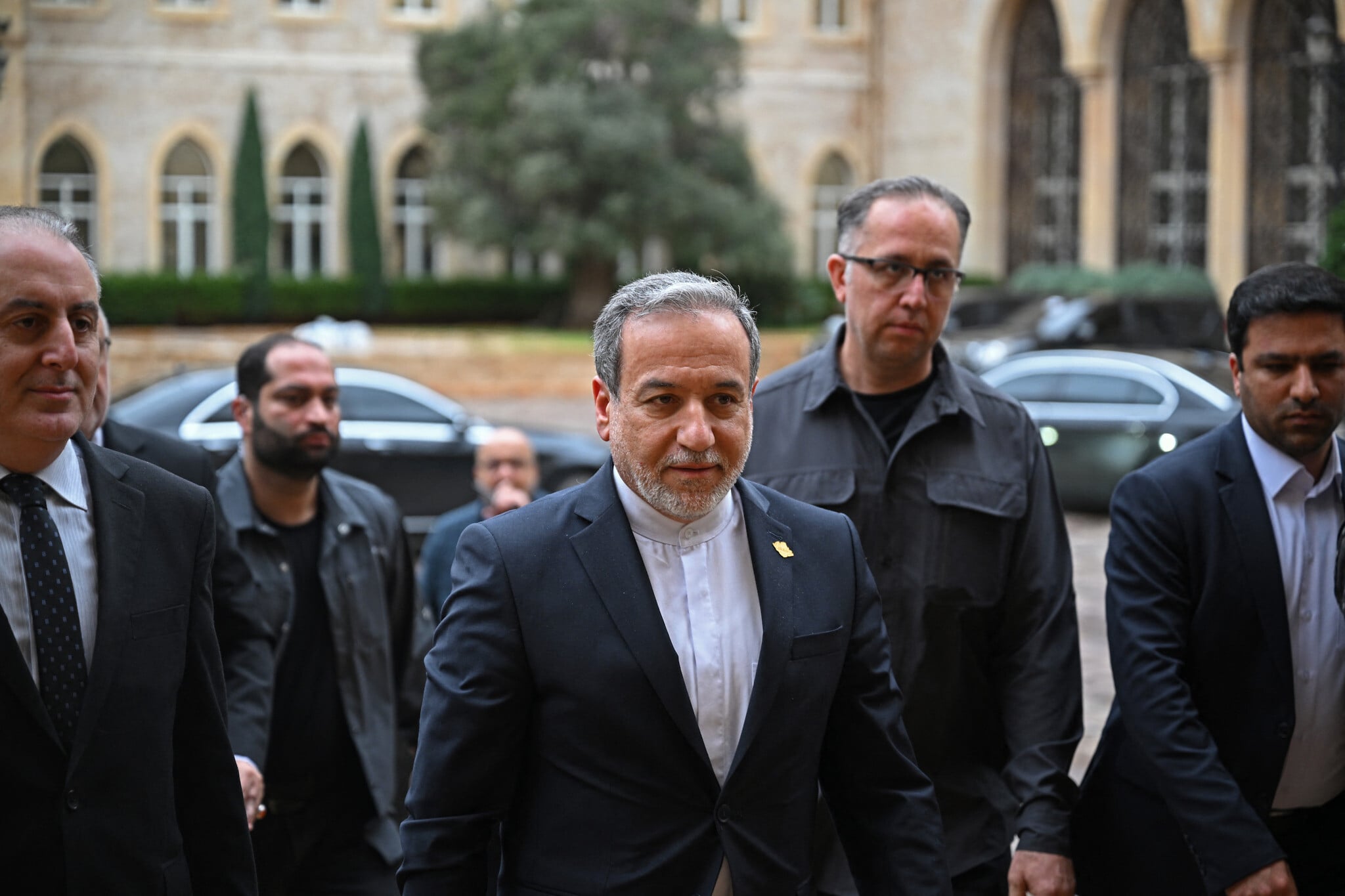
Iranian Foreign Minister Abbas Araghchi (center) arrives at the government palace to meet Lebanon’s Prime Minister Nawaf Salam, in Beirut on January 9, 2026. (JOSEPH EID / AFP)
Italy’s Foreign Minister Antonio Tajani said the agreement “does not mean that we should not continue to engage in dialogue.”
The EU also adopted sanctions on Thursday targeting 15 individuals and six entities “responsible for serious human rights violations in Iran,” the Council of the European Union said.
Iranian Interior Minister Eskandar Momeni, Prosecutor General Mohammad Movahedi Azad, a number of IRGC commanders and some senior law enforcement officials were among those sanctioned, it said in a statement.
Entities sanctioned on Thursday include the Iranian Audio-Visual Media Regulatory Authority and several software companies, which the EU said were “involved in censoring activities, trolling campaigns on social media, spreading disinformation and misinformation online, or contributed to the widespread disruption of access to the internet by developing surveillance and repression tools.”
The EU also sanctioned four individuals and six entities connected to Iran’s drone and missile program and “decided to extend the prohibition on the export, sale, transfer or supply from the EU to Iran to include further components and technologies used in the development and production of UAVs and missiles,” the Council said.