
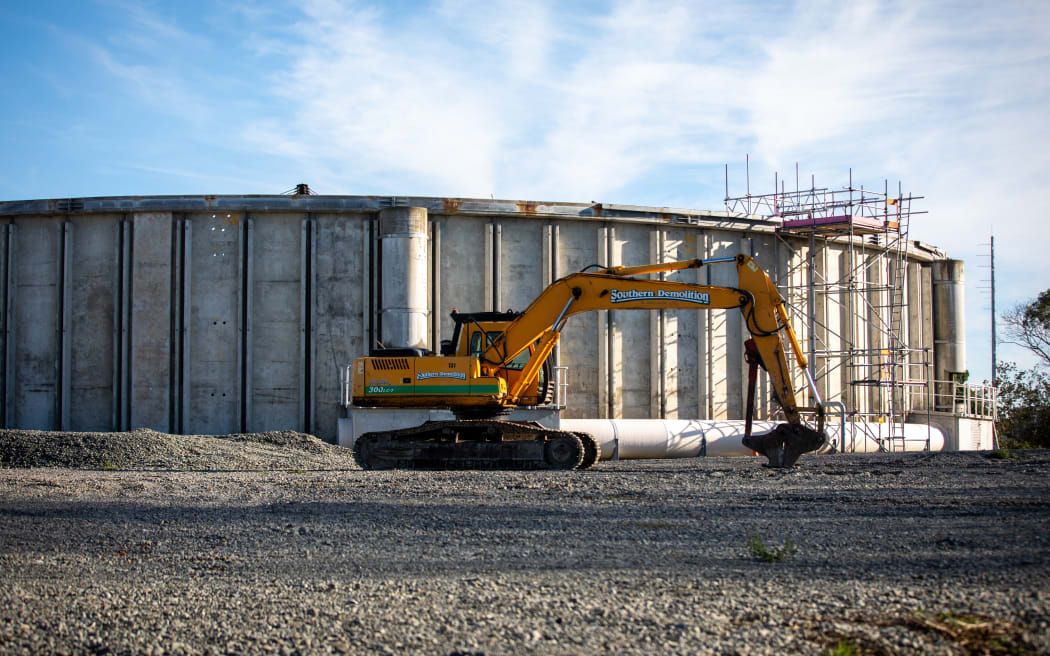
Christchurch’s Wastewater Treatment Plant.
Photo:
A resident of east Christchurch says the council should be communicating better with locals about a putrid stench from the city’s sewage treatment plant.
Offensive odours have plagued Bromley and neighbouring suburbs since a fire at the plant in 2021 but some neighbours believe the pong has become worse than ever in recent days.
The fire badly damaged the plant’s two trickling filters, affecting the quality of effluent flowing into the system.
The stench left people battling nausea, worsening asthma, sleepless nights and deteriorating mental health for months.
Christchurch City Council said recent heavy rain had affected the health of oxidation ponds and the stench could last for at least another week.
Woolston local and community advocate Rebecca Robin told Morning Report the smell was terrible.
“We’ve had to shut all of our windows and pretty much stay inside. For the people who live right next to the wastewater treatment plant, this is what it smells like for them all the time,” she said.
Work had started on a new $140 million sludge plant, with construction expected to take about three years.
“There’s going to be three more years. [The council] could potentially communicate with people more, not just by Facebook, and give the residents some more authority over what’s going on, let them be involved,” Robin said.
The smell could be dependent on the way the wind blew, she said.
“It’s been really bad since the fire. It’s definitely a toxic smell and it should’ve been prioritised a lot faster than what it has been,” she said.
Environment Canterbury said since Monday, it had received 530 odour reports from east Christchurch suburbs, which were likely related to the plant.
The regional council said it was working with Christchurch City Council on odour mitigation measures.
Christchurch City Council head of three waters Gavin Hutchison said the council expected higher-than-normal odour levels to continue for at least another week.
“The recent period of heavy rain has significantly affected the health of several oxidation ponds. Monitoring from this week showed a drop in dissolved oxygen levels across the system. These low-oxygen conditions create an environment where odour is much more likely to be released,” he said.
“This is different from what we’ve seen in the past. During previous wet-weather events, the additional rainfall has generally supported pond recovery, improving overall pond health and preventing odour issues. However, this time the ponds have not responded in the same way. Our staff are continuing to collect and analyse data to understand why these conditions have developed on this occasion.
“We’ve also seen increased loading to the ponds, which also put more pressure on the ponds, increasing the likelihood of odour.”
Hutchison said staff were trying to minimise the odour by using all available tools to improve the ponds’ water quality.
“We know odour impacts are disruptive and we want to reassure our community that reducing them is a priority for us,” he said.
Sign up for Ngā Pitopito Kōrero, a daily newsletter curated by our editors and delivered straight to your inbox every weekday.