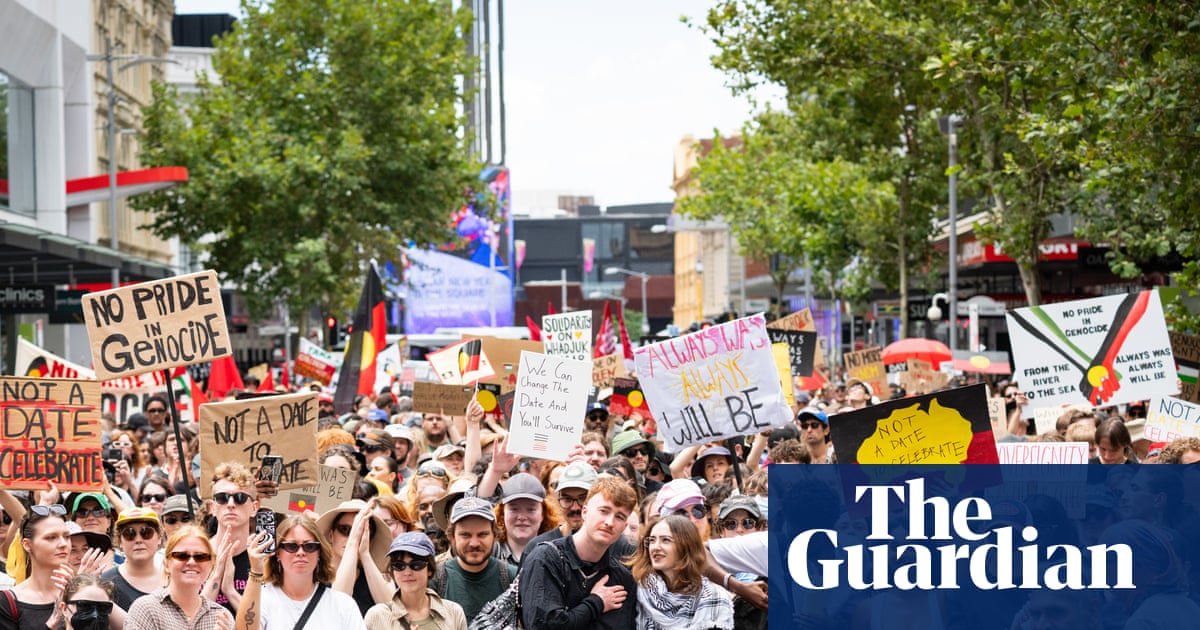
When an object was thrown off a balcony into a crowded square in the heart of Perth’s main shopping mall, it did not register as a threat, with many thinking it was an empty coffee cup or a piece of rubbish.
But police have since said the device, which was allegedly lobbed into the middle of an Invasion Day rally on Monday, was a homemade bomb that had the potential to explode and injure or even kill “many people”.
Nadine Highfield, a Wangkatha woman and mother of two, attended the packed 26 January rally with her sister. They were among the 2,500 people gathered at Forrest Place to hear speeches before marching on to Stirling Gardens. The area in front of the stage, where the device landed, was reserved for the most vulnerable: parents pushing prams, people in wheelchairs and elders. Suddenly, Highfield saw dozens of police running towards the stage.
“I said to my sister, this isn’t normal. I’ve been to other protests and rallies before. Normally the police will just observe,” she says.
“Where it landed, those are people in wheelchairs. There were babies and prams. Like, it wouldn’t have been people maimed – they would have died. That’s where kids were, fucking kids who would have been eye level with that shit.”
Highfield says the attack has left her and her sister shaken. “I’ve been really weepy, my sister is really upset crying,” she says.
Police arrested a 31-year-old Perth man at the rally and charged him with two offences, including intent to do harm in such a way as to endanger life, health or safety, and with making or possessing explosives under suspicious circumstances.
Two days later, the Australian federal police, Asio and the Western Australian joint counter-terrorism team released a joint statement saying they were investigating the incident “as a potential terrorist act”.
‘It’s very surreal’
The incident shocked many in the Aboriginal and Torres Strait Islander community, not just in Perth but across Australia.
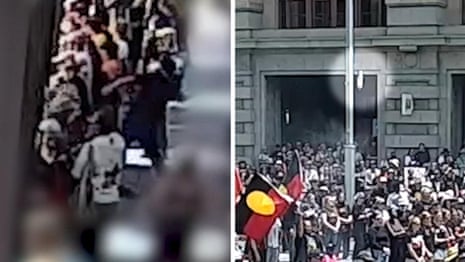
The moment an alleged homemade bomb was thrown at Perth Invasion Day rally – video
In WA in particular there are increased fears over safety of the community, overlayed with fears about a general rise in white nationalism and racist sentiment over the past few years.
In particular, HIghfield says, she was shocked there had not been an outpouring of anger or concern among the wider Australian population, despite it dominating conversations within First Nations communities. It’s a sentiment echoed by many First Nations people who spoke to Guardian Australia.
“It’s very surreal. It’s like upside-down land, where really bad things that happen but it’s not a big deal if it happens to Black people,” Highfield says.
She says a recent death in custody in Kalgoorlie as well as the cancellation of a popular Survival Day festival in the lead up to 26 January have added to the grief and anger. “It’s really heavy for mob over here,” she says.
“I think underneath it all is also that sense of that colonial violence, this could have killed people and no one’s saying shit, it’s all silence.”
Tanesha Bennell, 25, has been going to Invasion Day rallies since she was a small child. As a Noongar traditional owner, whose lands include the area where Perth now sits, she says she feels a deep sense of responsibility to keep those who visit safe. “It’s part of our ways that if we have guests or visitors for us to look after [them] and we weren’t able to do that as traditional custodians because of the actions of someone who was inciting harm,” she says.
Sign up: AU Breaking News email
She criticised politicians for being slow to condemn the incident. Premier Roger Cook condemned the incident in a joint press conference with police on Monday night, while Anthony Albanese and others followed suit in following days, but officials did not use the language of a potential terror incident until more than 48 hours had passed.
“There’s an ongoing gaslighting, it feels, from media and government,” Bennell says. “It’s like our trauma is being denied before we’ve even began to process it.”
The Wadjuk Noongar woman said the slow evacuation out of Forrest Place was partly due to community mistrust of police. “Mob don’t have good relationships with police and when we’re having all these big feelings and trying to heal and mourn together, and then we see all of these police in uniforms. It’s so distressing for some of our community,” she said.
Meeting with police
One of the rally’s organisers, Roxanne Moore, criticised many media outlets and politicians for not giving the incident the attention it deserved.
“I think it says so much about this country, the media silence since Monday. Racism is killing our people in this country, systemically and directly,” she told Guardian Australia.
Moore said she had since spoken to many community members who were traumatised after learning what had been thrown into the crowd.
“We are so lucky that the ancestors were looking out for us … but it’s terrifying and I’m hearing from my friends that people are scared to leave their house,” she said. “But we won’t be silenced … they can’t break our ‘wirin’ [spirit].”
Megan Krakouer was among a group of Aboriginal leaders who met with the WA police commissioner. Photograph: Richard Wainwright/AAP
About 20 Perth elders met with the WA police commissioner, Col Blanch, on Wednesday to discuss concerns about the police response.
Megan Krakouer, a Menang Noongar woman who attended the meeting, said elders raised concerns about the response time when police were first presented with the alleged device; and about whether the incident was being investigated as a potential hate crime.
Among the elders was Minang-Goreng Noongar man Dr Jim Morrison, who heads Yokai, an organisation that supports survivors of the stolen generations. He said it was an important moment for the community to bring their concerns to police, and that police listened.
“Everyone is worried, scared, they’re worried for their children, their grandchildren’s welfare after an event like that,” Morrison said.
“I think the referendum has created a lot more racists than we thought. I think Bondi has put people on edge as well.”
Indigenous Australians affected by this event can call 13YARN on 13 92 76 for information and crisis support