A Bay Area environmental group is pushing for more restrictions and protection at one of the largest shale reefs in North America. As part of its proposal to the state, all fishing would be banned.
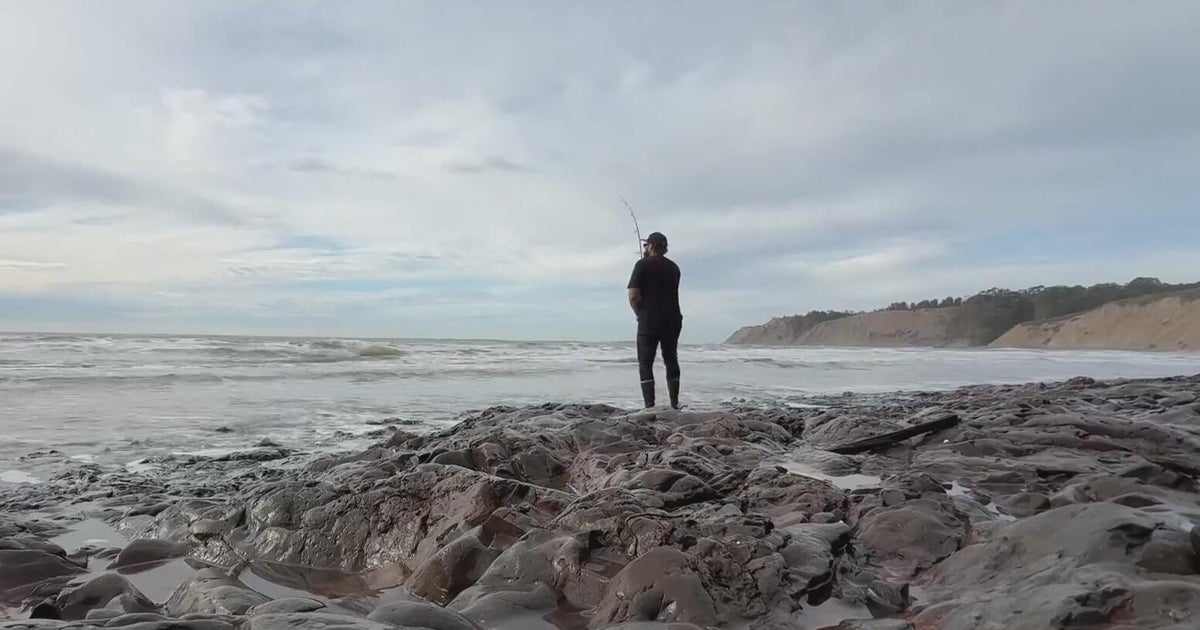
The sounds of waves and fishing from the shoreline are some of the reasons Zach Fuller visits Duxbury Reef in Bolinas.
“I love taking the time to learn how to be patient with it, and learning about how the jetties in the ocean work, about how the fish population has changed over time,” Fuller said.
He considers himself an environmentalist, but opposes the latest effort to redesignate what is already a Marine Conservation Area into a fully protected State Marine Reserve, which would ban even recreational fishing.
“Getting a fish, bringing it back home, has a reward pathway built into it, and appreciation for the health of the reef,” Fuller said.
Protecting intertidal species, including octopus, is one of the reasons driving the Environmental Action Committee of West Marin.
Ashley Eagle Gibbs is the executive director. Her proposal would expand the protected area nearly threefold.
“Our volunteers have seen invertebrates chiseled off the reef. It’s a highly sensitive, vulnerable environment. It’s also a pretty remote location, so there’s limited enforcement,” Eagle-Gibbs said.
EAC says expanding the protected territory would not limit public access to the reef.
Redesignating it and banning all fishing at the reef and within 1,000 feet of the low-tide line on an eight-mile stretch of beach, Gibbs said, would reduce confusion about what people can and cannot take.
“When the petition was submitted, it had community support, wide stakeholder support from national parks, sanctuaries, professors, scientists, NGOs, and local community members,” Eagle-Gibbs said.
Some local residents are working with EAC, but others say recent public meetings have been extremely contentious.
Other locals, like Patrick Sullivan, who runs Coast Cafe, which offers locally caught fish on its menu, said it’s not just recreation and commercial fishermen who would be impacted by the ban.
“It’s a huge part of the story. We get to share with our customers about where their food comes from and knowing that it sustains this local economy,” Sullivan said.
For Fuller, allowing anglers to teach others how to fish responsibly only strengthens desires within the community to protect the coastal environment.
“I just think they should have a broader perspective about what this is going to mean for 2030, and years into the future. I mean, if nobody’s ever allowed to fish here, that’s a bummer,” Fuller said.
The tides are shifting, but in which direction, in this case, is uncertain.
Marin County Supervisor Dennis Rodoni recently sent a letter to state officials withdrawing his initial support of the proposed change.
Part of that letter reads, “I am respectfully asking for Commissioners to set aside, or withdraw, the petition. I request that Commissioners instead focus on creating an opportunity for meaningful community engagement and feedback – outside of a regulatory rulemaking context – to help develop a collective vision that reflects the local cultural, ecological, and recreational importance of Duxbury Reef.”
The California Department of Fish and Wildlife plans to release a draft evaluation by March.
The State Fish and Game Commission will hold a public listening session on April 21 in Half Moon Bay.