The recently concluded Free Trade Agreement, or FTA, between India and the European Union is unprecedented. Few bilateral arrangements in modern trade diplomacy can match the scale or ambition of what the ‘mother of all deals’ has unlocked.
The numbers alone justify the excitement. The agreement is expected to double EU exports to India by 2032, with tariffs removed or reduced on 96.6 per cent of EU goods entering the Indian market. In return, the EU will liberalise tariffs on 99.5 per cent of Indian goods over a seven-year period. Once ratified by the European Parliament, formal signing is expected later this year, with entry into force projected for early 2027.
The next test will lie in the boost to Indian manufacturing and infrastructure modernisation, should the bilateral investment treaty follow and investments abound.
Show Full Article
As the initial euphoria settles and the hard legal work of translating political intent into binding text begins, some wider consequences of this India-EU FTA should be discussed.
In particular, there is a cousin arrangement—born not out of the ‘mother of all deals’ itself—but out of the EU’s existing trade architecture.
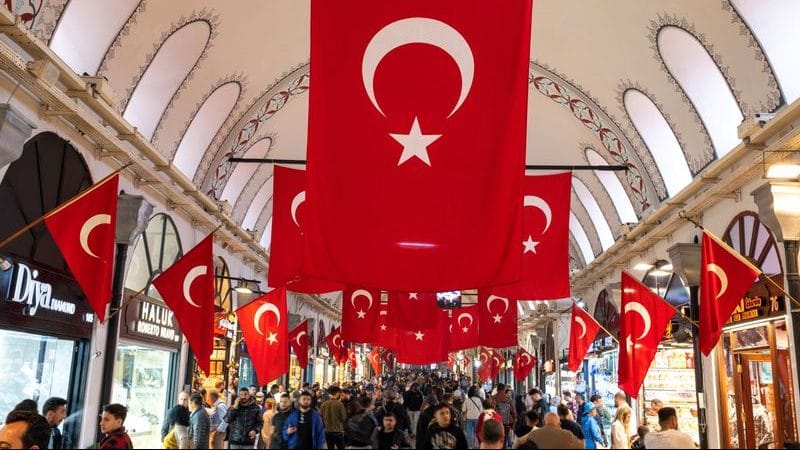
New Delhi must now understand and engage with the EU’s customs union with Turkey and its implications.
Also read: India-EU FTA will change how US looks at trade with New Delhi. We must be ready
Customary customs union
In recent years, Turkey has largely featured in Indian strategic discourse for the wrong reasons. Erdoğan’s support for Pakistan on the internationalisation of Kashmir, Turkey’s growing defence-industrial synergies with Pakistan and Bangladesh, and its role in fuelling hostile narratives against India—especially after Operation Sindoor—have cast Ankara in an almost uniformly negative light of discomfort, distrust and strategic concern in New Delhi.
The signing of the India-EU agreement, however, provides India with a different opportunity to revisit the Turkey question—this time with greater nuance and, for a change, from an economic and trade perspective.
This issue featured in expert discussions held recently in New Delhi during a conference on India-EU Relations in a Multipolar World, co-organised by CSDR and St Antony’s College, University of Oxford. Coinciding with the EU-India summit, experts discussed how India would address the EU’s existing customs union with Turkey. Does the India-EU FTA create unintended exposure for Indian markets or vice versa? Are there risks of trade diversion or hidden benefits for non-EU partners?
That brings us to the question: are there opportunities that India could leverage?
To answer these, one must first understand what a customs union is—and why Turkey is uniquely asymmetric in its relationship with the West.
Established in 1968, the EU Customs Union is a foundational pillar of European economic integration. It eliminates customs duties among members, establishes a common external tariff for goods entering the union, and enables seamless internal trade. It also serves broader goals, such as protecting consumers, facilitating innovation and strengthening the EU’s position in global trade.
While primarily an EU construct, three non-EU countries have joined customs union with the bloc—Turkey, Andorra and San Marino. These arrangements allow the free movement of specific categories of goods, different for each case, without customs duties. They do not, however, confer decision-making powers or broader market access comparable to EU membership or the benefits of EU-signed FTAs.
Also read: India-EU agenda can fundamentally alter global geopolitics—if Europe stands up to Trump
Half a union and complicated commitments
Turkey’s customs union with the EU came into force on 1 January 1996, under Decision No. 1/95 of the EC-Turkey Association Council. This decision was itself rooted in the 1963 Ankara Agreement. That arrangement required Turkey to adopt the EU’s Common External Tariff and align its commercial policy with that of Brussels for goods that were covered under the formalities.
The customs union was never meant to be a permanent objective in itself. It was conceived as a transitional step toward eventual EU membership. Nearly three decades later, Turkey remains outside the EU, with accession talks effectively frozen since 2018 due to persistent concerns over democratic backsliding, the rule of law and human rights abuses under Recep Tayyip Erdoğan.
Despite this political stalemate, Turkey’s economic integration with Europe remains reasonably deep. The customs union has played a significant role in Turkey’s industrial modernisation and export growth, eventually making the EU Ankara’s largest trading partner. At the same time, the arrangement continues to be structurally limited, if not flawed—Turkey must align with EU trade policy without having a seat at the table, creating imbalances and constraints, especially as the global trade landscape evolves.
Also read: EU is evolving into a security actor. It opens new doors for India
An uncomfortable conversation?
Under the newly concluded India-EU deal, Indian goods gain preferential access not only to EU markets but also to markets of countries that have customs union agreements with the EU, including Turkey (as well as Andorra and San Marino). However, the reverse does not apply. Turkish goods do not gain any preferential access to India simply because Turkey is part of the EU customs union.
This asymmetry is fundamental. Turkey must align with the EU’s external tariffs, but it cannot leverage EU FTAs with third countries—such as India—for its own exports unless India separately agrees.
For now, this dynamic works in India’s favour. However, talks on updating the EU-Turkey customs union were launched a few years ago and have continued into 2026, with Ankara pushing for an expanded scope that includes services, agriculture and public procurement. No breakthrough has yet occurred, but that is not the same as saying that it will never happen.
Remember that, in the eventuality of a diminished or even adversarial US role in NATO, Turkey has the largest land forces in the alliance and remains a staunch supporter of Ukraine, with reasonable clout in Russia.
It makes sense for Brussels to keep Turkey actively engaged in the European system, even without full accession, which of course seems impossible under Erdoğan.
India-Turkey trade has grown steadily despite political tensions. In FY25, bilateral trade reached around $10 billion, heavily skewed in India’s favour. Indian exports dominate the relationship, and this surplus is likely to widen as the India-EU FTA comes into force next year. Indian companies have already invested around $126 million in Turkey, while Turkish investment in India stands at $210.47 million.
Paradoxically, this creates an opening for India.
Also read: Wines, gems & surgical equipment set to get cheaper. The big gains for India & EU from historic FTA
A pragmatic compartmentalisation
It has been confirmed by Indian authorities that there is no immediate danger of Turkish goods flooding Indian markets through the back door of the EU. That fear is misplaced. But there is a strategic opportunity for India to use the India-EU FTA as a structured channel to recalibrate economic engagement with a difficult but consequential partner.
The rationale here is not naive ‘good-boyism’, nor is it an argument to underplay Turkey’s growing defence-industrial footprint in Pakistan and Bangladesh (and soon, possibly Sri Lanka as well).
Rather, the rationale for pragmatism is grounded in strategic realism. Trade engagement can act as a stabiliser—a way to balance hostile energies in volatile geopolitical times and prevent further strategic drift in India’s neighbourhood.
If Turkey succeeds in updating its customs union with the EU to make it more comprehensive and economically viable, Indian exporters stand to benefit even more. What remains unclear is what benefits such an upgrade could bring for Ankara vis-à-vis India. At a time when India already enjoys a surplus with Ankara, it would be beneficial to use it as a leverage—not a vulnerability.
The final argument is perhaps the most compelling.
India continues to pursue a complex, compartmentalised relationship with China despite a $113 billion trade deficit, deep supply-chain dependencies in critical sectors, and Beijing’s active support for Pakistan—including during Operation Sindoor—in addition to the challenges along the LAC.
If New Delhi can adopt a pragmatic, interest-based approach with Beijing under far more adverse conditions, there is little reason not to do the same with a smaller, more agile Ankara.
Allowing India’s neighbours to drift further into Turkey’s orbit would only reinforce President Erdoğan’s anti-India narrative. Engagement, by contrast, would create more options. In that sense, India-EU FTA, in its scope and scale, goes beyond a mere trade agreement.
Swasti Rao is a Consulting Editor (International and Strategic Affairs) at ThePrint. She tweets @swasrao. Views are personal.
(Edited by Prashant Dixit)