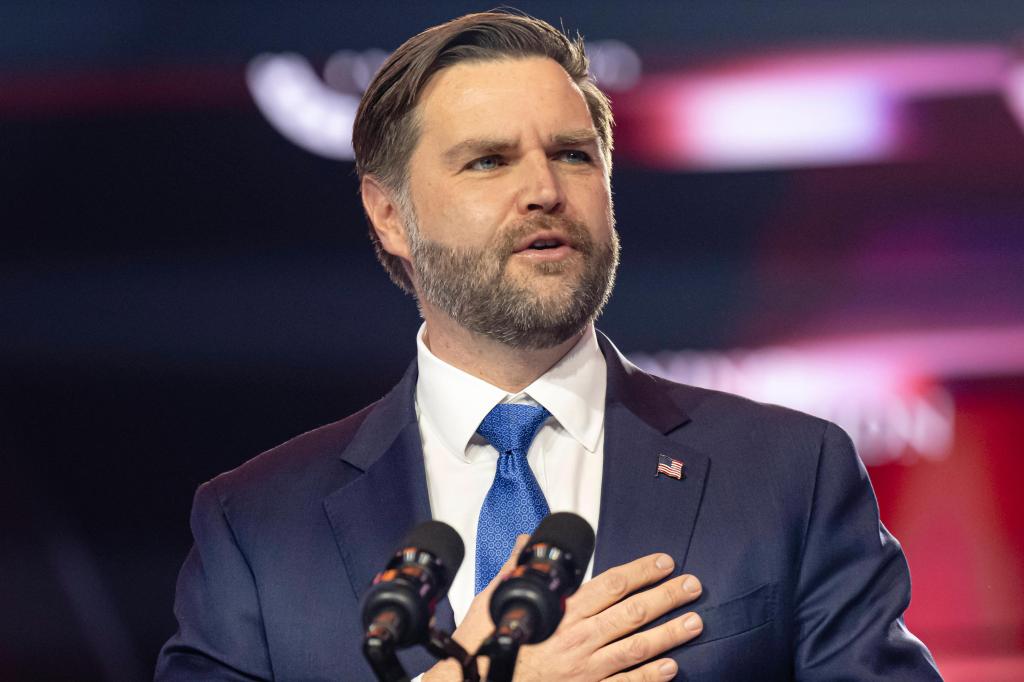
When JD Vance was announced as an attendee and speaker at this year’s annual March for Life, an unsurprising conversation ensued. Is the Trump-Vance administration publicly and aggressively anti-abortion, as many claim on the Left? Or, as recent pro-life advocates have insisted, is the Trump-Vance administration the “least pro-life” Republican administration in history?
This is a good stand-in for the bigger question: what does this administration really believe? What policies does it actually care about and remain consistent on? As the Republican Party has significantly shifted and realigned from the party of Reagan and Goldwater to the party of Trump, this remains an open and important question.
For President Trump, there were a couple of clear priorities from the time he stepped off the escalator in 2015: he was worried that America was being overrun due to an out-of-control immigration system and that our nation was getting a bad deal through terrible trade policy. On other issues — from social conservative ones like abortion to foreign policy — he polled his voting base, listened to advisers and made compromises. If pro-lifers or anyone else is surprised or feels betrayed, perhaps this is more a sign that they haven’t been paying close enough attention. Trump has always wanted to make America great again by fixing the massive problems he saw in immigration, trade and the economy. Everything else was always negotiable.
But President Trump is a lame duck and his time as head of the Republican Party is waning. And the way the political landscape is shaping up, 2028 will not be a “this is anybody’s race” kind of open primary. JD Vance is the heir apparent. The 2028 Republican nomination, and with it the future of the post-Trump Republican Party, is likely in the hands of JD Vance.
So perhaps the real question is not about Trump but Vance. What does JD Vance really care about? What will be the consistent priorities that would shape a Vance candidacy and, more important, a Vance presidency?
I have spent quite a bit of time reading Vance’s op-eds, essays, speeches and interview transcripts, from the time he emerged in public life in 2016 to the present. Vance’s writing from his pre-Senate candidate days (likely his most candid work) is of particular interest.
On the domestic front, Vance is deeply affected by his experiences growing up in a small town in middle America, a town that had seen better days. Throughout his writings, he yearns for a nation in which as many ordinary people as possible can get married, have children, and raise a family on a working-class income provided by a good, meaningful job.
On foreign policy, Vance is also affected by personal experience, as a Marine who was actually deployed to the Middle East. More than anyone else in the Trump administration, Vance represents the growing movement in the Republican Party that seeks to end America’s status as the adventurous, aggressive world police force. This does not mean isolationism; Vance (and most of those in favor of foreign policy restraint) accept that America has security interests that warrant the use of military force. But, as revealed by the leaked Signal messages before the Trump administration bombed the Houthis in the Red Sea, Vance is a strong voice against unnecessary military intervention.
We can expect an administration focused on creating an environment where more people are able to have stable marriages and children. We can expect Vance to prioritize improving the lot of the average American worker. And we can expect a drastic reduction in the instances of use of military power, especially when intervention is not in the direct and immediate interests of the nation.
These priorities do not reveal exact policy proposals. Remember that Trump’s priorities (immigration and trade) guided him to try different things. For example, in the first administration, building the wall was the big goal. In the current administration, building up ICE and the deportation regime has taken priority.
In the same way, expect JD Vance to try different things to reshore manufacturing, to create a better atmosphere for family life and the raising of children, and to keep America out of new military conflicts. American families, American workers, and foreign policy restraint will be the guiding principles to understand what a JD Vance presidency will look like in the post-Trump world.
Frank DeVito is senior counsel and director of content at the Napa Legal Institute, a Washington, D.C.-based network focused on faith-based nonprofits. This article was originally published by RealClearPennsylvania and made available via RealClearWire.