What was the point of that then?
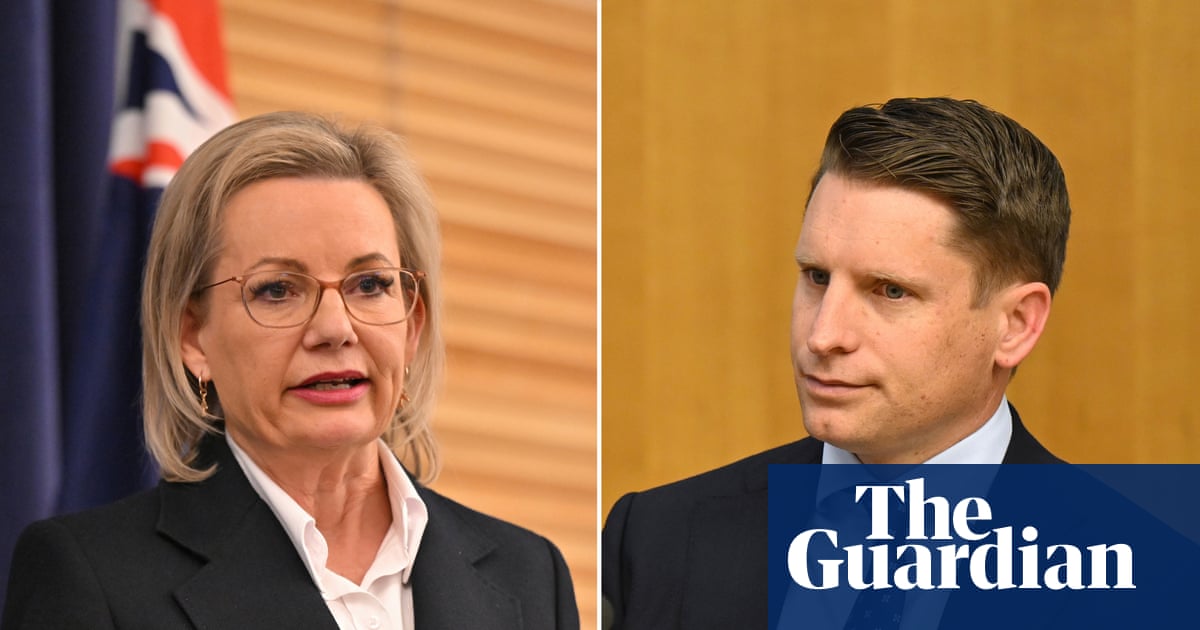
That is the question some Liberals MPs – and no doubt some bemused voters – are asking after Andrew Hastie abandoned plans to challenge Sussan Ley for the party leadership after a week of feverish speculation.
It would be technically incorrect to report the former Special Air Service soldier pulled out of the contest. He was never officially part of the contest, and there was never officially a contest.
That is the bizarre state of things after a week of political shadow-boxing that has wounded and embarrassed Hastie, a man who has long wanted to be leader.
So, how did we get here and, more importantly, what happens now?
The speculation about Hastie’s leadership challenge began in earnest last Friday when an active group of supporters launched a campaign to install him as leader after Sussan Ley presided over the second Coalition breakup in eight months.
But the Western Australian’s campaign really started months ago when he began laying a nationalist vision for the country on energy, immigration and manufacturing that doubled as a leadership pitch for a party drifting without direction.
Hastie’s decision to quit the shadow cabinet in October allowed him to prosecute the agenda unrestrained and he sought to confirm theinevitable run when the opportunity arose.
The opposition’s disastrous position in the polls had most conservative MPs preparing for a spill around the time of the federal budget in May.
But as the Coalition imploded last week, first Hastie’s allies and then Hastie himself saw an opportunity.
The 43-year-old was seen as a candidate who would offer generational change and a vision to reclaim rightwing voters who are fleeing to Pauline Hanson’s One Nation.
At the time, some supporters envisioned a scenario in which Hastie’s ascension to the Liberal throne would appear so preordained that fellow right-faction contender Angus Taylor would step aside and then Ley herself would allow for a peaceful handover of power.
That was never going to happen. This is politics.
Even if Hastie had secured the right’s blessing, it is doubtful – or at the very least debatable – whether enough of his more moderate colleagues would have endorsed a man with some extreme social views, including on abortion.
But Taylor, who at 59 doesn’t have as much time on his side as Hastie, never intended to stand aside.
After “secret” talks between the pair in Melbourne on Monday ended without a resolution, Hastie canvassed colleagues and confidantes to gauge what support he had to push on.
He received a clear answer.
“Having consulted with colleagues over the past week, and respecting their honest feedback to me, it is clear that I do not have the support needed to become leader of the Liberal Party,” he said in a statement issued just after 4pm on Friday afternoon.
“On this basis, I wish to make it clear I will not be contesting the leadership of the Liberal party.”
It is the second time Hastie has “pulled out” of a Liberal leadership contest after declining to put up his hand after the 2025 election.
Sources familiar with Hastie’s thinking say he came to this decision himself.
There is no deal with Taylor nor any bad blood, sources insist, with allies hopeful Hastie can play a significant role alongside his conservative colleagues if he does challenge and defeat Ley.
Late on Friday, a source close to Taylor said it was a “question of when, not if” the shadow defence minister would launch a formal bid to unseat the party’s first female leader.
The when is not expected to be next week, buying Ley precious time.
Ley narrowly defeated Taylor after the election and, while the numbers in the Liberal party room have shifted since, a reversal of that result would not necessarily be guaranteed.
Hastie’s allies are cautioning against assuming that the Western Australian’s supporters would automatically shift their allegiances to Taylor.
They remain hopeful the party will turn to him at some point.
Just not yet.