
 Malta Chamber of SMEs,
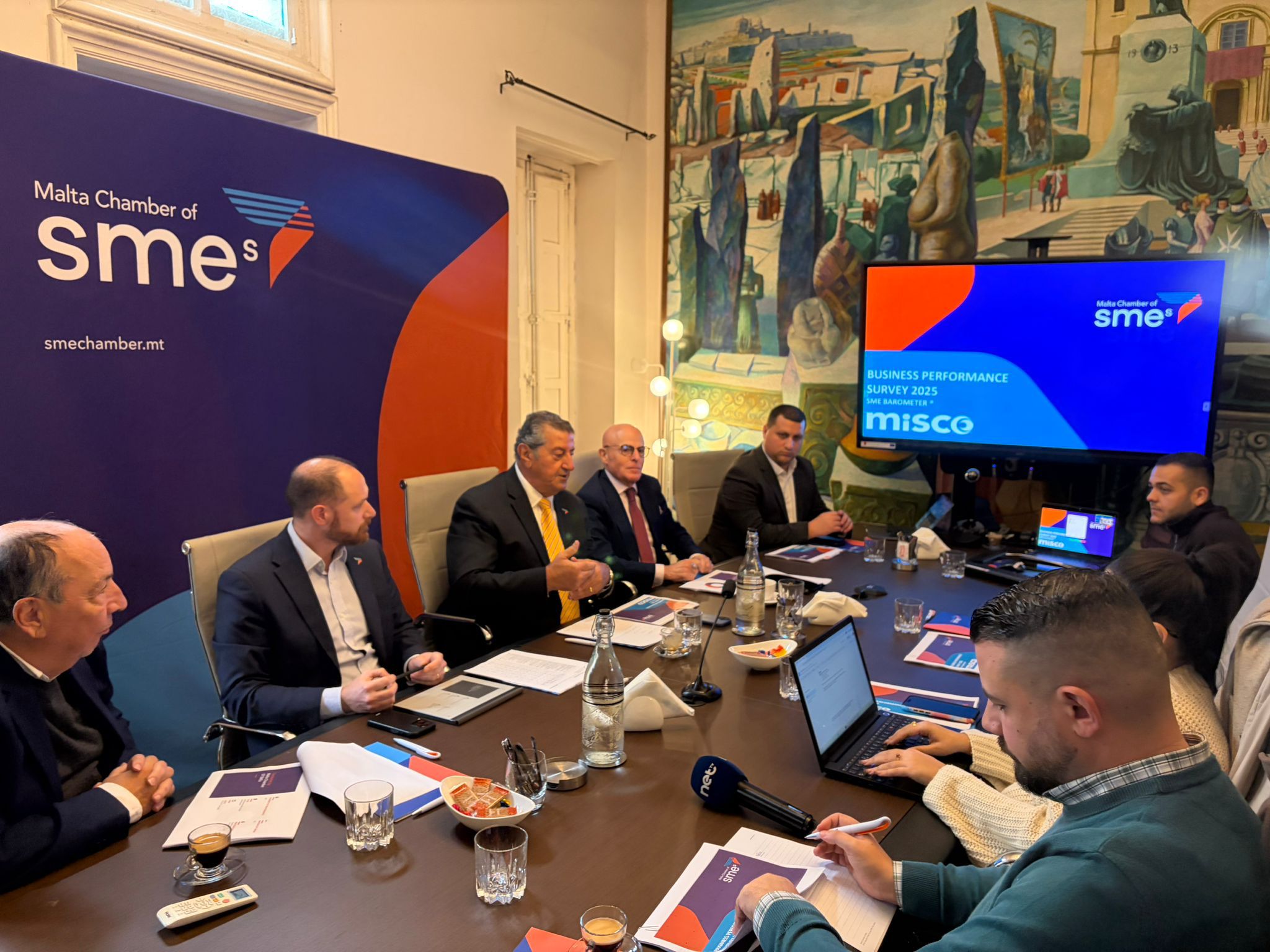
More than a third of Maltese businesses reported declining profitability in 2025, according to a survey released today by the Malta Chamber of SMEs, painting a sobering picture of the challenges facing small and medium-sized enterprises despite some growth.
The Business Performance Survey 2025, conducted in January with 351 businesses, found 35% were less profitable in 2025 compared to the previous year, whilst only 26% reported increased profitability and 39% maintained the same levels.
The findings proved stark for the festive trading period, with almost three-quarters of businesses either performing worse than the previous year or registering no improvement. Only 26% recorded better sales compared to 2024, whilst 44% reported declining turnover.
Despite profitability concerns, 43% of businesses saw turnover increase during 2025, suggesting revenue growth did not necessarily translate into improved profit margins as operational costs mounted.
Rising operational costs emerged as the primary challenge, cited by 45% of businesses as the main reason sales remained stagnant. Employee wage and salary costs topped price increase drivers at 59%, followed by the cost of imported products at 40%.
Businesses identified price sensitivity (33%) as another factor constraining sales, whilst increased competition (48%) and unfair competition or illicit trading (22%) led to decreased turnover.
Customer spending power decreased for 38% of respondents, whilst labour shortages and bureaucracy were flagged as obstacles increasing business costs.
On the positive side, businesses that achieved sales increases attributed success to better marketing (38%) and improved sales strategies including offers and deals (36%). Increased stability compared to 2023 (13%) and improved consumer confidence (13%) also contributed to growth.
Looking ahead, the business community expressed pessimism about Malta’s direction. A striking 62% of businesses believe the country is moving in the wrong direction, a sentiment that persisted throughout 2025.
When asked about investment intentions, 80% of business owners said they either will not invest or are uncertain, with only 20% prepared to increase investment during 2026.
Expectations for 2026 remained muted, with just 28% anticipating the year will be better than 2025, whilst 52% expect the same and 20% believe it will be worse.
Business owners identified the most urgent issues requiring government attention as lack of good governance (33%), population growth (30%), corruption (24%), rising cost of living (24%), and protection of quality of life (21%).
Their pressing challenges included employee shortages (41%), unfair competition (29%), excessive competition (24%), and processing visa applications for third-country nationals (17%).
The Nationalist Party seized on the findings as vindication of its criticisms. Shadow Minister Robert Cutajar stated the survey “confirms what the Partit Nazzjonalista has long been saying: that our country needs a new economic model based on quality that attracts investment”.
“Malta and its economy require a change in direction that only the Partit Nazzjonalista can deliver,” Cutajar declared. “Those who created the problem cannot be the solution.”
The Opposition highlighted that SME owners cited rising cost of living, concerns about quality of life, and lack of leadership as the top reasons Malta needs a change in direction.
“The Maltese people want change, and this latest survey by the Malta Chamber of SMEs confirms it,” Cutajar concluded. “Only a new Nationalist Government can offer renewed hope and peace of mind to the Maltese and Gozitan families, and to business owners in our country.”

