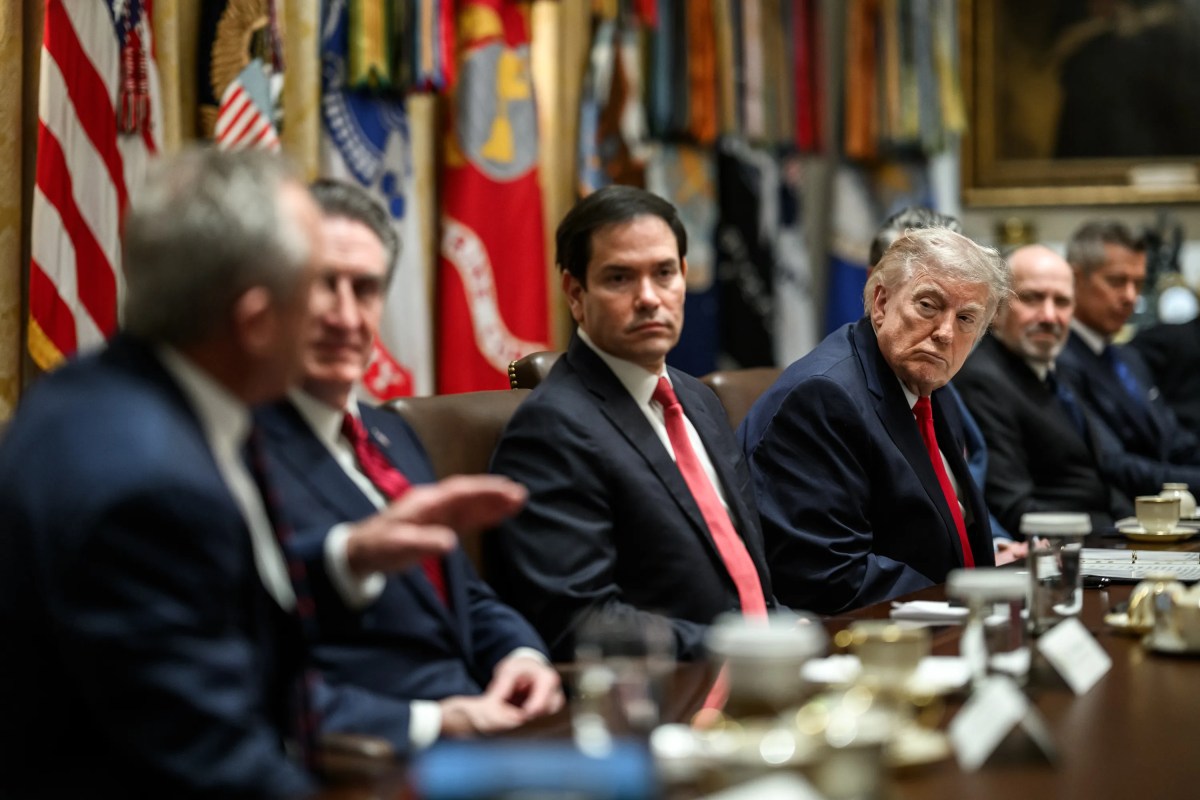
 White House.gov
In one of the scariest moments in modern history, we’re doing our best at ScheerPost to pierce the fog of lies that conceal it but we need some help to pay our writers and staff. Please consider a tax-deductible donation.
Posted by Joshua Scheer
Donald Trump is taking his economic threats international. Fresh off Davos, Trump launched an unprecedented attack on Canada, threatening to impose a 50% tariff on all Canadian aircraft sold in the U.S. and decertifying every new plane made in Canada, including Bombardier jets, until Gulfstream — a “Great American Company” — is certified to his satisfaction.
In a social media post, Trump claimed Canada had “wrongfully, illegally, and steadfastly refused to certify the Gulfstream 500, 600, 700, and 800 Jets,” and accused Ottawa of “effectively prohibiting” Gulfstream sales in Canada. Bombardier shares tumbled 8% in Toronto as markets digested the news.
But the Canadian threat is only the tip of the iceberg. Trump’s trade aggression now extends to Mexico with an eye towards overthrown in Cuba. In a direct attack on Mexico’s sovereignty and economic freedom, Trump has threatened tariffs on any country that sells oil to Cuba, part of a broader push to enforce U.S.-style regime change in Havana. Mexican President Claudia Sheinbaum confirmed this week that her government had temporarily stopped oil shipments to Cuba — a “sovereign decision,” she insisted and not because of US pressure— but the timing is telling.
President Sheinbaum spoke to Trump yesterday with Trump posting that “Much of it was focused on the Border, stopping Drug Trafficking, and Trade. We will be speaking again, soon…”
They didn’t discuss Cuba on the call, but Sheinbaum made clear the implications of cutting oil supplies, stating she would be reaching out to the State Department. She added, “The imposition of tariffs on countries that supply petroleum to Cuba could unleash a far-reaching humanitarian crisis, directly affecting hospitals, food supplies, and other basic services for the Cuban people — a situation that must be avoided through dialogue between parties and respect for international law.
In yesterday’s executive order, President Donald Trump declared that the “policies, practices, and actions of the Government of Cuba constitute an unusual and extraordinary threat” to U.S. national security. The justification? Alleged alliances with Russia, China, Iran, Hamas, and Hezbollah — a geopolitical cocktail designed to trigger maximum alarm.
But what exactly is the threat? Cuba’s military posture is defensive, its economy is struggling, and its influence — while symbolically potent — is hardly capable of harming the United States. The real danger, it seems, is ideological. A different way of living. A system that dares to exist outside the neoliberal consensus.
Calling Cuba a threat is not just a stretch — it’s a strategic absurdity. It’s the latest chapter in a long history of coercive U.S. policy that punishes independence and criminalizes dissent. The executive order reads less like a sober assessment of risk and more like a Cold War fever dream repackaged for the 2025 news cycle.
In the end, this isn’t about Cuba’s capacity to harm. It’s about the persistence of an idea — that another world is possible — and the lengths to which empire will go to suppress it.
Trump has been clear: “THERE WILL BE NO MORE OIL OR MONEY GOING TO CUBA — ZERO!” he wrote earlier this month, framing international commerce as a blunt tool of coercion. He added, “I strongly suggest they make a deal, BEFORE IT IS TOO LATE.” Trump, of course, didn’t specify what any “deal” would look like, but based on current situations it would be a right‑wing government that does his bidding, as per the Donroe Doctrine.
Cuba’s President Miguel Díaz‑Canel responded on X: “Those who turn everything into a business, even human lives, have no moral authority to point the finger at Cuba in any way, absolutely in any way.”
To further strengthen the point of the Cuban president—when human lives are meaningless—Trump tweeted after the kidnapping of Maduro and the death of Cuban guards, explaining this current path: “Now, they won’t have that money coming in. They won’t have the income coming in. You know, a lot of Cubans were killed yesterday, you know that a lot of Cubans were killed,” Trump told reporters at a weekend press conference.
About business side of this Pete Mento, director of global trade advisory services at Baker Tilly, writing in a LinkedIn “So strategically, this is less about cigars and nostalgia and more about leverage,” “It’s a geopolitical pressure tool dressed in trade clothing. And as we’ve seen the last few years, trade policy has officially become foreign policy with a spreadsheet.”
To that end Trump has been at this for a while now this from early January when Maduro was kidnapped
“Cuba looks like it’s ready to fall. I don’t know how they—if they’re going to hold out, but Cuba now has no income,” he said. “They got all of their income from Venezuela, from the Venezuelan oil. They’re not getting any of it.”
Trump is making good on his promises to cut Cuba off from the world, no matter how many innocent people he kills through his actions.
In the current US empire they don’t really hide their intentions anymore.
Rick Scott of Florida said on NewsNation on January 7 that Republican Sen. Rick Scott (R‑Fla.), a close ally of President Trump, is predicting the Cuban government will be overthrown “this year” or “next year” as the U.S. blockade of oil exports from Venezuela ramps up pressure on the Cuban government.
“I think it will probably happen maybe this year, maybe next year. It’s going to happen. I thought Maduro would be out by Christmas. It took a little bit longer. So who knows when it’s going to happen, but we’re gonna get democracy.”
But at what cost, sir.
Trump said yesterday, “Cuba is a failing nation, and you have to feel badly for Cuba. They’ve treated people very badly. We have a lot of Cuban Americans who were treated very badly, and they’d probably like to go back… I think Cuba will not be able to survive.”
This isn’t about policy. It’s about revenge. And it doesn’t matter who suffers, as long as the vengeance is delivered.
From Canada to Mexico to Cuba, Trump’s threats are not just tariffs — they are instruments of American geopolitical power, wielded against allies and neighbors alike. Trade, diplomacy, and sovereignty all become leverage in his personal crusade for “Great American” dominance. The real question is not if the tide will turn, but when the empire will slip from these hands and into the next.
Editor’s Note: At a moment when the once vaunted model of responsible journalism is overwhelmingly the play thing of self-serving billionaires and their corporate scribes, alternatives of integrity are desperately needed, and ScheerPost is one of them. Please support our independent journalism by contributing to our online donation platform, Network for Good, or send a check to our new PO Box. We can’t thank you enough, and promise to keep bringing you this kind of vital news.
You can also make a donation to our PayPal or subscribe to our Patreon.
Please share this story and help us grow our network!
Post navigation