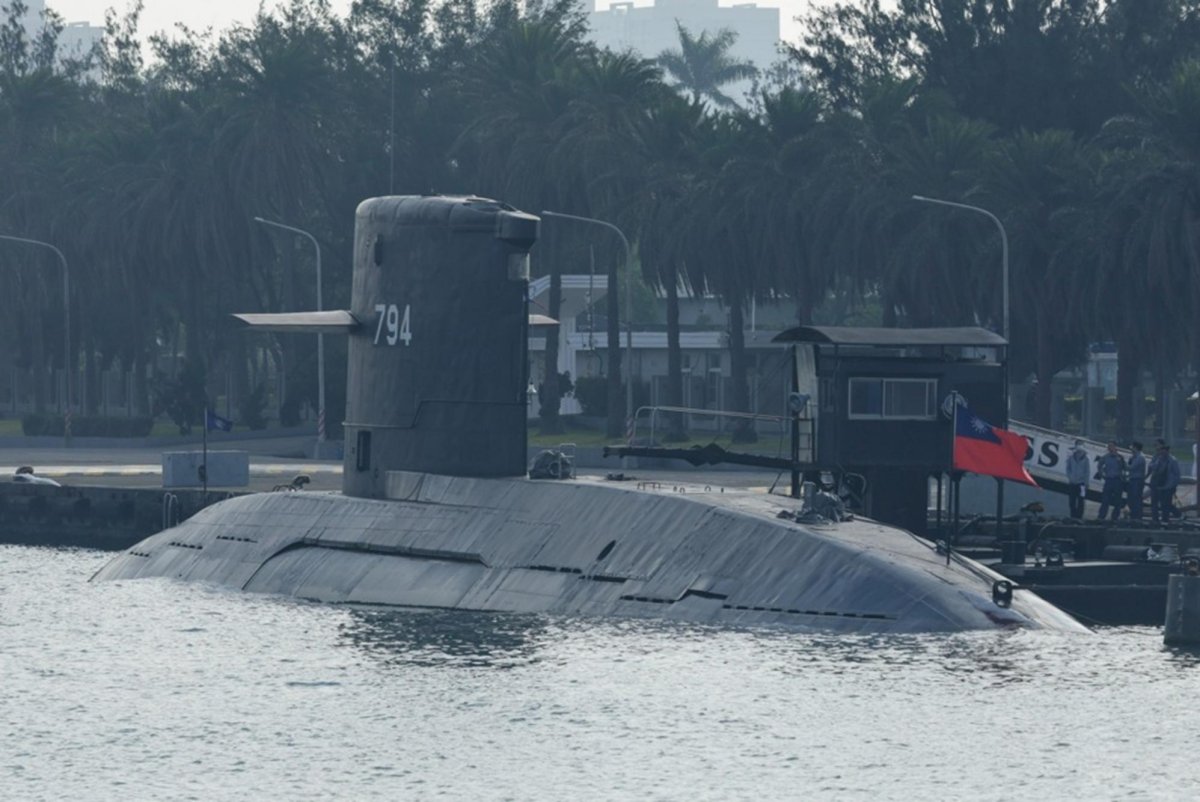
Taiwan navy Hai Hu (SS-794) submarine is anchored inside a naval base in Kaohsiung, Taiwan, 09 January 2025. Taiwanese President William Lai (Lai Cheng-te) pledged in his new year speech to boost Tawan’s defense budget amidst rising tensions with China. File. Photo by RITCHIE B. TONGO / EPA
Jan. 30 (Asia Today) — Taiwan’s first domestically built conventional submarine completed its first submerged sea trial Thursday, a milestone for an eight-boat program aimed at strengthening deterrence against China.
The submarine, named Hai Kun and also known as Narwhal, conducted a shallow-water submerged navigation test and returned safely to port near the southern city of Kaohsiung, according to Taiwan’s China Shipbuilding Corp., the state-linked builder leading the project.
The company said the program has faced obstacles because of international constraints and pressure from China but described the trial as a key step before staged sea testing continues.
Beijing has long opposed Taiwan’s submarine program. A Chinese newspaper commentary described the vessel as having performance issues, reflecting Beijing’s criticism of Taipei’s defense buildup.
According to people familiar with the trial, the test focused on basic checks such as watertight integrity and underwater stability at shallow depth, with later trials expected to proceed to deeper dives and stress testing.
The diesel-electric submarine is about 70 meters long with an underwater displacement of about 2,800 tons and a crew of about 60, according to published specifications.
Taiwan launched the first boat in September 2023 and the delivery timeline has slipped from earlier targets. The first vessel is budgeted at NT$49.36 billion (about ₩2.26 trillion, about $1.57 billion), with Taiwan aiming to have at least two of the new submarines operational by 2027.
The program has drawn scrutiny in South Korea after court rulings found contractors linked to Taiwan’s submarine effort guilty of leaking torpedo-launch system design documents, a case that raised concerns about possible technology transfer.
— Reported by Asia Today; translated by UPI
© Asia Today. Unauthorized reproduction or redistribution prohibited.
Original Korean report: https://www.asiatoday.co.kr/kn/view.php?key=20260130010013991