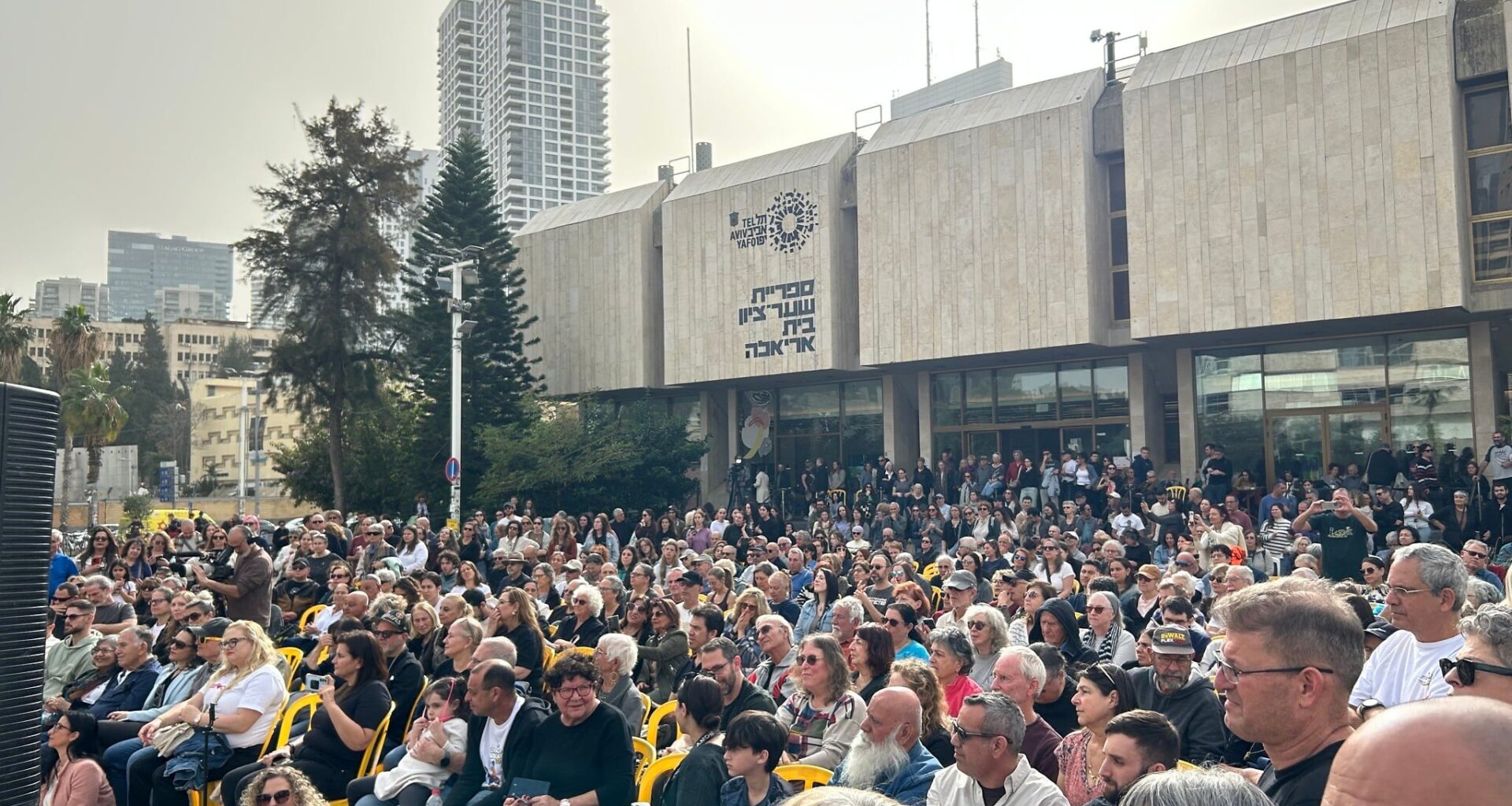
With the return of the body of police officer Ran Gvili earlier this week, the last hostage in Gaza, the Hostages and Missing Families Forum held its last Kabbalat Shabbat service at Hostages Square in Tel Aviv on Friday.
The mood was subdued but cheerful and the weather was warm and sunny as hundreds turned out for the service welcoming the Sabbath.
Most of the installations that had long filled the square were removed, though not all.
Under a tent, attendees sipped wine and ate cakes as a man sang “Habayta,” a song about returning home that became an anthem for the movement to free the hostages.
The hostage crisis that began on October 7, 2023, lasted for 843 days, ending on January 26, 2026, with the recovery of the body of Gvili. His return marked the first time since July 20, 2014, that no Israelis were held hostage in the Gaza Strip.
Get The Times of Israel’s Daily Edition
by email and never miss our top stories
By signing up, you agree to the terms
Ayelet Sela Youngerman, a representative of the Kibbutz Movement that organized the services, opened the ceremony by saying the feeling in the square was different following the return of Gvili’s remains.
“For several weeks I’ve stood here and started the Kabbalat Shabbat with the obligatory sentence, ”Until the last hostage’ is not just a slogan,’” she said. “Now in the square, thanks to you, today we can say we kept our promise: Rani is back and there are no more hostages.”
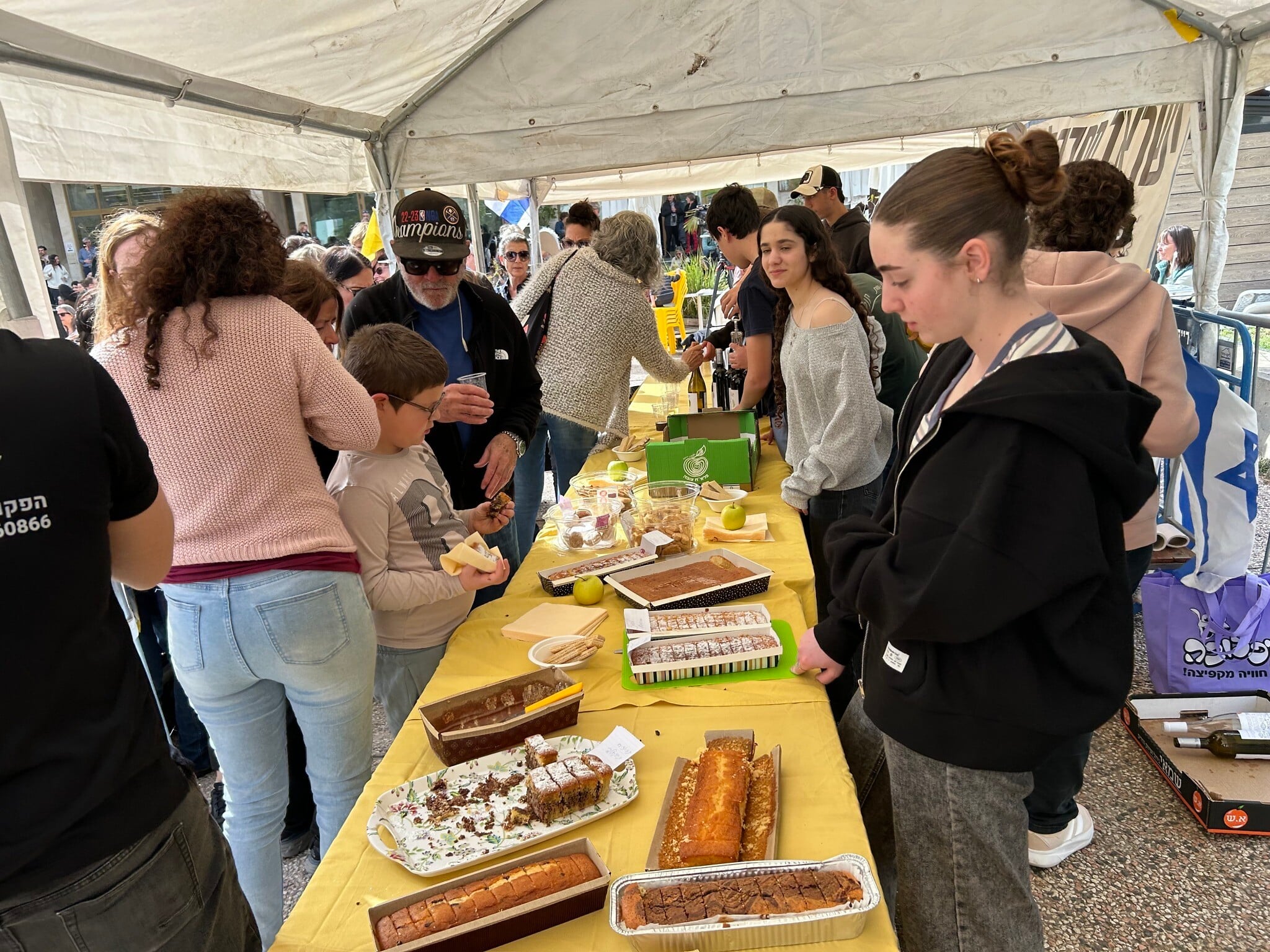
Attendees at the Kabbalat Shabbat service at Tel Aviv’s Hostages Square on January 30, 2026, eat cake ahead of the service. (Ben Sales/The Times of Israel)
Gvili’s family was not at the service, as they were observing the seven-day Shiva mourning period for him. Three of his friends, who did not state their full names, represented the family and thanked the hundreds who gathered on their behalf.
“You let them feel that Rani is really everyone’s son,” one of the friends said. “This is a time of gathering, a time of mourning, a time of remembrance, to part from the brother, the son, the friend.
“In the name of the family and friends, we want to say thank you to everyone who didn’t give up, who came when it was difficult to come, who reminded us again and again that we don’t leave anyone behind,” he added.
After the man spoke, the crowd began singing songs, including “Shalom Aleichem,” a traditional song sung on Friday nights to welcome Shabbat. In keeping with the blend of moods in the square, the song began slowly and softly, then switched to an upbeat tempo.
Dvora Idan, mother of slain hostage Tsahi Idan, encouraged the crowd to hold fast to the value of mutual responsibility.
“We don’t leave anyone behind,” she said. “This is a value anchored in the spirit of the IDF, and now, as we are a moment after the return of the last hostage, Ran, for a respectful and appropriate burial, we all saw the happiness that the value of friendship is back in its rightful place.”
She continued, “We can act, strengthen and build. Despite all of the arguments, the anger, the hate, there is one value that unites us, a value that everyone knows, and it is ‘Love your neighbor as yourself.’ It’s not just a verse in the Torah, it’s a sentence that obligates and strengthens us, our society, this nation.”
Released hostage Omri Miran also spoke and recalled the moment when he heard that Gvili had been brought back from Gaza.
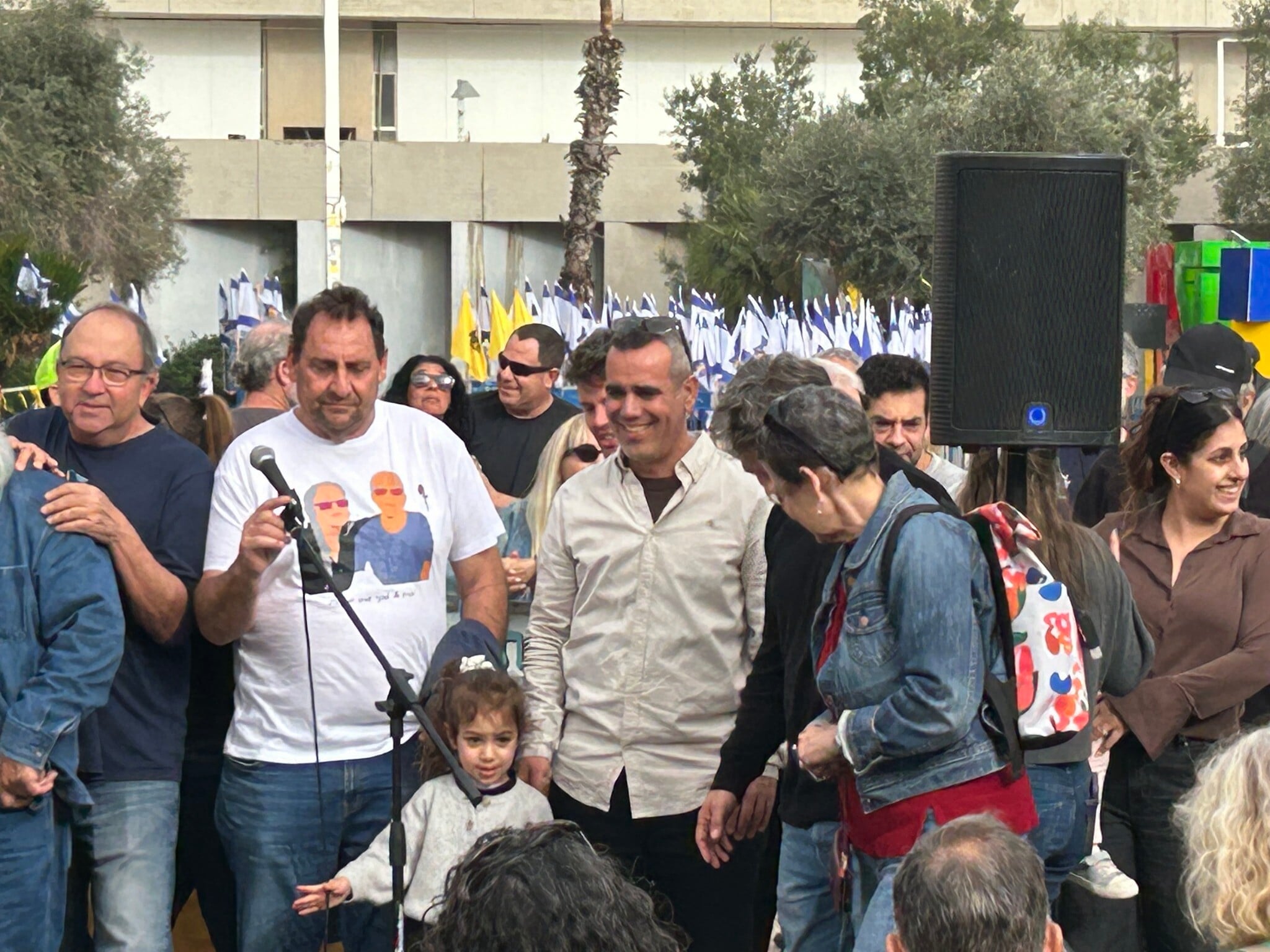
Omri Miran (center, in collared shirt) poses for a photo at a Kabbalat Shabbat service at Tel Aviv’s Hostages Square on January 30, 2026. (Ben Sales/The Times of Israel)
“Rani is back, and suddenly we can breathe a little more again,” said Miran, who was kidnapped from Kibbutz Nahal Oz in the Hamas-led October 7, 2023, attack and released in October 2025, more than two years later. “Suddenly, out of nowhere, I felt a deeper exhalation and a much, much, much deeper inhalation. It was an amazing experience, the power of which surprised me.”
Miran expressed trepidation over whether Israelis can maintain the unity they felt when Gvili’s body returned to Israel, marking the end of the hostages’ long ordeal.
“I’m proud but also have fear of what the day after will bring, or, more accurately, the day that is already here,” he said. “This week, a whole nation held its breath. A whole nation wept with powerful feelings, of sadness, and of relief. A whole nation was, for a few moments, back together, really together. And today, especially today, I want to remind us all that to rise up and rehabilitate, we also need to be together.”
Miran gave thanks to the soldiers of the IDF, security personnel and bereaved families. He also thanked Hostages Square itself. He was among several speakers at the service to wonder aloud what will become of the square in front of the Tel Aviv Art Museum that, for more than two years, served as Israel’s central space dedicated to the captives and their families. Miran called it a “second home.”
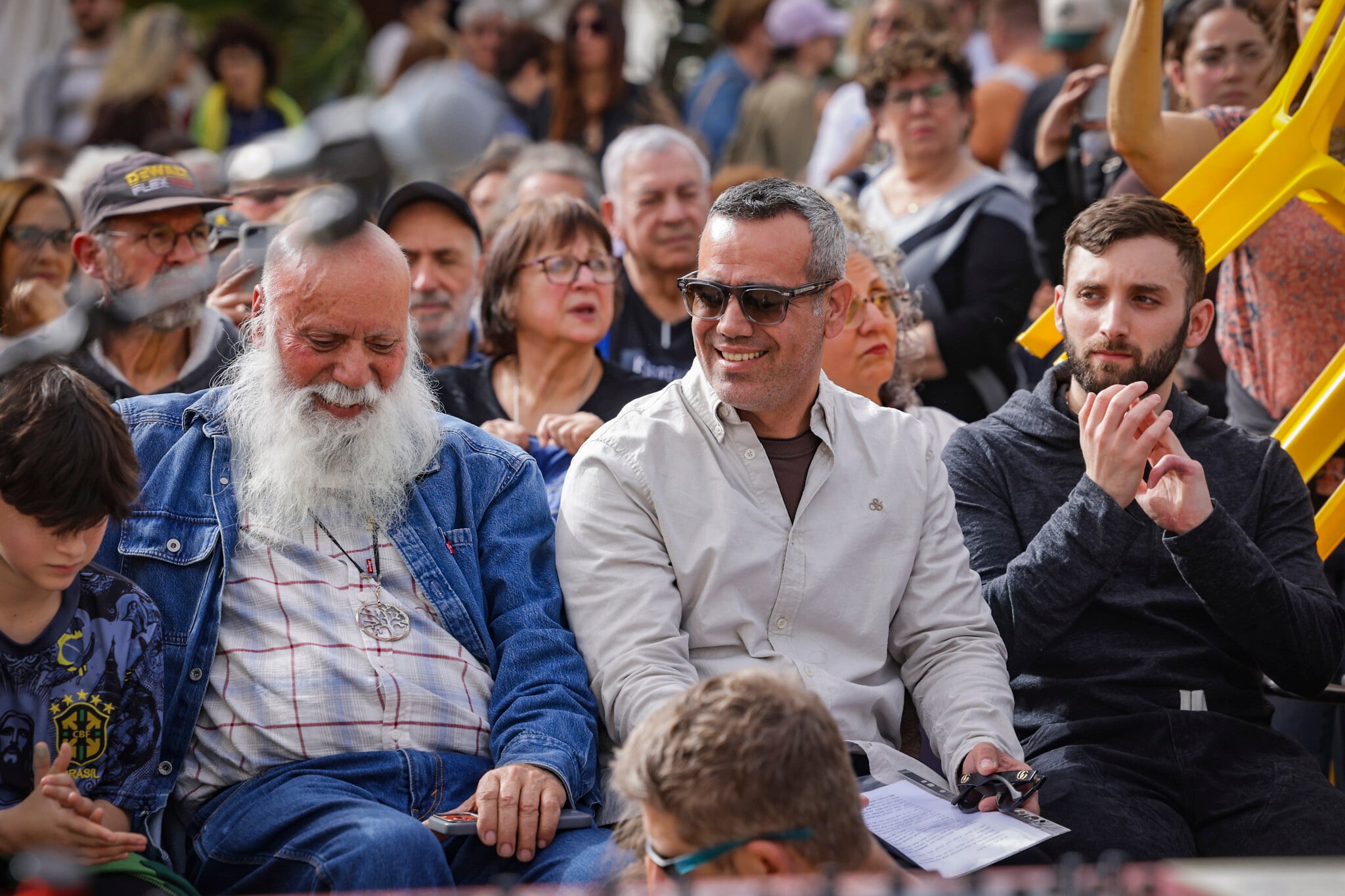
Former hostages Omri Miran (center) and Matan Angrest (right) attend the final Kabbalat Shabbat service at Hostages Square in Tel Aviv, marking the first Shabbat since 2014 without any hostages in Gaza, on January 30, 2026. (Miriam Alster/Flash90)
Miran’s father, Dani, also spoke and made a public request for the name of the plaza to remain “Hostages Square” despite all the captives returning home. He proposed dedicating one corner of the square as a memorial to the hostages and suggested placing a metal sculpture of a tree there, where people can hang mementos to the hostages.
The service concluded with the singing of Hatikvah, Israel’s national anthem, and a refrain from “Shir L’Shalom,” the song to peace sung by former prime minister Yitzhak Rabin shortly before he was assassinated in 1995, not far from what is now Hostages Square.