Published on
January 31, 2026
Ios is moving firmly into Europe’s travel spotlight for 2026 as growing international recognition aligns with a clear shift in how the island is shaping its future. Celebrated for its Cycladic architecture, layered history, and striking landscapes, the island is no longer viewed only as a seasonal escape but as a destination built around culture, liveability, and long-term planning. Strategic investment in infrastructure, preservation of heritage sites, and a focus on improving everyday conditions for residents are strengthening Ios’ appeal while setting a model for balanced island tourism in Greece, where quality of life and visitor experience are now advancing side by side.
Ios is quietly redefining its place on the Greek tourism map, earning international recognition while investing steadily in the foundations of everyday life on the island. Recently ranked among the 25 most beautiful villages in Greece by a prominent British newspaper, Ios Town has been praised for its timeless visual appeal and layered history. The recognition places the island alongside some of the country’s most admired destinations, but what makes Ios stand out is how naturally beauty, heritage, and modern planning intersect.
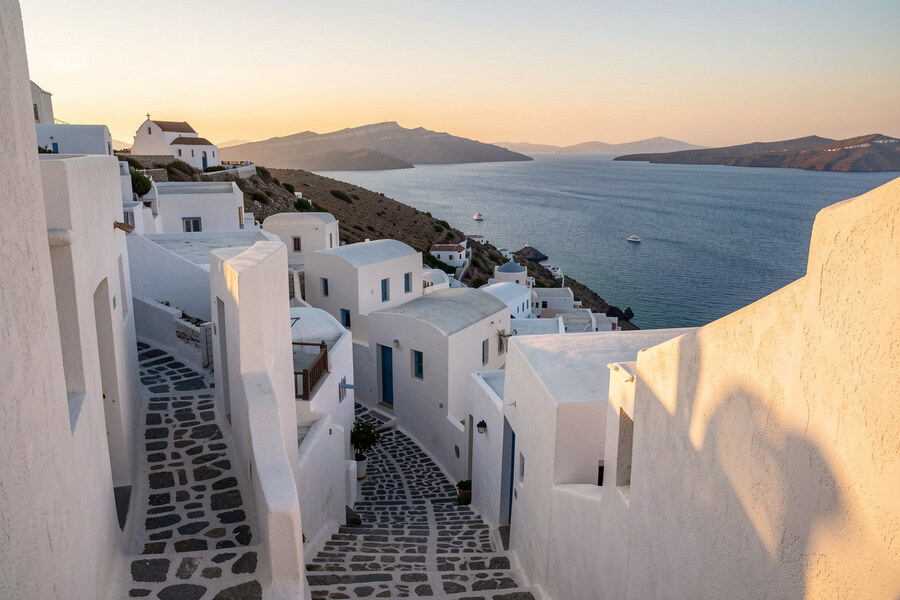
At the heart of this attention is Ios Town itself, a classic Cycladic settlement shaped by centuries of island life. Rows of white, cube-shaped houses cascade down gentle slopes, broken only by blue doors, stone stairways, and narrow alleys that twist and turn with no obvious pattern. These winding streets are not just decorative features; they reflect an older way of building designed to protect residents from strong winds and summer heat. Walking through the town feels less like following a route and more like discovering a story, with each turn opening onto small squares, viewpoints, or quiet corners overlooking the sea.
One of the most striking features of the town is the gradual climb toward its hilltop church, a landmark visible from many points across the island. From this elevated position, the landscape opens dramatically, offering uninterrupted views across the Aegean. As daylight fades, the sky and sea blend into layers of gold, orange, and deep blue, creating sunsets that have become one of Ios’ defining experiences. These views are not staged or engineered; they are part of the island’s natural rhythm, shaped by geography and light rather than modern design.
Advertisement
Advertisement
Beyond its visual charm, Ios carries a historical weight that adds depth to its image. The island is home to Skarkos, one of the most important prehistoric settlements in the Cyclades. Dating back to around 2300 BCE, the site offers rare insight into early urban organization in the Aegean region. Stone structures, pathways, and building remains reveal a community that was surprisingly advanced for its time, with evidence of planning, craftsmanship, and social structure. This ancient settlement positions Ios not only as a place of beauty but also as a key location in the broader story of early Greek civilization.
Other historical landmarks across the island further reinforce this sense of continuity between past and present. Scattered chapels, archaeological remains, and long-preserved sites remind visitors that Ios has been inhabited, shaped, and reshaped over thousands of years. Unlike destinations where history is confined to museums, here it is woven directly into the landscape, visible in architecture, pathways, and the layout of settlements.
Advertisement
Advertisement
Recognition from a respected French travel guide has added another layer to Ios’ growing reputation. By placing the island among the best Greek islands of the year, the guide highlighted its ability to balance visitor appeal with a strong quality of life. This distinction is significant in a country where many islands struggle to manage the pressures of tourism. Ios has increasingly positioned itself as a destination that values long-term sustainability over short-term gains, focusing on preserving character while improving infrastructure.
This approach reflects a broader shift in how smaller islands are redefining success. Instead of measuring growth purely by visitor numbers, Ios is emphasizing liveability, accessibility, and thoughtful development. The goal is not only to attract travelers but also to ensure that the island remains a functional, welcoming place for its permanent population. This balance has become increasingly important as global travel patterns change and destinations face rising expectations around sustainability and community wellbeing.
Concrete steps toward this vision are already underway. The municipality has secured €100,000 in government funding specifically aimed at repairing and upgrading damaged infrastructure. While modest in scale, this investment targets essential improvements that directly affect daily life, from public spaces to transport-related facilities. These upgrades are designed to strengthen resilience, particularly in the face of seasonal pressures and weather-related challenges that often affect island communities.
More significantly, Ios has taken a major step forward with the approval of a €1.862 million indoor sports complex, now officially included in the national public investment program for the first time. This project represents a long-term commitment to social infrastructure, extending benefits well beyond the tourism sector. The facility is designed to serve both residents and visitors, reinforcing the idea that development should support community needs first while enhancing the overall destination experience.
The sports complex will feature a modern indoor gym suitable for competitions and daily training, along with dedicated spectator seating. A separate section will include fully equipped locker rooms for athletes, accessible facilities for people with disabilities, administrative offices, and a medical room. By incorporating accessibility and health services into the design, the project reflects a more inclusive and forward-looking approach to public investment.
Such infrastructure plays an important role in addressing one of the key challenges faced by island communities: maintaining year-round vitality. Facilities like this support local youth, encourage active lifestyles, and provide venues for events that extend beyond the peak tourist season. Over time, they also help reduce the sense of isolation that can affect smaller islands, creating spaces where residents can gather, train, and participate in shared activities.
Taken together, international recognition and targeted investment signal a turning point for Ios. The island is no longer defined solely by seasonal travel patterns or postcard imagery. Instead, it is emerging as a place where history, landscape, and modern planning coexist with purpose. The growing attention from global media and travel authorities reflects not just what Ios looks like, but how it is choosing to evolve.
Ios is emerging as one of Europe’s most sought-after destinations for 2026 as Greece combines international recognition with focused investment in cultural preservation, modern infrastructure, and community wellbeing, transforming the island into a balanced destination where quality of life and visitor experience grow together.
As destinations across Greece reassess their future in an increasingly competitive and sustainability-focused tourism market, Ios offers a clear example of a different path forward. By protecting its heritage, celebrating its natural beauty, and investing in infrastructure that benefits both residents and visitors, the island is building a model that values depth over scale. In doing so, Ios is not only earning recognition today but also laying the groundwork for a resilient and balanced future.
