KEY POINTS:
Partial government shutdown began Saturday, January 31, 2026, after House failed to vote on Senate-approved funding deal before leaving town until Monday
Dispute centers on immigration enforcement tactics following two deadly shootings of U.S. citizens by federal agents in Minneapolis this month
Senate passed compromise 71-29 that funds most agencies while giving DHS only two weeks to negotiate reforms, including body cameras and warrant requirements
Immigration enforcement operations continue unaffected due to $165 billion already allocated in last year’s “One Big Beautiful Bill Act”
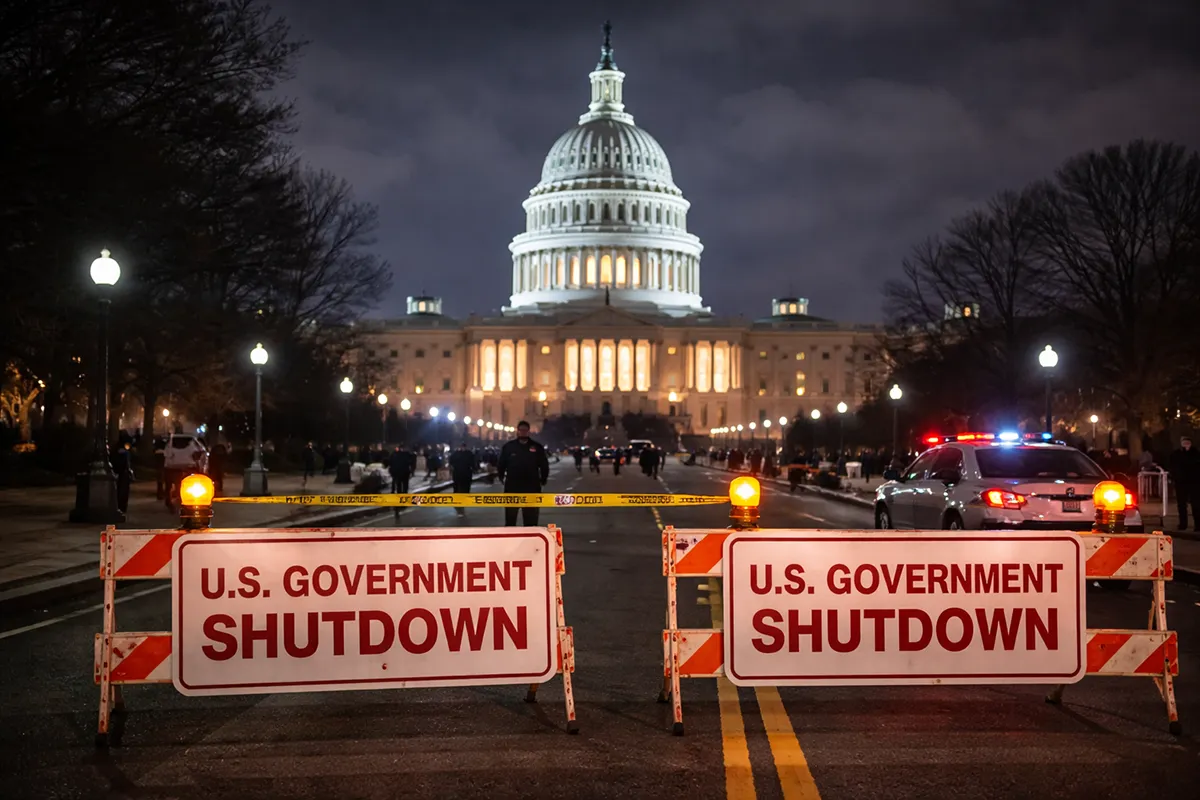
The U.S. government entered a partial shutdown as appropriations expired at 11:59 PM on January 30 after the House failed to approve a Senate funding deal before the deadline. This left multiple federal agencies without appropriations as lawmakers could not come to an agreement over funding for the Department of Homeland Security (DHS), particularly regarding immigration enforcement reforms.
The Senate voted 71-29 late Friday to pass a compromise package that funds five major spending bills through September while extending DHS funding for just two weeks. However, the House had already left Washington and won’t return until Monday, February 2, creating the funding lapse.
The shutdown stems from debate over immigration enforcement tactics following the deaths of two U.S. citizens, Renee Good and Alex Pretti, shot by federal agents during law enforcement operations in Minneapolis within weeks of each other. Senate Democrats, led by Minority Leader Chuck Schumer, refused to fund DHS without reforms and demanded an end to roving patrols; mandatory body cameras for agents; prohibition of face masks; and stricter warrant requirements from judges rather than internal DHS officials.
The Compromise Deal
After an initial vote failed Thursday, January 29, Democrats struck a deal with the White House hours later. The agreement separates DHS funding from other agencies, allowing passage of five major spending bills while giving negotiators two weeks to hammer out immigration enforcement reforms.
The affected agencies include the Departments of War, State, Labor, Health and Human Services (HHS), Education, Transportation, Housing and Urban Development (HUD), and Treasury (including the Internal Revenue Service (IRS)). Six other appropriations bills already have funding through September, meaning the Departments of Veterans Affairs, Agriculture, Commerce, Justice, Energy, and Interior, as well as the Food and Drug Administration (FDA), Environmental Protection Agency (EPA). National Aeronautics and Space Administration (NASA), and National Science Foundation will not be affected by this shutdown.
Expected Impact
This partial shutdown is expected to be brief with limited real-world effects. The House is positioned to vote Monday, and there’s little appetite for a prolonged standoff like last fall’s record 43-day shutdown that cost the economy an estimated $11 billion.
President Trump earlier issued a statement on social media, making clear his thoughts on a shutdown.
 Source: X @WhiteHouse
The immigration enforcement operations at the heart of the dispute will continue uninterrupted. DHS received approximately $165 billion in last year’s “One Big Beautiful Bill Act,” including $75 billion for ICE and $65 billion for Customs and Border Protection, which is well beyond typical annual allocations.
Essential employees at affected agencies will work without pay until the shutdown ends, though they will receive backpay. Non-essential workers face furloughs but are also expected to receive backpay once funding is restored.
Since the shutdown began over a weekend, agencies won’t implement shutdown procedures until Monday, which is potentially the same day Congress resolves the impasse. Historical data shows that 10 shutdowns of three days or fewer since 1977 have had minimal impact.
The House is expected to take up the Senate-approved package when it returns Monday, though the exact timeline and whether any amendments will be proposed remains to be seen.
To view the memo, “Status of Agency Operations,” issued by Office of Management and Budget Director Russell Vought, click here.