It has been another fascinating week to be an observer of international and military affairs.
Ukraine has agreed to an energy truce, which sees them holding off on attacking Russian energy infrastructure. But this has not halted Russian attacks on other civilian infrastructure including a civil train service in Kharkiv. Concurrently, peace negotiations are occurring, although they show little progress.
In the Pacific, China continues its campaign of aggression against Taiwan in the skies, at sea and in the information domain. At the same time, Taiwan launched its first indigenous submarine and announced changes to its integration of professional and conscripted soldiers.
In my Ukraine update this week, I have opted for a single, longer op-ed that is focused on why Putin is unlikely to agree to a peace deal in the short term, and therefore why the current round of talks are unlikely to gain much traction. I hope it proves informative.
Welcome to this week’s edition of The Big Five.
Another Round of Peace Talks. There is one message that we should take away from the current round of talks to end the war in Ukraine: Putin does not want the war to end right now.
Peace talks for the war in Ukraine continue to drag out. U.S. Special Envoy Steve Witkoff, along with U.S. Treasury Secretary Scott Bessent, Jared Kushner, and senior advisor to the U.S. President’s Board of Peace Josh Gruenbaum met with Russia’s lead negotiator Kirill Dmitriev in Miami on 31 January. These talks, like all previous discussions, were described as “productive” and “constructive.” In a social media post, Witkoff stated that:
We are encouraged by this meeting that Russia is working toward securing peace in Ukraine and is grateful for @POTUS’s critical leadership in seeking a durable and lasting peace.
The United States negotiating team is also planning to meet again with Ukrainian and Russian delegations in Abu Dhabi on the first of February.
These latest discussions are being held against the backdrop of a truce on strikes against energy facilities. At least Ukraine is sticking to this arrangement. There is no word from Russia about whether they intend doing so.
Besides this ‘energy truce’, and an exchange of fallen soldiers this week, very little else has emerged from the recent talks designed to end the current war in Ukraine. There is a very simple reason why there has been so little progress.
There is no way that the Russian president can afford to end the war now.
This is despite the fact that the war has been a catastrophe for Russia. It has suffered over 1.2 million casualties (although the true figure is unlikely to ever be fully established). It has used up a large proportion of its Cold War legacy stocks of munitions and equipment, something that is unlikely to ever be replenished. Its economy is in trouble, it has used up much of its treasury reserves, and it has become a vassal state of China. Russia has also seen the emigration of 1.3 million citizens since the start of the full-scale invasion of Ukraine, exacerbating its pre-existing demography challenges.
And Russia has achieved none of its political objectives for Ukraine that Putin discussed in his speeches on the eve of the full-scale invasion:
Ukraine has not been subjugated, and remains a free, vibrant democracy.
Ukraine’s military has not been destroyed; indeed it is bigger and vastly more capable.
Russian territory is less secure; Ukraine is able to conduct long-range strikes on targets deep inside Russia at will.
Russia’s reputation as a world power – or even as a middling power – has been degraded.
The Russian military has shown itself to marginally effective in military affairs, while showing it is highly effective at looting, raping, murdering civilians and POWs, and destroying civil infrastructure and Ukrainian cultural treasures. And while the Russian military has learned to learn better, it has only improved its performance from ‘abysmal’ to just plain old ‘barely adequate’ over a four year period.
If this was the United States four years after its 2003 invasion of Iraq, we would call this out clearly as “losing the war”.
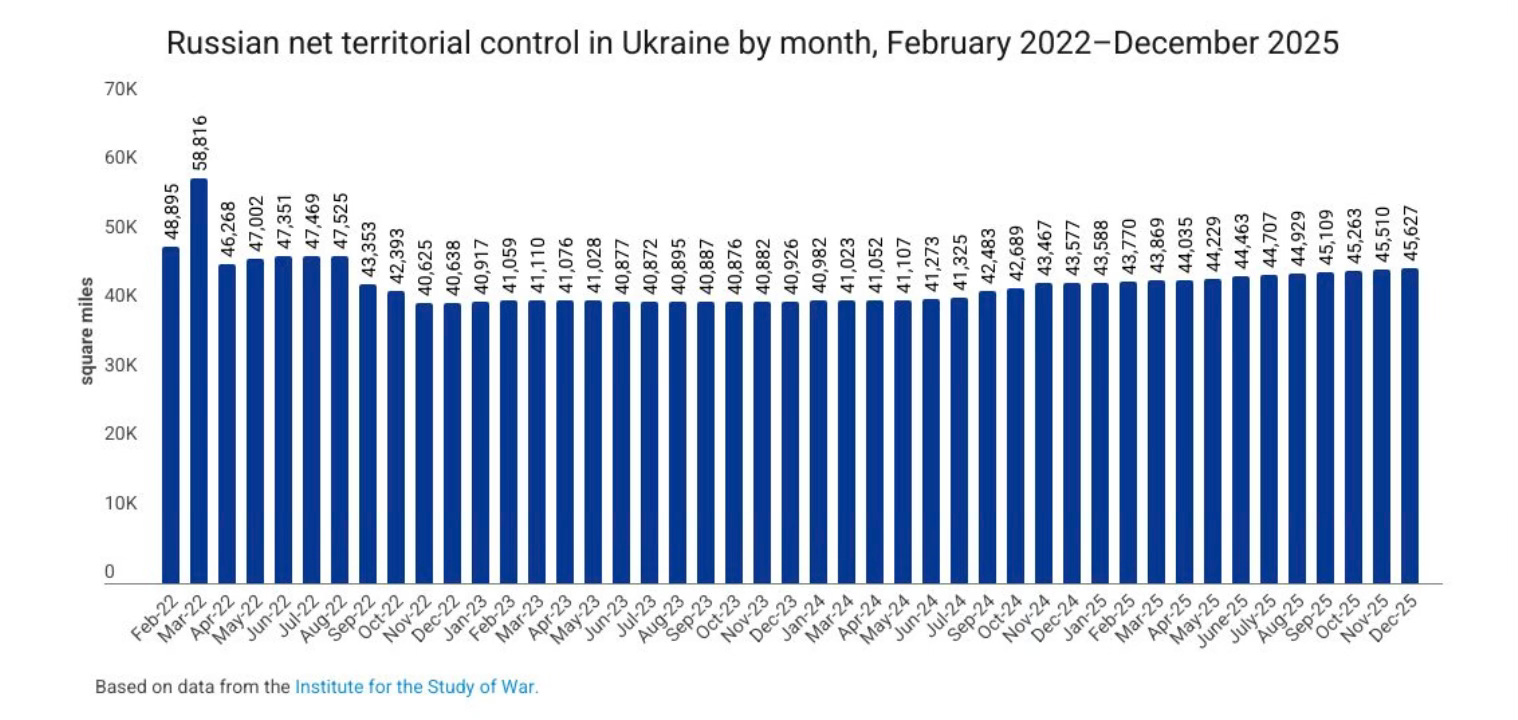
And what has Russia recieved in return?
Well, in February 2022 before it commenced its full-scale invasion, Russia occupied about 9% of Ukraine, including Crimea and areas of the Donbas. Since that time, it has seized around another 12% of Ukraine. According to the figures published by the Institute for the Study of War, that equates to just over 45 700 square miles captures in four years of war, or over the 1438 days of the war, about 31 square miles per day. This has come at the cost, on average, of over 850 casualties for every single day of the war.
By comparison, the United States (with a population 2.4 times the size of Russia’s) suffered an average of 24 casualties per day in 2004, the worst year for American casualties of the Iraq War.
In short, Putin has almost nothing to show for the massive costs of the war. Accepting a negotiated settlement now, where he cannot claim a clear ‘win’ for Russia and for the Russian people, would be a big problem domestically for Putin. Over the past four years, Putin has transformed Russia into a ‘war’ nation, changing school curricula, domestic media, defence industry, trading parters and other national endeavours to re-jig Russia for a long, drawn out war effort. He has to show to his people some kind of return on that investment, which at present, he cannot.
Additionally, he would also have a major challenge with the return home of hundreds of thousands of veterans, many of whom will be angry that they were not permitted to ‘fight on to victory’. Russian politicians know well what occurs when losing armies return home: political strife. Neither Putin nor his ruling clique of billionaires want that. As one recent article on this subject notes:
The Kremlin is beginning to worry about the problems with returning veterans of the war in Ukraine but does not yet have a clear idea about what to do.
On the flip side, Putin also knows that taking the rest of the Donbas by force will probably take all of 2026 (at least) and will result in another half a million casualties. And, the higher his casualties go, the less believable his strategic narrative of ‘inevitable victory’ becomes.
But, this is better for Putin than the alternative I have described above.
Therefore, Putin has continued to set the bar very high for any ceasefire: the ceding of the entirety of the Donbas to Russia, keeping Ukraine’s territory of Crimea, political accommodations from the Ukrainian government, no NATO and no foreign forces in Ukraine. Putin knows that together these are unacceptable to Ukraine and Europe, and thus, he can keep fighting. He is deliberately sabotaging negotiations so the fighting can continue.
Putin’s big problem is the President of the United States. He can’t afford to arbitrarily dismiss the American negotiations team because Putin knows that Trump is inclined to help Russia if possible. And he knows the best chance of an outcome favourable to Russia is through keeping Trump on side. At the same time, Putin knows that when he has rebuffed Trump in 2025, he has suffered few consequences.
Somehow, through peace talks, back channel discussions with Trump’s representatives, terror bombing in Ukraine, misinformation and subversion in Ukraine and Europe in 2026, Putin will be hoping to have the U.S. administration strong-arm Ukraine into an agreement favourable to Russia.
But here’s the thing with that plan. It might result in a ceasefire for a short time. But, neither party is likely to be satisfied with the solution for long. And here is where understanding Clausewitz really matters. As he writes in Chapter 1 of On War:
Even the final decision of a whole War is not always to be regarded as absolute. The conquered State often sees in it only a passing evil.
We know from Russia’s behaviour in the past quarter century that it has rarely signed a peace agreement that it has abided by. Any ceasefire negotiated in 2026 (if that is possible) will not settle the war. There is too much enmity, and too much disputed terrain and political ideology now between Ukraine and Russia to see any peace agreement as anything other than a temporary cessation of hostilities.
In conclusion, we should keep our expectations low for this round of peace talks, and those that follow in the short term. Neither side believes they are losing, and both believe they are capable of negotiating a better deal than those currently on the table.
The fighting and the dying – on the battlefield and by civilians in the cities across Ukraine – will continue.
New Taiwan-U.S. Headquarters. The countdown clock in Taiwan steadily ticks down the seconds, days, weeks and months until 1 January 2027. That is the year that China’s President Xi has given his military forces to be ready for militarily action against Taiwan to absorb the prosperous island democracy into the mainland Communist morass.
This week, it was revealed that the United States and Taiwan have created at Joint Fires Coordination Centre and that it has been operating since 2025. This would probably replicate the current set up for U.S. support to Ukrainian strike operations: the U.S. provides intelligence and mensuration data to the Taiwanese forces that would conduct medium and long-range strikes. The joint coordination centre provides a strategic capacity to integrate the ‘deep operations’ of all the Taiwanese military services, as well as provide them access to world’s best practice in targeting doctrine and practice.
I would expect that the establishment of this joint fires centre would also have implications for Taiwan’s military training and education. If Taiwan is to effectively employ American assistance for its medium and long-range fires, employing the latest NATO joint targeting doctrine would make a lot of sense. This in turn would require aligning Taiwanese targeting and fires training with the doctrine.
While it is tempting to compare the new U.S.-Taiwan arrangement to the U.S.-Korea structures, I don’t think this is useful. In Korea, the U.S. is part of the UN force that is – technically – still at war with North Korea. It maintains ground and air forces in Korea as part of a strategic deterrent to North Korean aggression, and as a first response to any efforts by North Korea to break the armistice. Almost none of these circumstances exist in Taiwan. As such, American arrangements with Ukraine are probably a better comparison for the U.S.-Taiwan joint fires coordination centre.
One final thing, and it is a little doctrinaire. Joint operations generally refers to the integration of different services from a single nation. Where two or more nations are working together, this is described as ‘combined’ operations. Anyway, I just thought that was worth mentioning!
Taiwan Conscripts to Regular Brigades. According to a report in the Taipei Times this week, conscript forces in Taiwan will now be integrated into regular force brigades for training and in wartime. Under the new combined arms brigades (of which seven were just established), conscripts will be formed into battalions which will then become integral force elements of the combined arms brigades. When mobilisation exercises take place, these conscripts will report as part of the combined arms brigades.
From my perspective, this makes a lot of sense. Exposing new, inexperienced soldiers to their more experienced, professional colleagues will result in an uplift of professional competence in the conscript force. It also exposes the professional force to people with different ways to making decisions, and who possess different forms of creativity and innovation.
A Comment on PLA Purges. I have seen a lot of commentary on the impact of President’s Xi’s removal of two senior members of the PLA, one of whom was a member of the CMC. These are important, and we can never assume that removing senior military leaders isn’t noticed by everyone below them. It can and does have an impact on the behaviour of more junior military personnel.
But let’s not forget that even in democracies, senior military personnel are rotated regularly. Indeed, military organisations are specifically designed to lose people and for leaders to step up. In every military that I am aware of, the annual posting cycle changes around 40-50% of leaders at every single level of the force every single year. And in many cases, changing leaders can be a positive step with even better leaders replacing the old one.
So, let’s take a breath on predicting that China can’t invade Taiwan or that the PLA will be much less effective before a couple of General get sacked. There is no basis for this. Indeed, it could mean that Xi wants to move even faster with military transformation. The PLA has a lot of Generals that can step up to replace the two most recently removed Generals.
No one is saying the U.S. military can’t do its job, and it has removed even more senior military officers since January 2025 than China has!
*******
It’s time to explore this week’s recommended readings.
In this week’s Big Five, I have included an examination of changes required for leadership development in military institutions due to the opportunities and challenges of AI. There are articles about Japan’s growing defence capabilities, the reason why economic sanctions are unlikely to result in Russia ending its war against Ukraine, as well articles on the costs of Russia’s war in Ukraine and the narrative war around China’s exercise Justice Mission in late 2025.
As always, if you only have the time available to read one of my recommendations, the first is my pick of the week.
Happy reading!
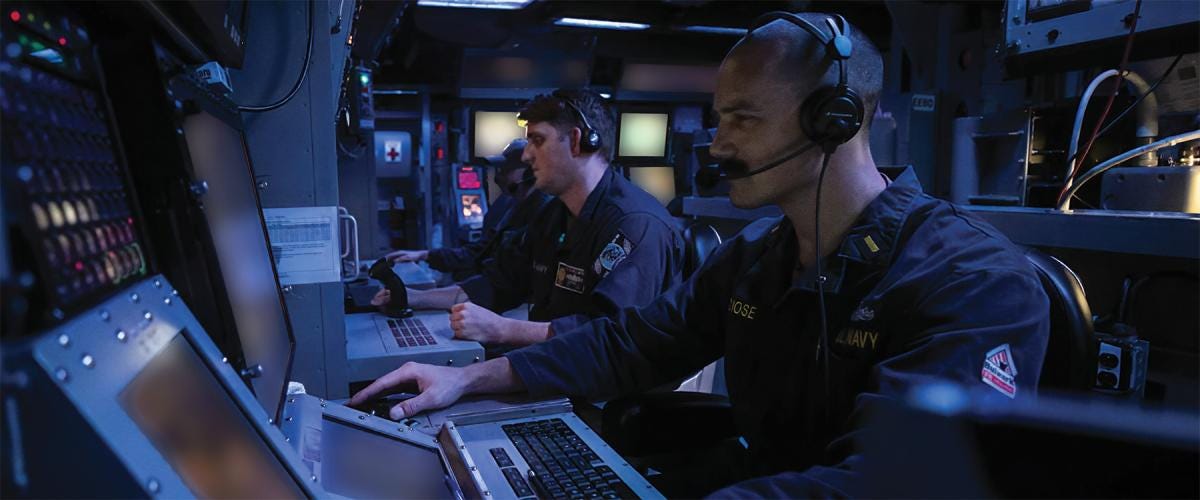
This is an excellent article from Frank Hoffman, published in Proceedings. Building on the concept of System 1 and 2 thinking, described in Daniel Kahneman’s book, Thinking Fast and Slow, Hoffman proposes that there is now a System 3 thinking. This is decision-making that is supported by the application of AI, and that it is now an integral ‘system’ like System 1 and 2 thinking. He also cautions that “AI should enhance a commander’s intuition, not displace it. Assistance should not lead to an abdication of agency or decision, and a collaborator should not become a crutch that obviates the necessity of human creative and novel thinking.” You can read the full article here.

Violence and influence have always been two sides of the same coin with regards to war. Winning the story of a war is as important as winning the war itself. The same now apparently applies to large scale military exercises. The large-scale, yet short notice, Chinese military exercise around Taiwan at the end of 2025 was accompanied by a robust misinformation campaign. A plethora of posters, videos and social media posts amplified what the PLA was doing, and why it felt justified in doing so. In this article from the Taiwan Security Monitor, the author explores how China sought to win the story of Justice Mission and what lessons can be drawn from this.

In this article, Dr Richard Connolly at RUSI, takes on the proposition that economic sanctions can be employed as a substitute for military force in order to achieve political outcomes. As he argues in this piece, “wars are rarely abandoned because they become expensive. They are more often terminated when states are defeated militarily, when ruling coalitions fracture, or when regimes themselves collapse. Economic pressure, where it matters, tends to operate through these channels rather than through persuasion alone. The experience of Russia today fits this broader pattern.” The full piece can be read at this link.
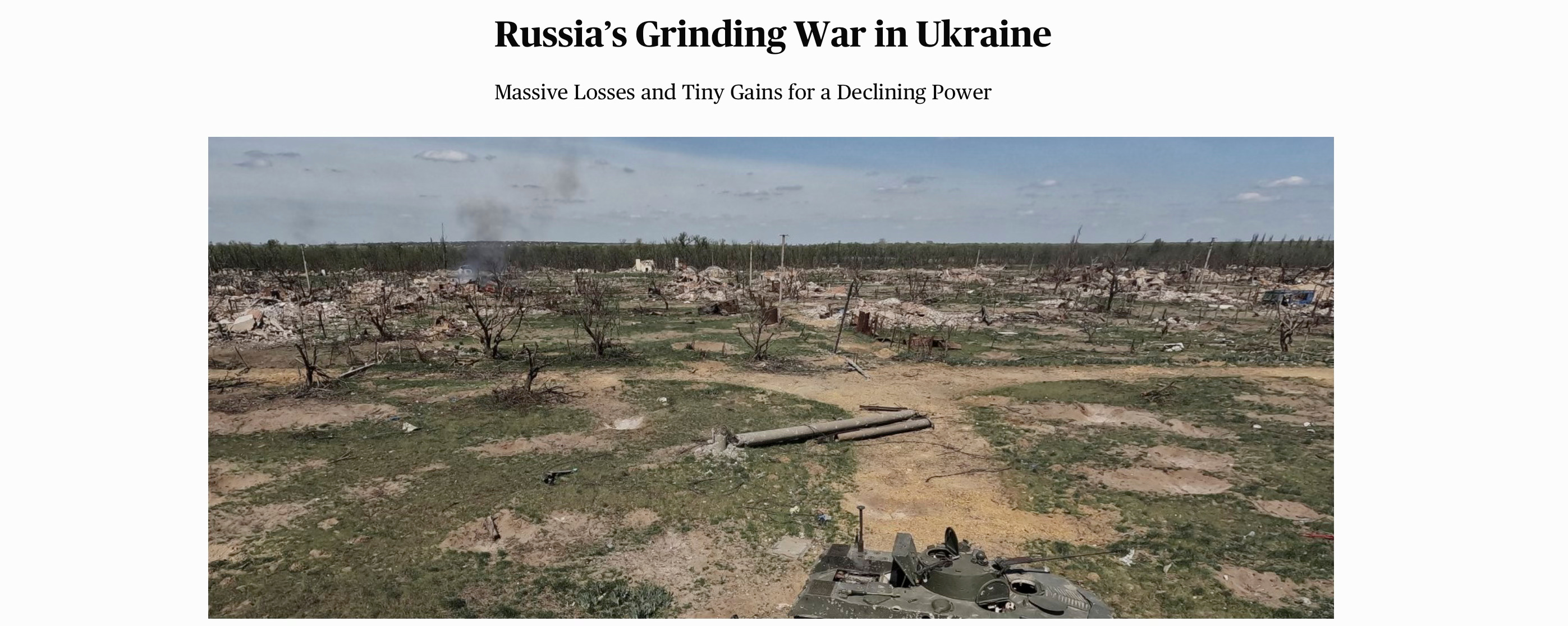
In this article, published by CSIS, the authors examine the massive casualties suffered by the Russians over the past four years, and the relatively small return on this investment they have achieved. The implications: “Despite Russian challenges, the great irony is that the United States and Europe have failed to fully wield the economic or military cudgels. Without greater pain, Putin will drag the talks out and keep fighting—even if it means millions of Russian and Ukrainian casualties.” The full piece is available at this link.
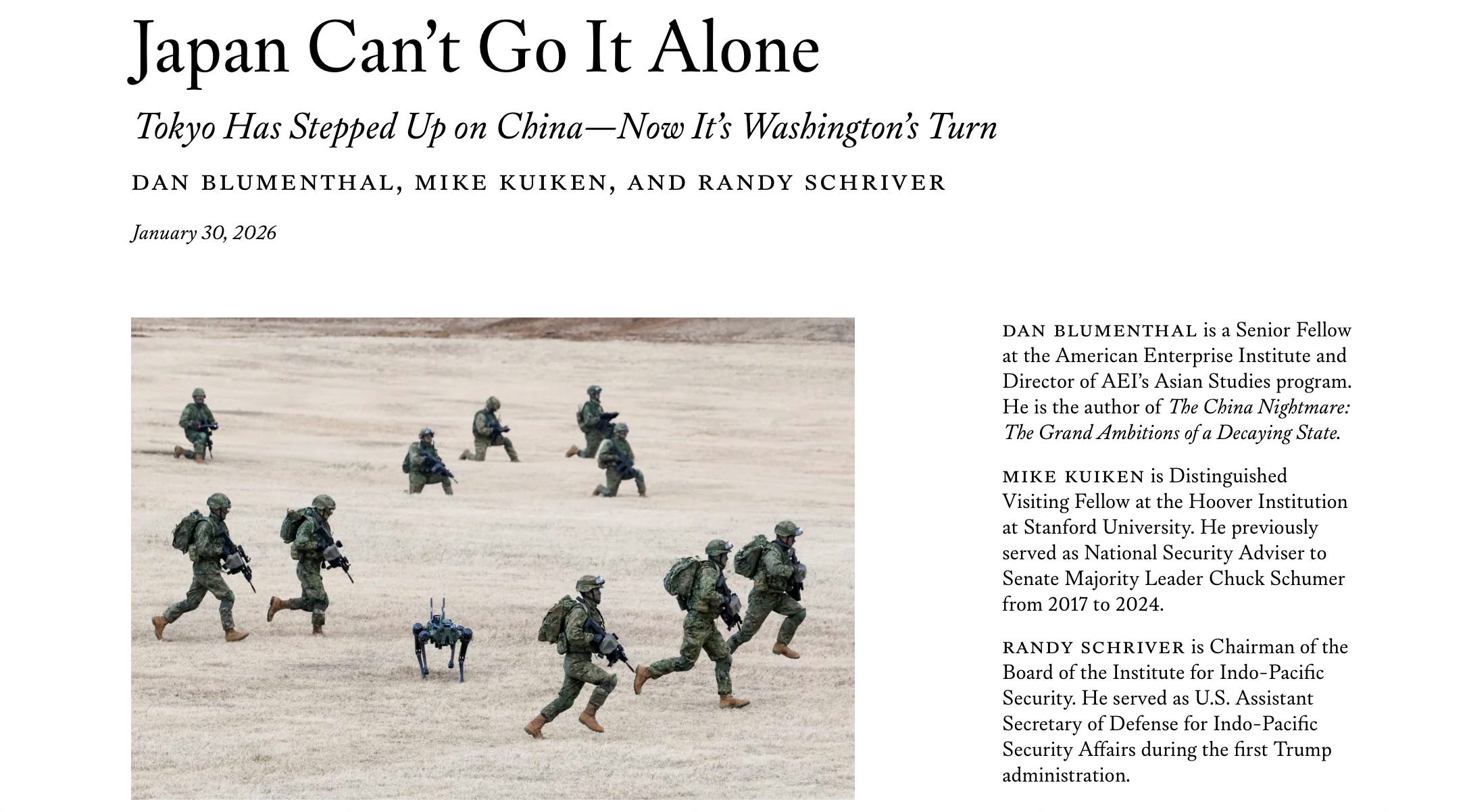
In this new article from Foreign Affairs, the authors argue that despite the very significant increase in defence spending and capability being undertaken by the Japanese government, America should not see this as a sign to decrease its military presence or support in the western Pacific. As the author’s propose, “Tokyo has done the hard part. Now it is time for Washington to step up. If it doesn’t, it will prove Beijing right—that the United States’ alliances are temporary, its promises are hollow, and its power is in decline.” You can read the full article at this link.