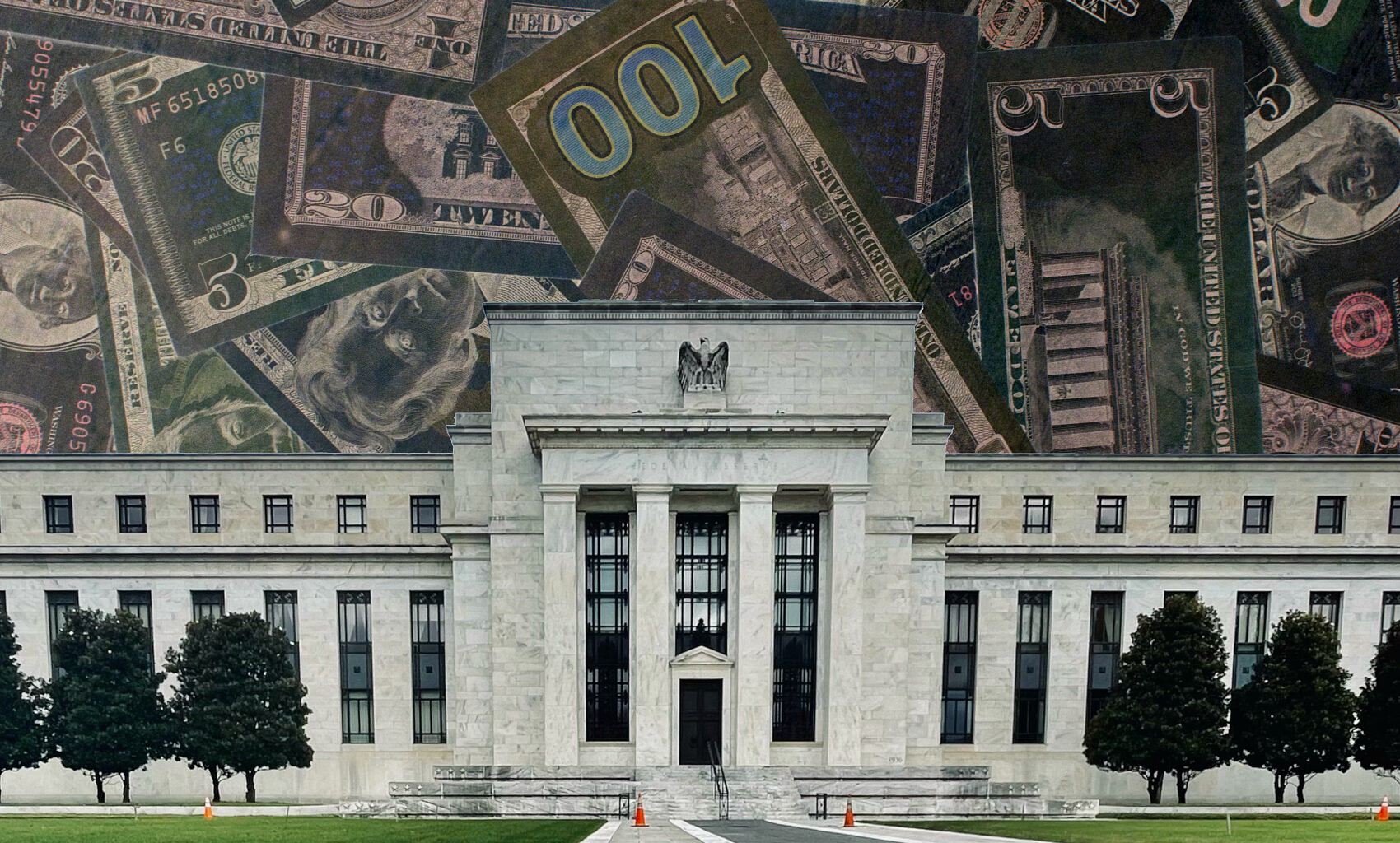
While U.S. President Trump is still deliberating over his next pick for the Federal Reserve chair, the market discussion has consistently centered on whether his choice would cut interest rates dramatically as he desires.
Now, with his nomination of former Fed Governor Kevin Warsh—known for his scathing critiques of the Fed and his monetary policy views—the debate has suddenly shifted from short-term interest rates to the Fed’s $6.6 trillion balance sheet and its role in the markets.
For years, Warsh has been vocal in criticizing his former colleagues for allowing asset inflation, sparking market speculation that he might act swiftly to reduce asset holdings. These rumors pushed long-term U.S. Treasury yields higher last Friday while boosting the dollar, causing gold and silver to plunge significantly.
 Zach Griffiths, Head of Investment Grade and Macro Strategy at CreditSights, stated: ‘He has been extremely critical of the Fed’s balance sheet expansion.’
Warsh believes that the Fed overextends its reach—a view shared by U.S. Treasury Secretary Bessent—who hopes to reverse this trend entirely and push for further reforms. However, such a complete overhaul won’t be easy; it would not only directly affect long-term interest rates but also ripple through major markets crucial to the daily borrowing activities of large global financial institutions.
If policymakers approve a Fed pullback, the central bank under Warsh could run counter to the government’s goal of lowering long-term borrowing costs. This may pressure the Treasury or other U.S. agencies to intervene more actively in market management—an even tougher challenge given rising total borrowing needs and national debt surpassing $30 trillion.
As early as January, Trump had instructed Fannie Mae and Freddie Mac, both government-controlled entities, to purchase $200 billion worth of mortgage-backed securities to help limit costs for homebuyers.
Greg Peters, Co-Chief Investment Officer at PGIM Fixed Income and a member of the Treasury Borrowing Advisory Committee composed of dealers and investors, stated: ‘If you believe Warsh when he says he doesn’t favor compressing yields via balance sheet expansion, it implies the burden falls on the Treasury.’
At the same time, Warsh might argue that tightening financial conditions by shrinking the balance sheet will give the Fed room to slash benchmark rates significantly.
Milan, a Fed governor appointed by Trump, noted last Friday: ‘Theoretically, you can offset your balance sheet operations by adjusting short-term interest rates, assuming you want the Fed’s footprint in the economy minimized out of principle and wish to shrink the balance sheet. If this leads to higher long-term rates, you can offset the tightening of financial conditions by lowering short-term rates.’
During his tenure at the Federal Reserve from 2006 to 2011, Warsh was initially a supporter of the Fed’s bond-purchasing program (known as Quantitative Easing, or QE). However, over time, he became a vocal critic of the policy and eventually resigned due to dissatisfaction with the central bank’s continued asset purchases.
Starting from the emergency measures implemented after the global financial crisis and continuing through the COVID-19 pandemic, the Federal Reserve accumulated massive amounts of U.S. Treasury bonds and other debt in order to maintain market stability and control borrowing costs to support the economy.
“Monetary dominance”
In speeches and interviews, Warsh argued that aggressive bond-buying had gone too far, artificially depressing borrowing rates for an extended period. This, in turn, fueled risky behavior on Wall Street while encouraging U.S. lawmakers to take on more debt, leading to what he termed “monetary dominance,” or excessive reliance of financial markets on the Fed’s support.
The “remedy” he proposed in an interview last July was: “The simple version is: print less money. Let the balance sheet shrink. Allow Treasury Secretary Bessent to handle the fiscal accounts so that you can achieve substantially lower interest rates.”
That same month, he also referenced the landmark 1951 Treasury-Federal Reserve Accord, which established the central bank’s independence, stating that this relationship needed to be redefined.
“We need a new Treasury-Federal Reserve Accord, much like we did in 1951 when we were coming out of a period of surging national debt and were constrained by a central bank whose objectives conflicted with those of the Treasury,” Warsh said. Under such a new accord, he added, “the Fed Chair and Treasury Secretary could candidly and prudently communicate to the markets, ‘This is our target for the size of the Fed’s balance sheet.'”
Shrinking the Fed’s footprint will be no easy task. If Warsh is confirmed, he will face a balance sheet several orders of magnitude larger than during his previous tenure at the central bank.
Money markets have proven to be extremely sensitive to even the smallest changes in the amount of liquidity in the system. A prime example occurred in 2019 when the Fed had to intervene to ease funding pressures, which had caused short-term borrowing rates to spike.
More recently, at the end of 2025, increased government borrowing, combined with the Fed’s ongoing reduction of some assets—a process known as Quantitative Tightening (QT)—created a smaller but still noteworthy squeeze by withdrawing cash from the money markets.
Immediately afterward, the Federal Reserve abruptly halted QT and began re-injecting reserves into the financial system by purchasing short-term Treasury bills maturing within a year. Starting in December of last year, the Federal Reserve began purchasing approximately $40 billion worth of bills each month in an effort to ease mounting pressure on short-term interest rates.
Joseph Abate, head of U.S. interest rate strategy at SMBC Nikko Securities America, wrote in a report to clients last Friday: ‘As the funding pressures last fall demonstrated, the demand for bank reserves — that is, the size of the Federal Reserve’s balance sheet — is determined by banks’ regulatory and internal liquidity needs.’
In the decades following the financial crisis, policymakers adopted an ‘ample’ reserves framework. The goal was to maintain sufficient cash flowing through the banking system so that lenders could meet regulatory liquidity requirements and settle payment flows without needing to borrow from the Federal Reserve. A return to an environment of reserve scarcity could lead to overdrafts in bank accounts, increasing borrowing and causing significant fluctuations in the size of the Federal Reserve’s balance sheet.
Room for maneuver
Barclays strategists Samuel Earl and Demi Hu believe there is ‘a bit of wiggle room’ in the Federal Reserve’s definition of ‘ample.’ For potential Fed chairs like Warsh who aim to shrink the balance sheet, officials could halt monthly purchases of Treasury bills, allowing financing costs to drift upward, possibly even exceeding the target range of the Federal Reserve’s federal funds rate.
Barclays suggests another option is to adjust the composition of the Federal Reserve’s Treasury holdings, tilting its portfolio toward shorter-term securities that better match its liabilities rather than long-term debt. Currently, the weighted average maturity of the balance sheet exceeds nine years, while the average duration of its liabilities (such as the Treasury General Account, reserves, and currency) is about six years.
Given that the chair has only one vote within the Federal Open Market Committee (FOMC), it remains to be seen how far-reaching expansionary policy changes Warsh can implement. Analysts at JPMorgan wrote in a report last Friday that Warsh will need to build consensus; while some members share his concerns, many still support maintaining an ample reserves regime.
For Vail Hartman at BMO Capital Markets, the Fed’s adoption of an ample reserves framework makes it hard to imagine a near-term shift. However, adding another ‘balance sheet hawk’ to the FOMC should help curb future asset purchase or reinvestment policies, he wrote last Friday. Beyond that, ‘significantly shrinking the balance sheet may require a major shift in the Fed’s existing bank regulatory framework,’ Hartman wrote.
Even so, traders believe they have received a warning.
Gennadiy Goldberg, head of U.S. interest rate strategy at TD Securities, stated: ‘It’s business as usual for now, but markets will remain on edge until Warsh more clearly articulates his views.’
Editor/KOKO