Quick overview
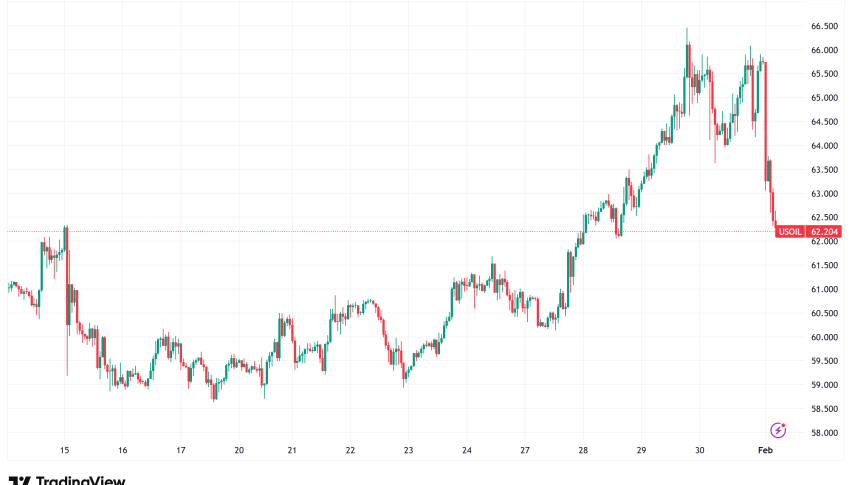
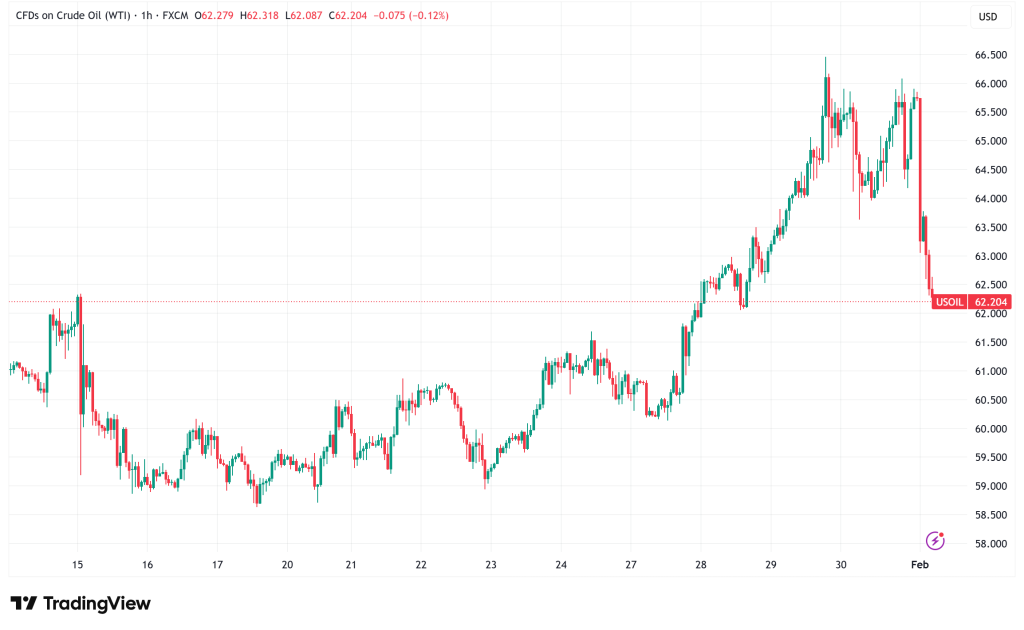
West Texas Intermediate (WTI) crude futures fell more than 5.3% to close below $63 a barrel on Monday, marking the biggest single-day drop in oil prices in weeks. The dramatic turnaround came as rising evidence of diplomatic progress between Washington and Tehran deflated the geopolitical risk premium that had drove prices to multi-month highs.
 WTI crude oil price analysis
Diplomacy over Drills: Trump’s Shift Deflates the “War Premium”
The selloff signals an abrupt halt to crude oil’s six-week winning streak, which had seen WTI climb from approximately $60 to test $66 last week, a gain of roughly 6.8% in the final week alone. The withdrawal was prompted by President Trump’s remarks over the weekend that Iran was “seriously talking” with the US, indicating a possible defusing of tensions that had endangered one of the most vital oil transportation lines in the world.
Iran stated that arrangements for conversations were proceeding, a dramatic contrast to the harsh rhetoric that dominated January. Just weeks ago, Trump threatened military action over Iran’s domestic crackdown on protests, while Tehran issued its own warnings of retaliation. Those transactions had pushed oil prices soaring substantially on fears of supply disruptions across the Persian Gulf region.
Adding to the relaxing sentiment, rumors emerged that Iran’s Revolutionary Guards’ naval forces have no intentions to perform previously stated live-fire exercises in the Strait of Hormuz. The narrow river through which almost 20% of the world’s seaborne oil passes every day is no longer in immediate danger if these drills are cancelled.
WTI Oil Technical Analysis: The “Double Top” and $61.50 Support
Technical analysts noted that Monday’s decline broke through a key support level at $63.50, triggering a bearish “double top” pattern on short-term charts. “The price breaking below this neckline, combined with negative signals from momentum indicators, suggests further downside potential toward the $61.50 support level,” according to analysis from Economies.com.
However, the geopolitical developments may simply be quickening a correction that fundamental experts had been predicting. A recent Reuters poll of 31 analysts estimates Brent crude would average just $62.02 per barrel in 2026, with WTI estimated at $58.72—both notably below current trading levels.
OPEC+ March Output Freeze and the $130 Million Malaysian Seizure
The negative view arises from expectations of a significant global oil surplus ranging from 750,000 to 3.5 million barrels per day this year. OPEC+ confirmed on Sunday that it would maintain unaltered output levels in March, the third month of its three-month production freeze established after the organization lifted objectives by 2.9 million barrels daily in 2025.
“The war premium is underpinning the rally, but the fundamental backdrop of excess supply capacity says don’t get too comfortable chasing this move,” warned commodities expert James Hyerczyk, emphasizing the mismatch between geopolitically-driven price surges and underlying market fundamentals.
While recent U.S. Energy Information Administration data revealed a 2.3-million-barrel inventory drop, leaving commercial crude stocks roughly 3% below the five-year seasonal average, analysts caution this tightness may prove ephemeral given the predicted supply surplus.
WTI Crude Oil Price Prediction: Intraday Bearishness vs. 2026 Oversupply
Market traders will be monitoring intently for any reversal in diplomatic momentum. Should tensions rekindle or actual supply interruptions materialize, economists predict prices may soon rebound into the low-to-mid $70s. Conversely, sustained progress toward a nuclear agreement or unfavorable inventory data might cause significant profit-taking back toward the $60 consensus prediction level.
For now, traders appear to be recalibrating their positions as the immediate prospect of Persian Gulf disruptions recedes, setting up what may be a tumultuous period as markets balance geopolitical threats against underlying oversupply concerns.

Arslan Butt
Lead Markets Analyst – Multi-Asset (FX, Commodities, Crypto)
Arslan Butt serves as the Lead Commodities and Indices Analyst, bringing a wealth of expertise to the field. With an MBA in Behavioral Finance and active progress towards a Ph.D., Arslan possesses a deep understanding of market dynamics.
His professional journey includes a significant role as a senior analyst at a leading brokerage firm, complementing his extensive experience as a market analyst and day trader. Adept in educating others, Arslan has a commendable track record as an instructor and public speaker.
His incisive analyses, particularly within the realms of cryptocurrency and forex markets, are showcased across esteemed financial publications such as ForexCrunch, InsideBitcoins, and EconomyWatch, solidifying his reputation in the financial community.
Related Articles