
In 2026, the competitive gap will widen between the players who figure out how to scale generative and agentic artificial intelligence (AI) and those who don’t.
In Phocuswright’s latest study, Budgets, Barriers and the Race to Agentic AI, we take the pulse of generative AI adoption. We asked senior travel executives how they are budgeting for technology, where generative and agentic AI is in use today, what’s blocking them from going further and what their outlook is for the future.
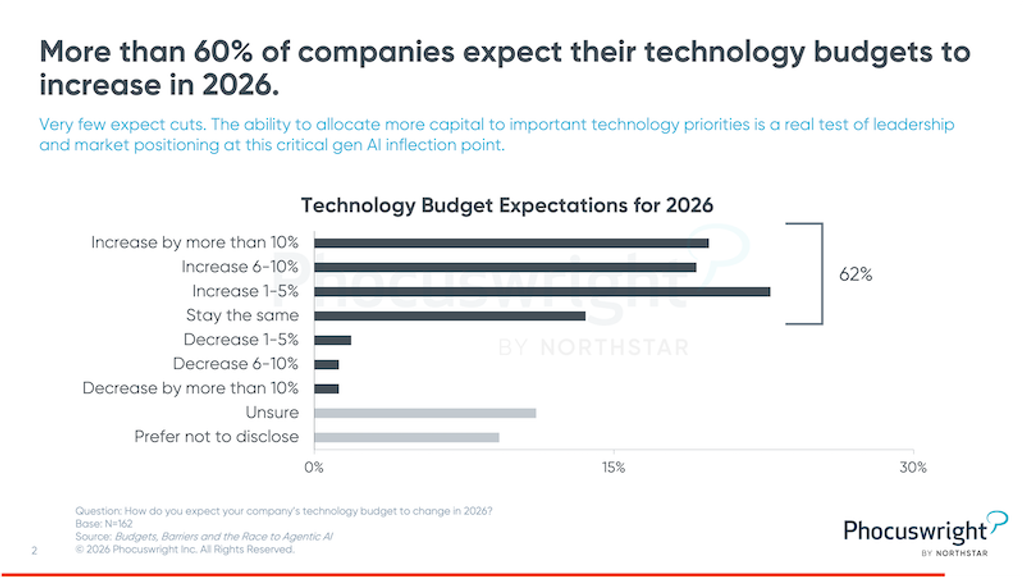
The signal is clear: Gen AI has shot to the top of the tech priority list, but most deployments are still small and tactical. Integration complexity, talent gaps and data security are the real restraints, not lack of interest or budget.
The winners of the future are figuring out the game now.
4 signals from the front lines of AI investment: Gen AI has jumped to the top of the tech agenda: It is the number one tech investment priority for the next 12 to 18 months, cited as the top choice by 28% of companies. Most companies are still funding AI as experimentation, not core infrastructure: Tech budgets are rising but not yet rewired for AI. More than 60% expect their overall tech budget to increase in 2026.Gen AI adoption is widespread but still in the early stages: 83% are using it, yet for most it still accounts for less than 10% of their tech budget. AI impact is rated highly, but preparedness is not: 88% say gen AI has already had a positive impact on their business. But not many feel fully prepared to implement.
Phocuswright’s Budgets, Barriers and the Race to Agentic AI
The report answers strategic questions around what decision makers are wrestling with next such as the top internal challenge when adopting new tech, lack of alignment on the industry’s perspective of ROI and more.