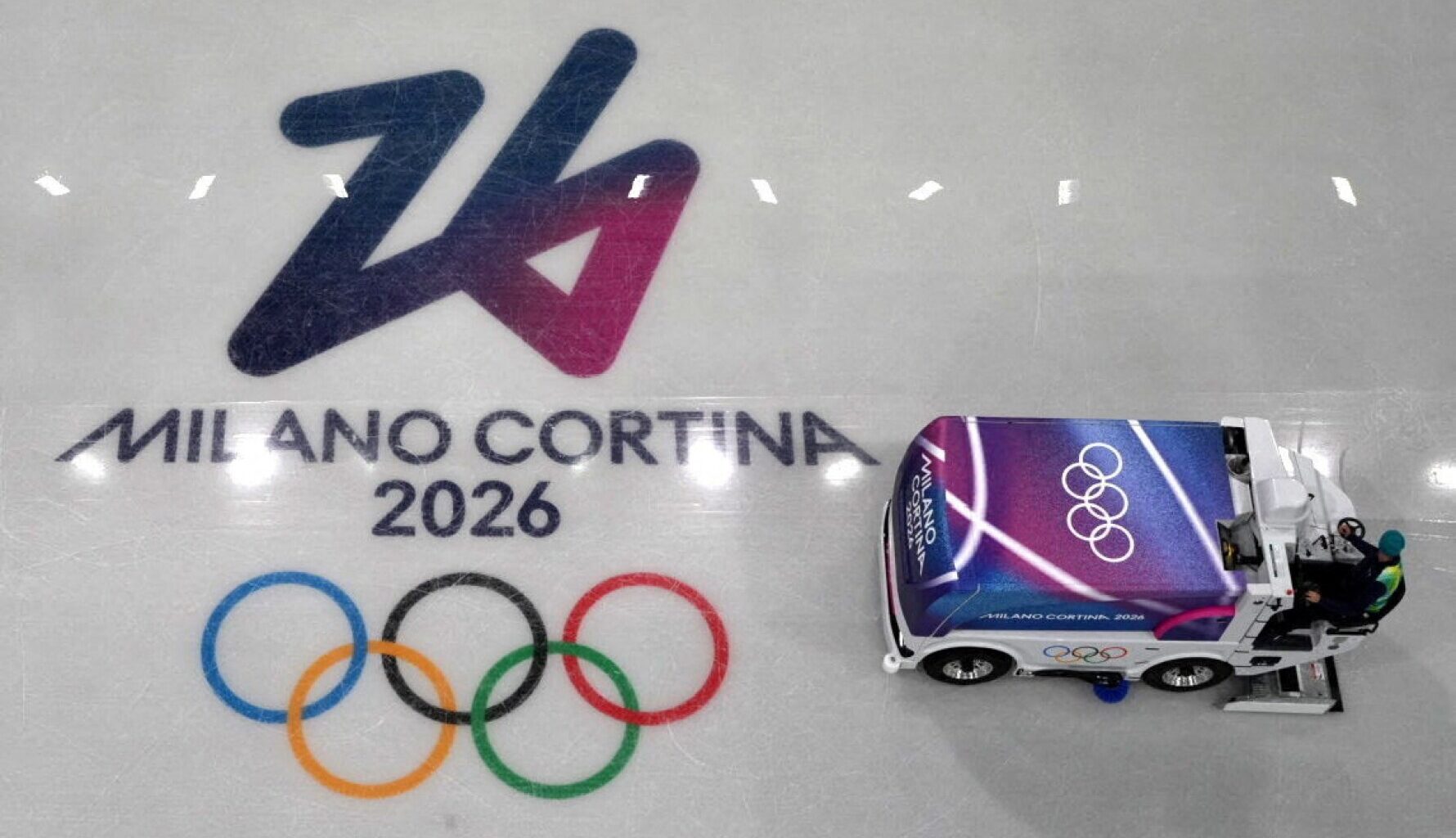
Time compresses memories for us all, so you can be forgiven if all this talk of the Winter Olympics in Italy confuses you. Didn’t we just have a Winter Olympics here?
Sort of. Turin, or as the locals call it, Torino, hosted in 2006. You remember right: John Shuster was in Pete Fenson’s curling rink and won a bronze medal (It had a hole in the middle on purpose).
The 2006 Games were the one where Lindsey Jacobellis fumbled a gold medal because she did a trick with a big lead on the last jump of her race, the one with speedskaters Shani Davis and Apolo Ohno, and where the world met snowboarder Shaun White and his very red hair.
Yes, that was 20 years ago. Now, we’re in Milan, or the locals call it, Milano, or more specifically, Milano-Cortina. It’s all northern Italy, but the similarities end there.
That hyphen is doing a lot of work, as the fastest driving route between Milan and Cortina d’Ampezzo is five hours. One can get from Milan to Turin in two.
In fact, one can get from Cortina to the site of five different Winter Olympics (Garmisch-Partenkirchen, Innsbruck [twice] and St. Moritz [twice]) in equal or lesser time than one can cover that hyphen from Milano to Cortina.
No, I am not in Italy, but I’d like to be. You see, every time the Olympics rolls around, I like to act as a sort of concierge so you, the reader, can get a little context for what you’re seeing on NBC. Also my coworkers benefit when I tell all my Olympics stories on the page instead of in the office when they’re trying to work.
Speaking of Olympics stories, here’s a good one:
As I’ve mentioned before, this is actually Italy’s third Winter Olympics. The first came in 1956, in Cortina. They were the last Winter Olympics where figure skating was an outdoor event and the first Winter Olympics with international television coverage.
This created a problem, however, when a speedskater carrying the Olympic Flame into the stadium on skates tripped over a television cable and wiped out. The torch remained lit. That venue, now enclosed and renovated, will host curling starting on Wednesday night (however, Duluth’s Cory Thiesse and Korey Dropkin have a bye in that round and don’t start until 3:05 Thursday morning Duluth time).
Another venue from 1956 that is being reused is the luge/skeleton/bobsled track, sort of. It was completely rebuilt in the same location at the cost of 118 million euros, and not without significant debate over whether it was worth it to build a very expensive and specialized sliding track again when Cesana Pariol, the 2006 venue near the Italian-French border, was still standing (and closer to Milan than Cortina is).
That debate is noteworthy as we start the 2026 Games. The Winter Olympics face a lot of significant and unique challenges, first among them the tenuous existence of winter. But climate change is a big problem for more than just biathletes. The Olympics have some other unique issues.
Any potential Winter Olympics site must be in a location large enough to host nearly 3,000 athletes, their support teams, the media that want to cover them and the fans that want to watch them, must be in a part of the earth that gets regular snow from January to March and is within driving distance from a major mountain range.
Back in 2018,
I dreamed a dream about Duluth hosting one of these,
and I’m still interested in getting a bid together if someone has $100 billion they’d like to give me. However, the minimum vertical drop for an Olympic Alpine ski downhill for men is 2,625 feet. Lutsen Mountains is listed at 1,088 and has the largest vertical drop in Minnesota. I’m not sure how to overcome that.
That doesn’t leave a lot of options, especially when the International Olympic Committee’s high-maintenance nature has offended several Western governments whose collaboration (and sweet, sweet public money) they need to pull this off.
Perhaps with that in mind, the IOC has started booking locations now. The 2030 Winter Games are just billed as “French Alps,” with ice venues in Nice on the French Riviera and skiing taking place in some of the same areas that hosted Albertville 1992 Olympic events, even though the two locations are separated by a six-plus-hour drive around the mountains that goes through the suburbs of … wait for it … Turin, Italy.
The 2034 Games are already booked for a return to Salt Lake City. Even though 2038 is 12 years off, the IOC is already holding hands with Switzerland, which is conveniently where their headquarters are located.
So, if you’re concerned about retread locations or venues that are hours apart from each other, get used to it. This is the reality now. However, I doubt you will. There’s lots to look forward to over the next two weeks, so settle in. We’ll worry about which northern Italian city ends up with 2046 in a couple of months.
Brandon Veale is the sports editor of the News Tribune and will be writing regular columns about Olympic history and issues during the Milano-Cortina 2026 Games.

Brandon Veale