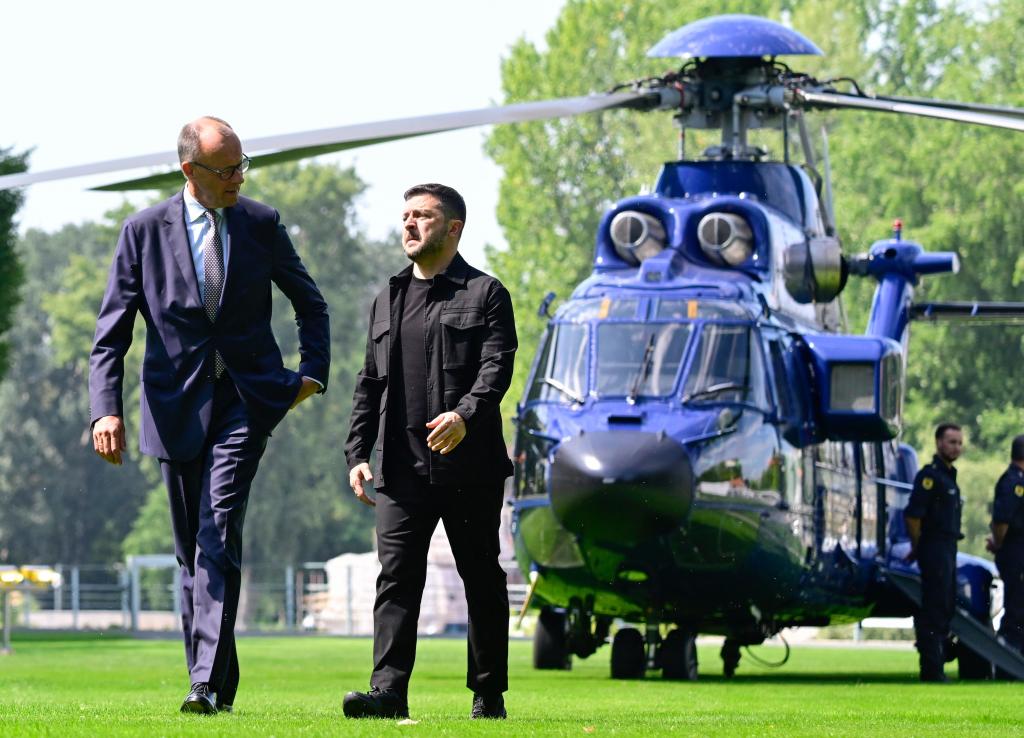
Contemporary Germany provides positive, sensible leadership for Europe and beyond.
Chancellor Friedrich Merz in recent months has enjoyed a series of successes, both rhetorical and diplomatic, that deserve more attention and praise than has to date been received. On Jan. 22, he delivered an important and insightful policy address at a meeting of international leaders in Davos, Switzerland.
Chancellor Merz emphasized that the international system of the past three decades, since the collapse of the Soviet Union and Soviet satellite bloc with the conclusion of the Cold War, has ended. The relatively stable successor system, led by the United States, where international law was relatively influential, has now also come to an end, in part because of the direct military invasion of Ukraine by Russia in 2022 and the resulting long, bloody, and so far indecisive war.
China, with impressive “strategic foresight,” has now become a great power, and more generally, we are entering an era of Great Power Politics.
Merz noted that “strength and force” have emerged as much more important than before, but do not have to dominate or even define future international relations. In his words, “We do not have to accept this new reality as fate.”
Appropriately, he emphasized the importance of responsible, far-sighted United States leadership in establishing NATO (North Atlantic Treaty Organization) soon after the end of World War II. He also stressed the European Union, which was also initially created through European and U.S. initiative to encourage economic development and security, primarily in this case by integrating West Germany with the rest of Western Europe.
Also skillfully, he complimented fresh attention devoted to Greenland and the vital importance of security for the “High North,” meaning the Arctic region.
This rhetorical tour de force caps extensive diplomatic activity over the past year. On July 17, the Kensington Treaty was signed by Merz and British Prime Minister Keir Starmer in London. The new treaty deepens existing cooperation in defense, migration, trade and other matters. Merz also called for greatly increased cooperation between the two nations and France.
This is a complement to the new Anglo-French agreement to coordinate nuclear weapons strategy. Historically, Britain has been closely tied to the United States in this regard.
Historically as well, France was distinctive for the pursuit of policies independent of Washington regarding nuclear weapons and other matters. Conflict reached a height of intensity during the Kennedy administration, when an assertive American president figuratively collided directly with imperious President Charles de Gaulle of France.
More recent years have brought low-key reconciliation across the Atlantic. In 2009, France rejoined NATO after dramatically departing the organization, and forcing NATO headquarters out of Paris, in 1966.
Chancellor Merz also scored a diplomatic success with his visit to President Trump at the White House on June 5. In contrast to a disastrous meeting earlier between President Volodymyr Zelensky of Ukraine and Trump, the session with Merz was calm, friendly and productive.
This is a result of the interpersonal skill, personal discipline and human insight of Germany’s head of government.
In concrete terms, Germany demonstrates sustained leadership of Europe and the larger Atlantic area alliance in forging a path to greater defense spending and greater support of Ukraine in the continuing brutal war with Russia.
Germany’s defense spending is projected to rise from 95 billion euros in fiscal 2025 to 162 billion euros in fiscal 2029, tangible funds used for hard realities.
Arthur I. Cyr is author of “After the Cold War – American Foreign Policy, Europe and Asia” (NYU Press and Palgrave/Macmillan). Contact acyr@carthage.edu