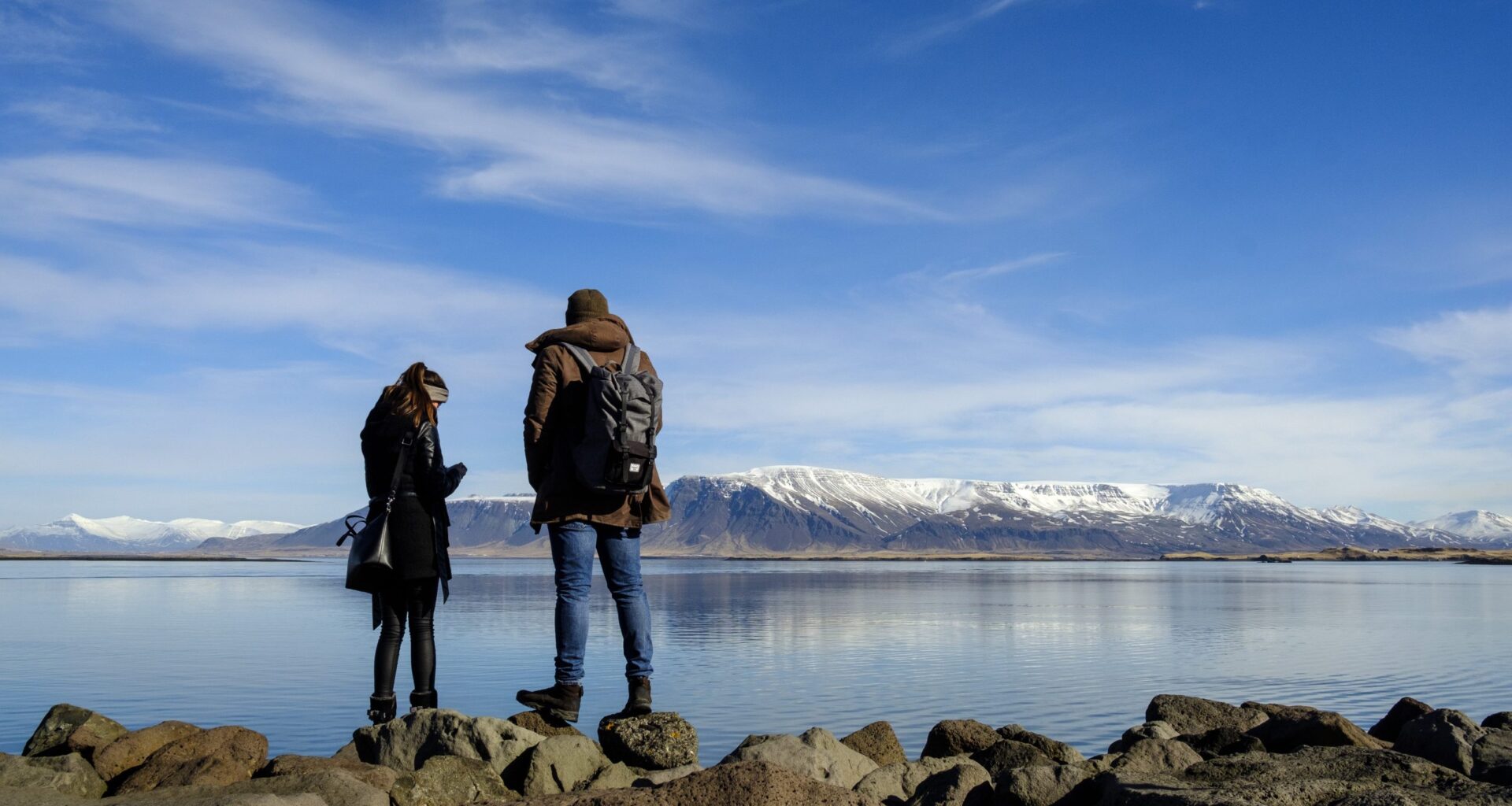
Most of our readers tend to fall into one of a few camps. You might be planning your first trip to Iceland, plotting a return visit, or are someone who once lived, worked, or studied here, and still checks in out of habit.
The truth is, Iceland rarely fits the tidy categories travellers and travel mags like to use. It is not quite a city break, nor is it a beach holiday. The weather does as it pleases, and much of the landscape looks almost unfinished, as if the earth is still in the middle of shaping it.
It is for these reasons, perhaps more than any other, that people from across the globe keep making the journey here.
And just as telling is that many who have already been, even multiple times before, find themselves drawn back time after time.
Ultimately, there’s no substitute for experiencing the country first hand. And it’s not a transitory feeling. Something about the space, the light and the pace of life in Iceland lingers with people long after they depart its shores.
So, whether you are arriving for the first time or returning to familiar ground, 2026 offers plenty of reasons to visit the Land of Ice and Fire.
What makes 2026 a good year to visit is not just one headline attraction, but rather, a litany of exciting updates and additions across the country.
For instance, parts of the country (namely, the Reykjanes Peninsula) continue to be shaped by recent volcanic activity.Reykjavík’s food and cultural scenes continue to grow up without losing their character. Expect new restaurants, food halls, and bars!Travel around the island has become easier, while much of it still feels properly remote.
There are, of course, also the reasons to visit that have not changed. For one thing, Iceland still offers space, quiet, and a sense that nature is in charge, but that’s just the tip of the iceberg.
Whether it is your first trip or a return, here are some solid reasons to point yourself north this year.
1. The Landscapes Are Still Changing
Iceland is defined as much by fire as by ice, and the recent eruptions on the Reykjanes Peninsula have visibly reshaped parts of the southwest.
New lava fields stretch across previously familiar ground, fissures cut through the earth, and altered terrain gives returning visitors an immediate sense that the landscape is still evolving. The region offers a rare chance to witness geological change not as distant history, but as an ongoing process.
Walking or driving through these areas reveals striking contrasts: fresh black lava beside moss-covered older flows, steaming vents near well-travelled routes, and coastlines subtly redrawn by volcanic force.
For many, seeing these newly formed features alongside established scenic drives adds a deeper dimension to a journey. They turn familiar views into something newly dramatic and unmistakably dynamic.
2. Reykjavík’s Food Scene Has Leveled Up
Reykjavík’s compact downtown continues to attract international attention for its cafés, restaurants and creative food culture. But, more and more, dining establishments all over the country are gathering more traction.
It should come as no surprise to anyone that locals and visitors alike celebrate small-plate dining, artisan baking and serious coffee culture. Don’t believe me? Make sure to check out Iceland Review’s Food & Drink section for our choices of the best restaurants around the country
From neighbourhood bakeries to hidden fruit markets, culinary experiences in Iceland offer a mix of tradition and experimentation.
Of course, culture beyond food also thrives on our quaint Nordic island; music venues, galleries and year-round events mean Iceland’s towns and villages stay livelier than you might expect, even off peak tourist seasons.
3. You Can Still See the Glaciers
A sad and troubling reason to visit Iceland, but one that must be mentioned nonetheless.
Iceland’s glaciers, central to many travellers’ itineraries, continue to shrink each year, but they are, as of 2026, still accessible for guided exploration.
Each thrilling in their own way, glacier hikes, ice cave tours and scenic helicopter flights offer close-up views of these ancient ice masses.
Visitors who want to see glaciers up close this year still have the opportunity to do so before future retreat alters their appearance. Glacier lagoons and floating icebergs remain quintessential Iceland sights.
Tours vary from easy walks to challenging climbs, making glacier exploration appropriate for a wide range of travellers.
4. Hot Springs Beyond the Blue Lagoon
The long-loved Mývatn Nature Baths are set to reopen in spring 2026 as the Earth Lagoon Mývatn. Visitors can expect updated facilities and an expanded bathing experience.
Located near the stunning Lake Mývatn in North Iceland, this geothermal spa offers milky-blue waters similar to the Blue Lagoon but with its own character and quieter surroundings.
For visitors exploring the Diamond Circle or Akureyri region, a soak here adds a relaxing geothermal focus that complements hikes, waterfalls and northern wilderness. Beyond that, it provides another reason to explore this stunning and lesser-visited region; one that hosts Dimmuborgir rock formations (“The Dark Fortress”) and Grjótagjá cave.
Then there is Laugarás Lagoon, which opened in summer 2025. Set against forested surroundings, Laugarás Lagoon is positioning itself as a new kind of geothermal retreat, combining bathing culture with high-end dining.
The experience will include a restaurant led by acclaimed Icelandic chef Gísli Matt, bringing a strong culinary focus to the site alongside its wellness facilities.
The project is being developed by Mannverk and will cover around 1,000 square metres. Plans centre on a tiered lagoon design, with a 6.6-metre waterfall flowing into the main pool; a feature the developers say is a first for Iceland. Water temperatures are expected to remain between 38°C and 40°C.
Additional facilities will include two saunas, a cold plunge pool and a secluded grotto area intended for quieter relaxation. Swim-up bars are also part of the design, adding a social element to the bathing experience while maintaining a focus on comfort and wellbeing.
5. The Ring Road Is Easier Than Ever
Travelling Iceland’s Ring Road remains the best way to see the country’s diversity, from volcanic deserts to coastal cliffs and deep fjords.
Over the last few years, infrastructure improvements and clearer signage around the island has helped drivers of all experience levels complete the circuit with confidence.
Whether self-drive or guided, the loop around Iceland in 2026 continues to be one of the most efficient ways to see a variety of landscapes in a single trip. It means you can experience the country at your own pace, stopping to appreciate the views and attractions as you see fit.
Looking for some inspiration? Be sure to prepare by exploring our Driving & Itineraries section, which offers plenty of ideas regarding route planning.
6. Midnight Sun Road Trips
Summer in Iceland brings long, lingering daylight, with the Midnight Sun brightening evenings well into the night.
The extended light is a defining feature of travel during this season and remains unchanged year to year, including 2026.
These prolonged hours make it easier to explore at a relaxed pace. Visitors can spend more time on hiking trails, pause for photography in shifting light, or take scenic drives without watching the clock.
Popular natural sites such as waterfalls, coastal cliffs, and highland routes feel more accessible when daylight is not a limiting factor.
For many travellers, the experience is less about packed schedules and more about flexibility; the freedom to follow clear skies, changing weather, or spontaneous detours.
Beyond what we’ve already mentioned, Iceland’s summer light does not simply lengthen the day; it changes how the landscape is experienced, offering a rare sense of time and space that shapes journeys across the country.
7. Northern Lights in the Shoulder Seasons
Autumn and late winter still offer the possibility of the Northern Lights, but with milder temperatures and fewer deep-winter challenges.
The aurora borealis occurs when charged particles from the sun collide with gases in Earth’s upper atmosphere, releasing energy in the form of light. These displays are most visible at high latitudes, including Iceland, when skies are dark and conditions are clear.
Activity varies depending on solar conditions, meaning sightings can never be guaranteed, but the darker months outside the peak of winter often provide a practical balance between visibility and travel comfort.
From 2026 and beyond, scientists predict that aurora activity is expected to increase as the current solar cycle approaches its peak, meaning brighter and more frequent Northern Lights displays may be visible over Iceland in the coming years.
8. Wildlife Without the Crowds
Many wildlife tours in Iceland operate with smaller groups and run from quieter harbours or wildlife centres across the island.
For nature lovers, this makes it easier to include memorable wildlife encounters within a wider itinerary, often without long detours or additional travel days. In 2026, operators continue to emphasise flexible scheduling and local departure points, allowing visitors to join excursions close to other major sightseeing routes.
These tours range from whale-watching trips departing coastal towns to guided visits to bird cliffs and seal colonies. Smaller group sizes can also mean more time for observation and photography, as well as closer communication with guides about animal behaviour and local ecosystems.
Because departures are spread around the country rather than concentrated in a few major ports, travellers can match wildlife experiences with the regions they are already exploring, whether along the south coast, in the west, or near fjord landscapes in the north and east.
This approach allows wildlife viewing to complement, rather than dominate, a broader journey through Iceland’s varied natural environments.
9. Culture in Compact Form
Reykjavík’s cultural scene is easy to explore on foot. Museums, galleries and performance venues concentrate the capital’s artistic energy in a walkable area.
Beyond the capital, cultural life is woven into towns and small communities across Iceland. Regional museums highlight local history and folklore, while community arts centres host exhibitions, theatre and concerts that reflect distinct identities from one part of the country to another.
Seasonal festivals further shape the calendar. Literary gatherings, design events and live music nights take place throughout the year, offering travellers a chance to experience contemporary Icelandic culture as well as longstanding traditions.
Even smaller settlements often maintain active choirs, craft collectives or cultural houses that welcome visitors.
For those looking to balance dramatic landscapes with arts and heritage, Iceland offers cultural experiences that extend far beyond the capital. Readers interested in exhibitions, events and local traditions can explore more stories and listings in the Culture section of Iceland Review.
10. It Still Feels Remote
Iceland in 2026 still delivers what many visitors seek most: space and quiet.
Step away from the busiest landmarks and the sense of scale quickly takes over. Long stretches of highland roads cross open plateaus, coastal routes trace sparsely populated shorelines, and inland valleys unfold with little sign of development.
Even in summer, it is possible to walk for extended periods without encountering large groups, particularly outside peak hours and in less-travelled regions.
This feeling of openness is shaped not only by low population density but also by geography. Glacial rivers, lava fields and mountain passes naturally limit where people gather, leaving broad areas where sound carries far and horizons feel uninterrupted.
Travel here often becomes less about ticking off sights and more about moving through landscapes at an unhurried pace.
For travellers who value room to think, photograph, or simply sit with a view, Iceland continues to offer a rare balance: accessible infrastructure alongside genuine solitude. It is this combination that keeps the country appealing to those who want journeys defined more by environment than by crowds.
11. Dramatic Weather (In a Good Way)
Icelandic weather has a pretty infamous reputation, putting it lightly. And anyone who has spent more than a few hours here knows that reputation is earned.
Sun, wind, rain and sudden clear skies can all pass through in the space of an afternoon. Forecasts help, but they are more like suggestions than promises.
For visitors, this constant change of conditions can feel inconvenient at first. Clothing layers become essential, and plans sometimes shift as quickly as the cloud cover. A picnic might turn into a café stop; cloudy mornings easily give way to clear aurora-filled evenings.
But for photographers, or pretty much anyone who appreciates atmosphere, this variability is part of the appeal. Fast-moving clouds, low light, mist over lava fields and sudden rainbows create landscapes that rarely look flat or predictable.
12. You’ll Come Back Different
At this point, you might be wondering whether Iceland is being oversold. It does sound a bit unreal on paper. The truth is, describing it without slipping into exaggeration is surprisingly difficult.
People arrive for the headline sights: glaciers, waterfalls, black sand beaches. What often stays with them, though, is everything in between. The long, near-empty roads. The sense that the sky sits a little lower and the land stretches a little further than expected. Those moments when you pull over for a quick photo and end up standing there, doing nothing much at all, for far longer than planned.
A quiet calm tends to settle in. You start to notice small things, the wind moving across open ground, shifting light on distant hills, the crunch of your own steps on gravel. Everyday worries do not disappear, but they seem to shrink slightly, as if they belong to a different scale of life.
Yes, people go home with memory cards full of dramatic landscapes. But the real takeaway is less visible. It is the feeling of having had space to think and breathe properly for a while. Iceland does not just fill your camera. It remains in your memory long after the journey ends.
Final Thoughts
As we’ve mentioned, the reasons to visit Iceland in 2026 are not built around a single new attraction, but around a combination of change and continuity.
Its epic landscapes continue to shift beneath vast open skies. Its towns and small communities keep adding new layers of food, art and cultural life. Its roads are easier to travel than ever before, yet it still takes very little to find yourself somewhere quiet, with nothing but wind and distance for company.
That balance is what continues to draw people north, and what makes 2026 as good a year as any to see it for yourself.