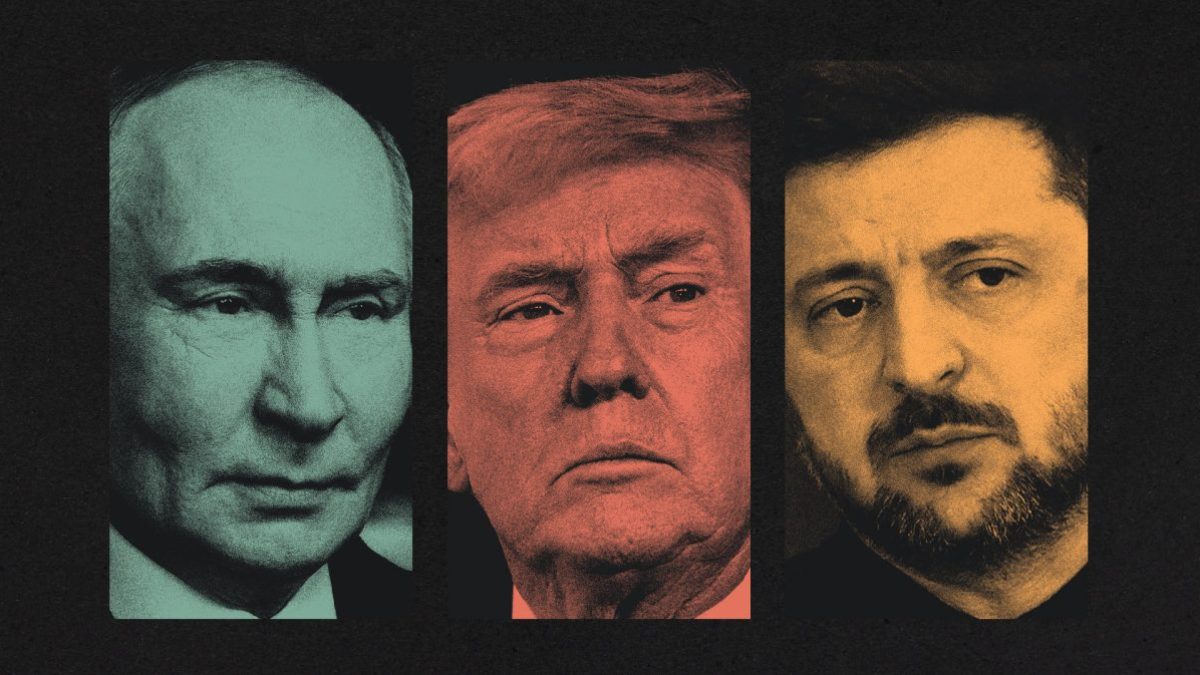
With talks taking place in Abu Dhabi, those involved are beginning to express a new, cautious optimism
The next round of Ukraine peace talks is set to kick off later today, and while it is still hard to be optimistic, a usually downbeat British diplomat did cautiously admit to me that “at least a sense of what a potential deal might look like is emerging”.
On the surface, it is hard to see much ground for positivity for ending a war that has left nearly 1.2 million Russian and close to 600,000 Ukrainian troops killed, wounded or missing, according to a study published last week.
A recent and brief energy ceasefire – where Kyiv and Moscow agreed to halt attacks on each other’s power infrastructure – led nowhere. Indeed, Russia used the lull to stockpile drones and missiles for a massive attack on Tuesday, with 450 drones and 71 missiles, leaving over a thousand apartment blocks in Kyiv without heating as temperatures dropped to below -20°C.
New FeatureIn ShortQuick Stories. Same trusted journalism.
However, at least for the moment, all sides are beginning to express a new, cautious optimism. It is even possible that an outline agreement could be reached in a matter of weeks. Otherwise, if the talks fail to acquire momentum, they are more likely to fizzle out, and it would take months for a new process to emerge.
These are trilateral talks, with Russia, Ukraine and the US all sitting around the same table at the same time, but at the weekend, Vladimir Putin’s envoy Kirill Dmitriev met with Steve Witkoff, Donald Trump’s peace envoy, in Florida.
According to Russian sources, Dmitriev may have used that meeting to convey Moscow’s conditional acceptance of proposed Western security guarantees for Ukraine.
That would have been a prize worth postponing the larger talks, which were originally set to begin on Sunday, and it may be telling that it was apparently the US who requested the delay.
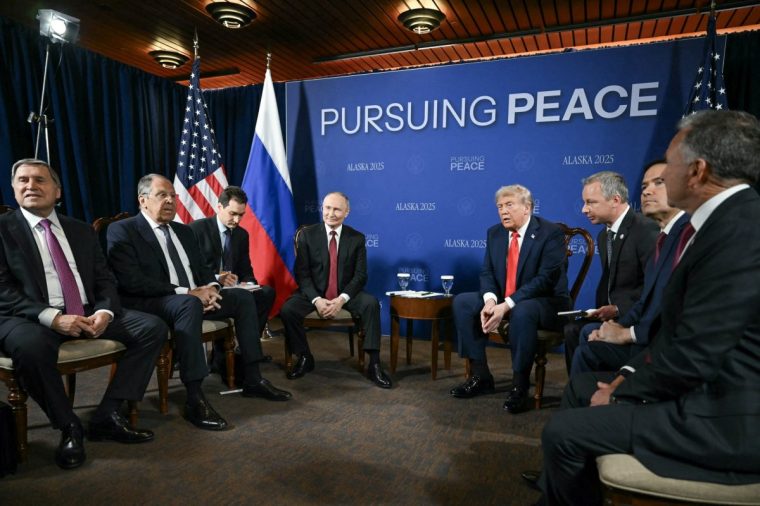 Donald Trump and Vladimir Putin, flanked by Russian and US officials, during a US-Russia summit on Ukraine in Alaska (Photo: Andrew Caballero-Reynolds/AFP via Getty)
Trump’s bullishness over Iran and his willingness to let New START, the last US-Russian nuclear arms control treaty, expire this week also seems to have put Moscow in a more focused and conciliatory mood. Although the Russians claim not to care about the treaty, it clearly worries Putin, given the US’s ability to rapidly ramp up nuclear production if it wants to.
So, what can we expect from the talks? Unconfirmed reporting suggests that the proposed security guarantees go some way to meeting both Russian and Ukrainian concerns.
The deployment of British and French-led peacekeepers into Ukraine has apparently been discarded in favour of a staged response. This would see any renewed Russian aggression met first by Ukraine, then forces from the coalition of the willing, and, if Moscow does not withdraw within 72 hours, a wider Nato response that would include US troops.
Putin has repeatedly and categorically excluded any notion of Western forces in Ukraine, while Ukrainian President Volodymyr Zelensky continues to want the type and scale of any direct assistance to be made explicit. Broad promises of an Article 5-style guarantee, modelled on Nato’s mutual defence clause, have been rejected.
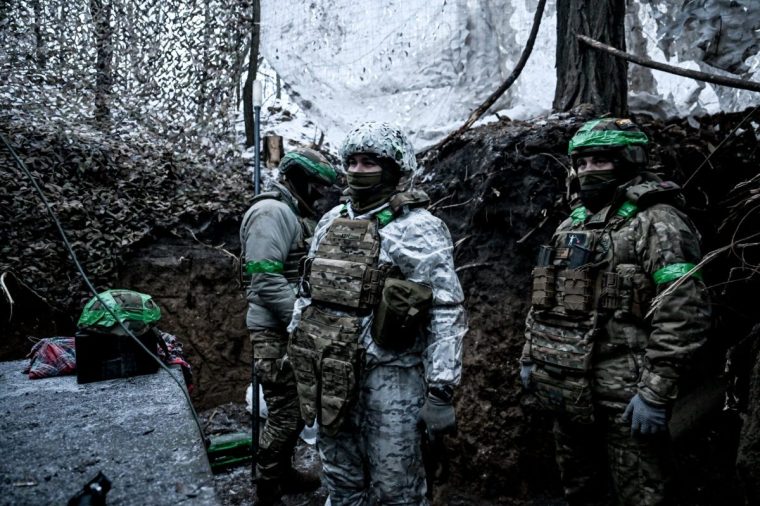 Ukrainian soldiers near the front line in Zaporizhzhia (Photo: Dmytro Smolienko/Ukrinform/NurPhoto via Getty)
Article 5 is actually much vaguer than often assumed, and only speaks of members responding “appropriately”, without spelling out what that means. As a senior Ukrainian foreign policy adviser told The I Paper: “With the greatest respect to our allies, we can’t base our future security on the hope that they will think an ‘appropriate’ response means military intervention, not thoughts and prayers.”
While reports suggest there has been some progress, it is clear that this is nowhere near a done deal, and the talks in Abu Dhabi could go south quickly.
Putin is still demanding to have the remaining fifth of the contested Donetsk region in Russian hands, so that he can claim to have “liberated” all of the symbolically important Donbas territory. Zelensky is strongly resisting this, not least out of a fear that allowing Russia to advance there leaves it in a far better position to resume its conquest at a later date.
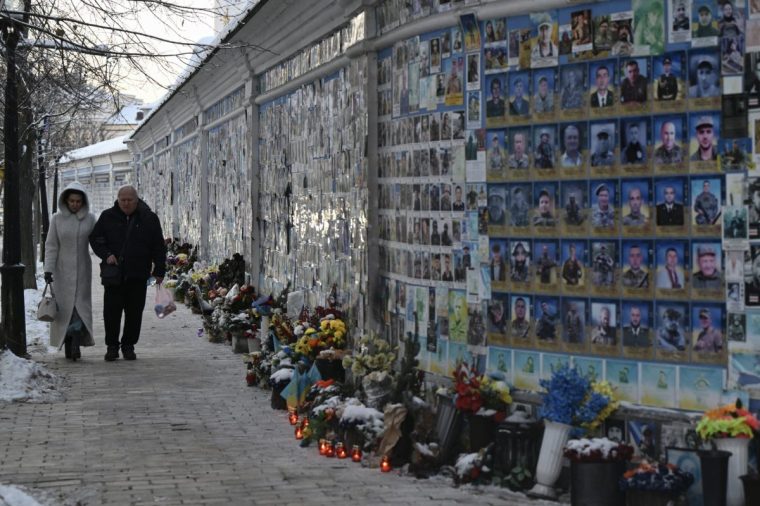 The Wall of Remembrance of the Fallen for Ukraine, a memorial for Ukrainian soldiers, in Kyiv (Photo: Genya Savilov/AFP via Getty)
While there has been talk of demilitarising the region, that does not really address Ukraine’s legitimate concern that Russia could quickly and easily remilitarise it.
However, if this is the price for more substantial security guarantees that would see a renewed attack met by Nato troops, then that might ultimately be acceptable to Kyiv – especially if Trump is willing to bring pressure to bear on Zelensky to try to end the war quickly.
Russian sources are suggesting that so long as Nato membership for Ukraine is ruled out, and some sanctions are gradually lifted, they could see this as the basis for a peace deal, which would see Russia in control of the Donbas and the rest of the territory they have occupied, but nothing more.
Any territorial concessions would be in practice, not in law – although Putin might push his luck and try to get Trump to accept the annexation of Crimea. They would therefore not require Ukraine to rewrite its constitution, something that would have to be done by referendum.
Kyiv could also still lay formal claim to those territories, so long as it also commits to not trying to take them back by force.
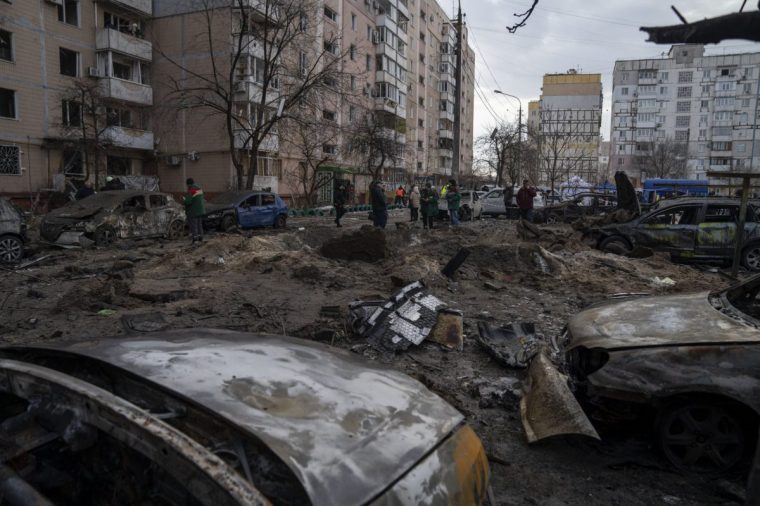 The aftermath of a Russian strike in Zaporizhia, Ukraine, earlier this year (Photo: Jose Colon/Anadolu via Getty)
Of course, even if the headline points can be agreed, the details may prove intractable. Who handles the demarcation of the new de facto border? Who will monitor the ceasefire, and will Kyiv also get a fast-track to EU membership, something Trump seems willing to promise on Brussels’ behalf, despite German Chancellor Friedrich Merz last week pouring cold water on the idea.
If a deal can be struck, Putin will claim an historic victory, and Russia’s elite, acutely aware of the worsening economic situation, can breathe a sigh of relief. At the same time, Trump will finally be able to say he has fulfilled his election promise to end the war and will once again demand the Nobel Peace Prize he so badly craves.
As for Zelensky, while potentially scapegoated for any concessions he is forced to make, he will have gained peace and the chance for Ukraine to rebuild as a sovereign, Western-facing democracy.
For now, however, simply discussing the details would be a major step forward, and could lay the groundwork for future rounds of talks.
If a deal cannot be agreed in the next few weeks, the Ukrainian adviser suggested that the current round of talks will fail. But he added that there will be more talks, because “we are all bleeding, and we need it to stop”.