At the same time, the first direct military friction between the two countries has been recorded. Armed vessels belonging to Iran’s Islamic Revolutionary Guard Corps attempted to stop a US-linked oil tanker in the Strait of Hormuz, while a US fighter jet intercepted an Iranian drone that approached the USS Abraham Lincoln aircraft carrier.
According to maritime security firm Vanguard Tech, cited by Reuters and The Wall Street Journal, Iranian vessels armed with heavy machine guns approached the tanker Stena Imperative at the entrance to the strait and ordered it to stop and prepare for boarding. The tanker refused, increased speed and managed to escape under escort by a US warship. Iran’s Fars news agency claimed in response that the vessel had entered Iranian territorial waters without authorization, was warned and left the area “without any special security incident.”
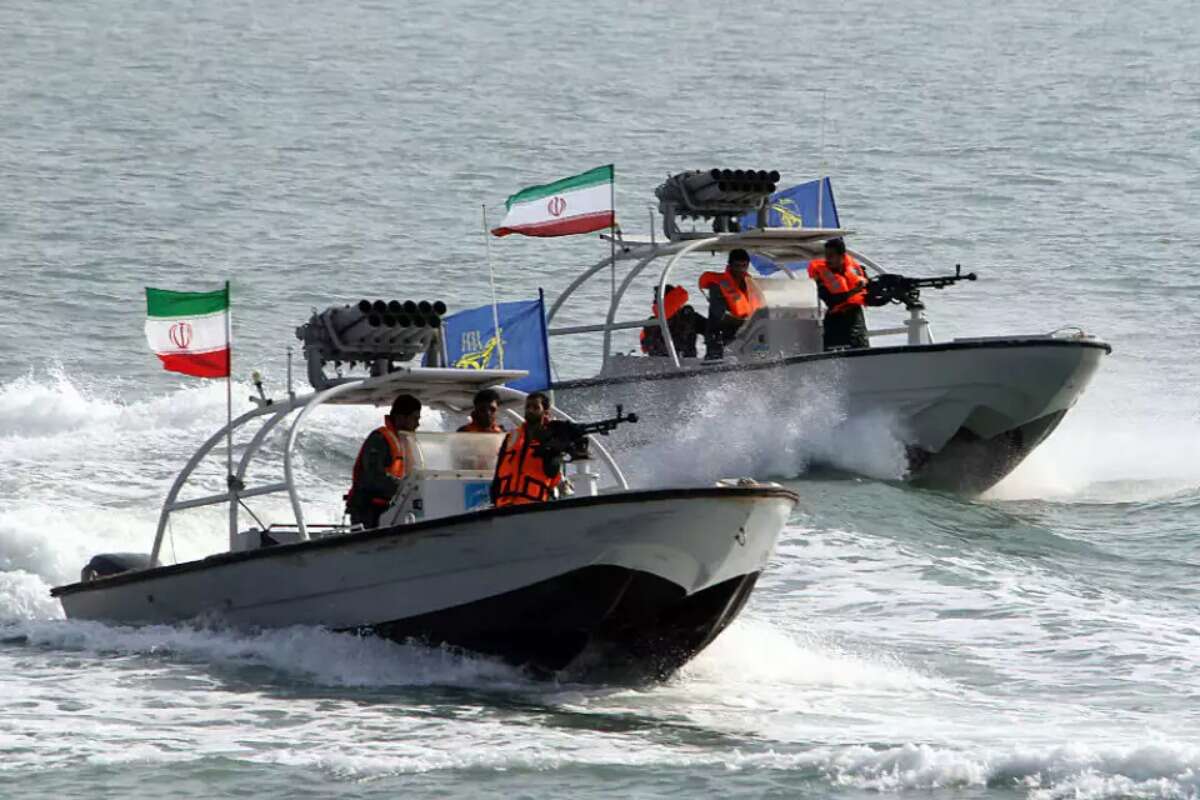 Boats belonging to Iran’s Islamic Revolutionary Guard Corps. Photo: AFP
The incident came two days after the Revolutionary Guard canceled a naval exercise that had been planned for the Strait of Hormuz.
Shortly afterward, a US F-35 fighter jet intercepted an Iranian Shahed-139 drone that maneuvered toward the USS Abraham Lincoln in the Arabian Sea, Reuters reported, citing a US official.
Diplomatic momentum now appears to be unraveling. Just a day earlier, reports indicated that the sides were preparing for a round of talks in Istanbul, alongside representatives from several Arab and Islamic countries. Axios reported, citing sources familiar with the matter, that Iran is now demanding the talks be relocated to Oman, which hosted several rounds of negotiations last year, and conducted solely with the US. According to the reports, Iran is retreating from understandings reached in recent days. The Wall Street Journal reported that Iran has even threatened to withdraw from the talks entirely, though the reason for the threat remains unclear.
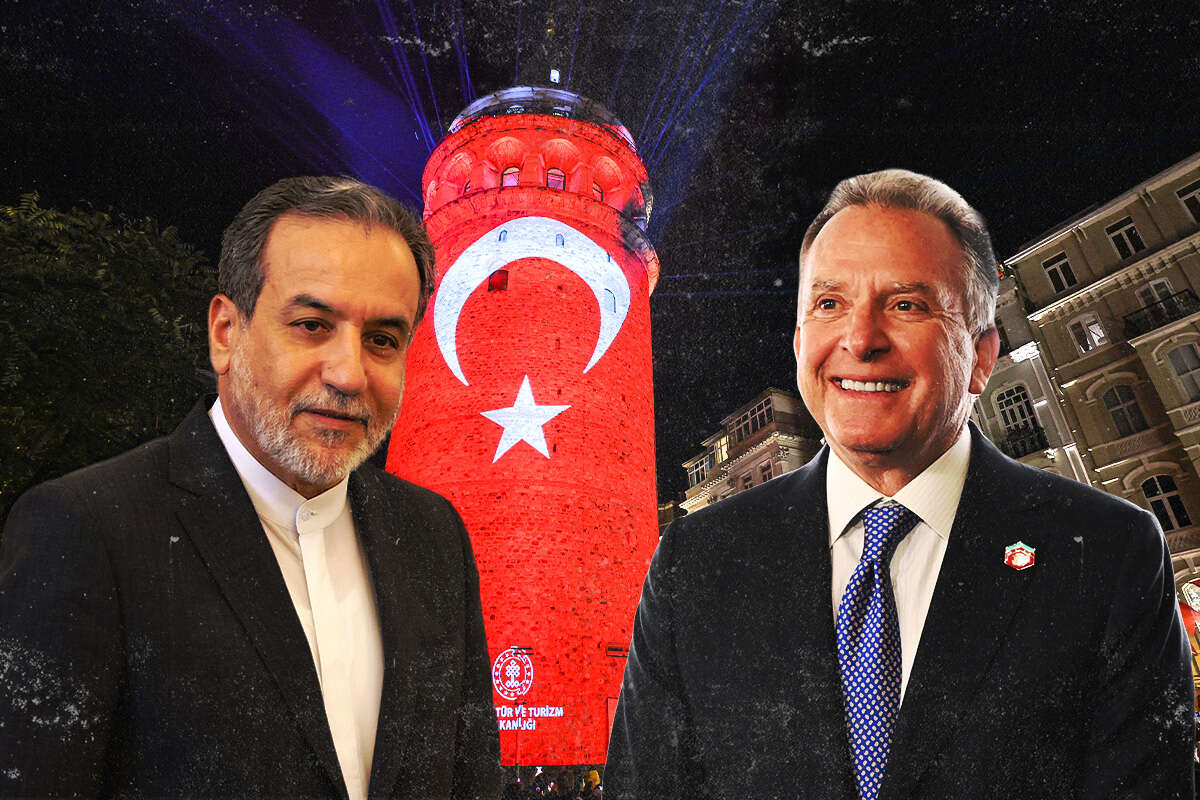 US and Iran move toward talks in Istanbul. Photo: AFP, Gettyimages
A regional diplomat told Reuters that Iran is also seeking to limit the scope of the talks exclusively to the nuclear file. This aligns with Tehran’s longstanding position of refusing to include its missile program or support for regional proxies, issues Washington insists must be addressed.
Behind the scenes, internal tensions in Tehran are complicating Iran’s negotiating stance. According to a report by the Amwaj website, which operates outside Iran but has regional sources, Foreign Minister Abbas Araghchi and Ali Larijani, secretary of Iran’s Supreme National Security Council, are effectively acting as the main decision-makers rather than President Masoud Pezeshkian.
The report said Araghchi’s visit to Turkey over the weekend was meant to be accompanied by a clear signal from Pezeshkian that the foreign minister had full authority to negotiate with Washington. At the last minute, however, the president sought final approval from senior regime figures, but “they did not give the president a green light,” one source told Amwaj.
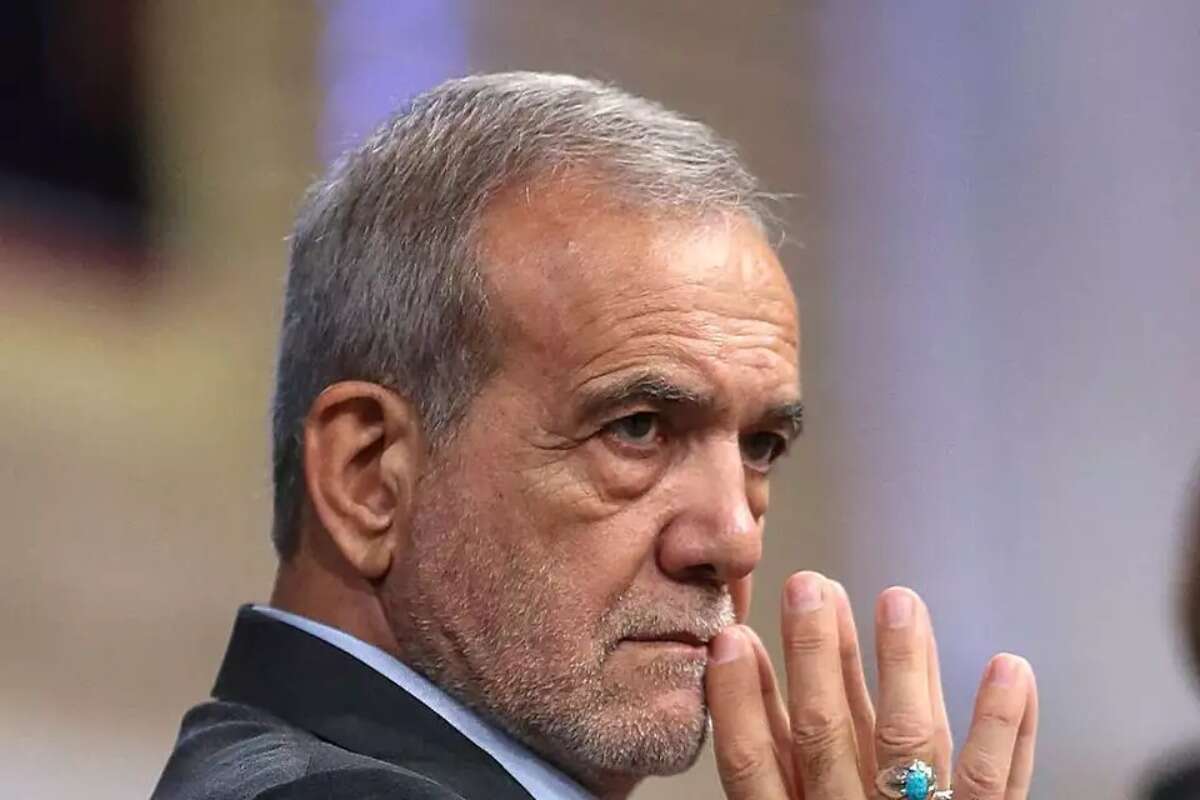 Iranian President Masoud Pezeshkian. Photo: Reuters Reuters
The report added that unlike predecessors such as former president Hassan Rouhani, who was seen as relatively moderate, Pezeshkian, known as a reformist, is struggling to present himself publicly as loyal to Supreme Leader Ali Khamenei. That dynamic, according to the report, makes it harder for Khamenei to change course and later blame the president for excessive flexibility if talks fail.
Ali Bagheri Kani, who previously headed Iran’s negotiating team under former president Ebrahim Raisi, has been appointed Larijani’s deputy on the National Security Council. According to the sources, he was “imposed” on Larijani and now plays a limited role, mainly recording meeting minutes. The report also noted the potential return of Ali Shamkhani, the former council secretary and now an adviser to Khamenei, as a spoiler. Amwaj said Shamkhani could reprise the role he played in 2021, when he repeatedly leaked information to Iranian media as an “informed source,” disrupting indirect negotiations between the Rouhani government and the Biden administration over a return to the 2015 nuclear deal.
According to a New York Times report published Monday, during Larijani’s meeting with Russian President Vladimir Putin in Moscow over the weekend, the senior Iranian official proposed, in Khamenei’s name, that Iran might agree to transfer its stockpile of enriched uranium to Russia, as it did under the 2015 agreement. Shamkhani rejected that idea in an interview Tuesday with the Lebanese channel Al Mayadeen, saying there was “no reason to transfer the material outside Iran.” He added that Iran was prepared to reduce enrichment levels from 60 percent to 20 percent, “but they must pay for it.”
Bagheri Kani also denied the reports on Tuesday. “Iran has no intention of transferring enriched nuclear material to any country, and the negotiations did not revolve around such an issue at all,” he was quoted as saying in Iranian media.