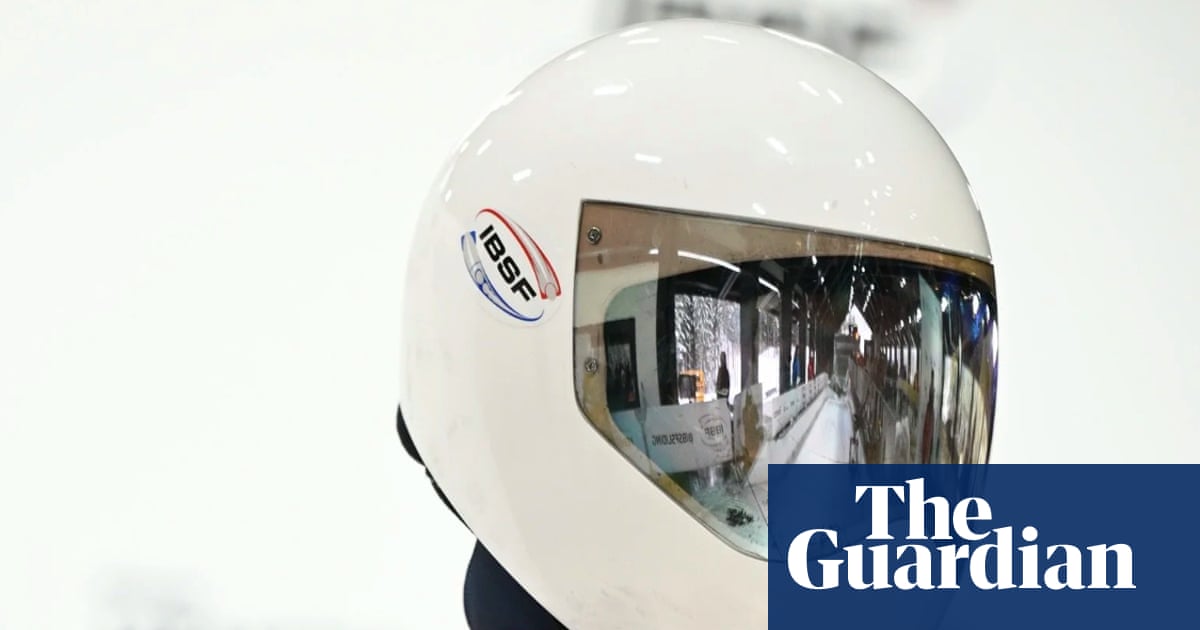
Great Britain’s best hopes of a gold medal at the Winter Olympics have suffered a significant blow after skeleton’s governing body sensationally banned Team GB’s aerodynamic helmets for being the wrong shape.
Team GB’s Matt Weston and Marcus Wyatt have dominated skeleton all season, winning all seven of the World Cup races, and making them strong favourites to win gold and silver here in Milan.
However, it has now emerged that the International Bobsleigh and Skeleton Federation (IBSF) banned the British helmets on 29 January, saying they “did not comply with the IBSF Skeleton Rules based on its shape”.
Team GB have now appealed the decision to the court of arbitration for sport, arguing the design and manufacture of the helmet meets rigorous safety standards. The appeal will be heard on Thursday, with the result expected on Friday. Weston and Wyatt will compete on 12 and 13 February.
UK Sport has pumped £5,765,123 of National Lottery funding into skeleton sliders over the last four years, and have been rewarded with Weston in particular dominating the sport.
Last year he became world champion for a second time, beating his closest rival Wyatt by 1.9secs faster. While this season, Weston has won five races and Wyatt has won two.
Speaking just before the Games, UK Sport’s performance director Kate Baker had admitted Team GB had been using new tech in the build-up, especially in skeleton and bobsleigh, and had been using their own wind tunnel to improve performance.
“Critically, what’s exciting about the way that the skeleton and bobsleigh programme are now working is that they are fully integrated together,” she said. “They used to be separate programmes. They’re now overseen by the same performance director, Nat Dunman, who you probably already know.
“She has overseen an integrated research and investment programme which has brought some real fruit, as you will see from the performances that we’re already producing,”
Asked whether stuff gets deliberately held back for the Olympics, Baker added: “Where historically, you could turn up at the games and you could just pull out a totally brand new kit set up, send the athletes out on it, and they’d suddenly find seconds. You just can’t do that anymore.”
“Our innovation team at the UK Sports Institute works with a number of critical partners,” she added. “Whether those are related to Formula One or related to cycling, we now have, which is a unique position for us, our own wind tunnel which we can get into and test consistently, which we are doing with our skeleton athletes.”
This is not the first time that the Great Britain’s skeleton team has been the subject of controversy on the eve of a Winter Olympics.
In 2018, the Guardian reported that other teams had raised eyebrows that they were using custom-made aerodynamic suits that provided a “massive” improvement on the conventional ones. However, the suits were declared legal by the IBSF.