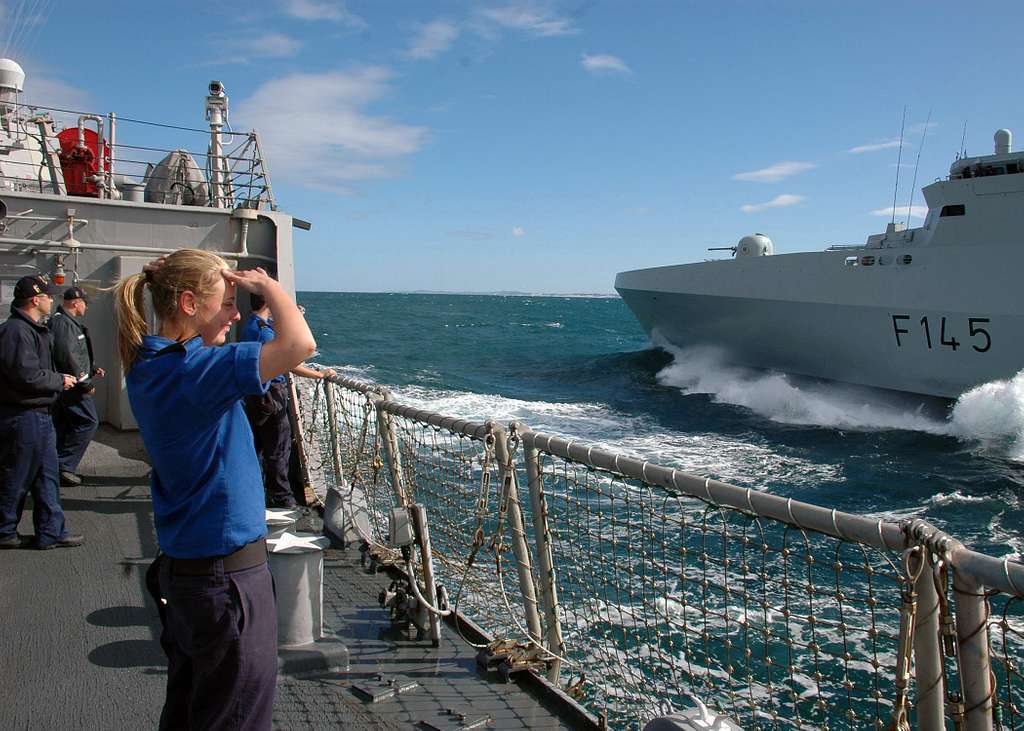
As part of the expanded B.R.I.C.S.+ framework, South Africa conducted “Will for Peace 2026,” a multinational naval drill comprising ships from China, Russia, Iran, the United Arab Emirates, and South Africa, last week in its territorial waters outside Cape Town. The maneuvers, according to South African authorities, were centered on maritime safety and the defense of sea channels vital to international trade, but they soon became the subject of heated diplomatic controversy. The United States and certain Western officials sharply criticized the involvement of Iranian vessels in particular, raising concerns about Pretoria’s foreign policy stance and its consequences for global peace and security.
At the opening ceremony, South African military authorities emphasized the exercises’ operational usefulness while defending them. The joint task force commander, Captain Ndwakhulu Thomas Thamaha, described the exercises as “a demonstration of our collective resolve to work together,” with the goal of enhancing collaboration and protecting crucial maritime lanes. The exercise aimed to improve interoperability between participating navies and solve marine issues such as coordinated maneuvers, communication drills, and search and rescue, according to official announcements.
The U.S. Embassy in Pretoria, on the other hand, denounced Iran’s involvement, claiming that it went against South Africa’s long-standing neutrality policy and conveyed the incorrect message about maritime security by admitting a state that has been widely condemned for violating human rights and destabilizing the region. Growing tensions between Washington and Pretoria are reflected in the U.S.’s accusations that South Africa is “cozying up” to Tehran and jeopardizing regional security. Beyond the United States, some observers of trade and security have cautioned that increased defense cooperation with countries that are often at odds with Western powers may have unforeseen political and economic consequences for South Africa and its allies.
This trend emphasizes the possible advantages and dangers of military cooperation under the auspices of geopolitical blocs from the standpoint of peace and stability. On the one hand, cooperative security arrangements and de-escalation in disputed waters, such as those surrounding the Cape sea lanes, can be facilitated by combined naval drills that reinforce maritime safety procedures, promote communication, and increase trust between navies. Theoretically, these exercises could lessen miscommunications that occasionally result in conflict by enhancing coordination and common operational standards.
However, this narrative is complicated by the inclusion of Iran, a country that is the subject of intense international attention due to its controversial foreign policies and home repression. The optics of Iranian warships actively taking part in a practice organized by an African state raise questions for many observers about whether such exercises promote peace or unintentionally indicate affiliation with people with controversial pasts. Critics contend that this could erode South Africa’s claim to nonalignment and widen geopolitical divides, especially with Western allies who continue to be crucial to South Africa’s economic and security cooperation.
It’s critical to contextualize the drills in order to comprehend these tensions. Originally made up of Brazil, Russia, India, China, and South Africa, B.R.I.C.S. has been growing into a larger alliance with new partners and members. A larger trend in global geopolitics is shown in the addition of new nations and the move away from traditional economic cooperation and toward security cooperation: growing powers aiming to increase their influence in determining international agendas. In order to strengthen their capabilities and showcase their combined presence on the international scene, the navies of the B.R.I.C.S.+ nations already regularly engage in drills. These actions, according to critics, are more about expressing political intent than they are about actual military readiness.
Internal disagreements regarding strategic priorities and civilian supervision of military operations were highlighted when South African authorities began an investigation into whether President Cyril Ramaphosa’s order to restrict Iran’s role was appropriately communicated and carried out as the drills came to an end on January 16. The difficulty many African nations face in striking a balance between a variety of international alliances, autonomy, and avoiding involvement in more significant power struggles is reflected in this internal review.
In summary, the B.R.I.C.S.+ naval drills off the coast of South Africa highlight a critical juncture in the changing geopolitical environment of African foreign policy. While it is commendable to work together to secure commerce lanes and maintain maritime peace, the disputes around involvement and diplomatic blowback show how readily military cooperation may be mistakenly perceived as geopolitical alignment. The crucial realization for peace advocates and decision-makers is that military drills need to be transparent, inclusive of wider regional standards, and rooted in de-escalation and human rights commitments rather than merely power struggles or cross-bloc signaling.