The US Congress approved a whopping $200 million security assistance package for the Baltic states as Russian activity along NATO’s eastern flank intensifies.
The
US Congress approved a whopping $200 million security assistance package for the Baltic states as
Russian activity along NATO’s eastern flank intensifies. According to Radio Liberty, the funding was approved this week by the American Congress as part of the Fiscal Year 2026 Defence Appropriations Act.
The legislation secures the continued backing for countries like
Estonia, Latvia, and Lithuania under the
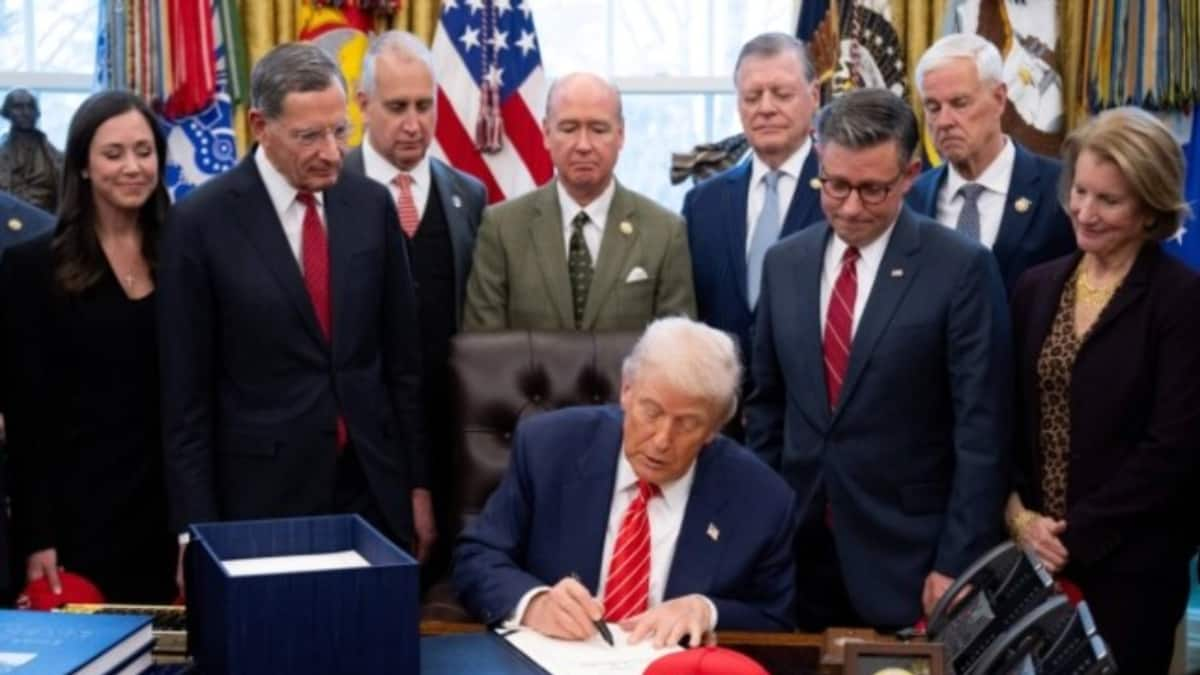
Baltic Security Initiative (BSI). It was part of the $838.7 billion defence package, which was signed by US President Donald Trump on February 3. The initiative locks funding for security cooperation with the three Baltic states despite earlier attempts inside the Pentagon to eliminate it.
Apart from this, an additional $10 million was allocated to
Estonia through the Foreign Military Financing program under the American overseas mission budget. Interestingly, it was this funding that Tallinn had previously used to acquire HIMARS ammunition, Javelin missiles, and large-calibre artillery shells.
“This is great for deterrence for our Baltic allies,” Republican Congressman Don Bacon (R-NE), a retired Air Force brigadier general and co-chair of the House Baltic Caucus, told Radio Liberty. He noted that the issue became a priority after the US Department of Defence signalled intentions to defund the program. “Congress is committed to a strong NATO alliance, and we know that extra emphasis is needed regarding the Baltics,” he said, adding that history shows the dangers of retreating from global engagement.
US reaffirming support to NATO
Speaking to Radio Liberty, Bacon emphasised that most US lawmakers in Congress are committed to Nato, regardless of the party they belong to. “Most in Congress are committed to NATO and know we need friends to counter China, Russia and Iran. We cannot do it alone. America alone is America weaker,” Bacon said.
It is pertinent to note that the three Baltic countries are all Nato members and have been ardent supporters of Ukraine in its war against Russia. There have been heightened tensions in the Baltic region for a while. Three Russian MiG-31 fighter jets entered Estonian airspace over the Gulf of Finland in September and remained there for approximately 12 minutes.
The incident prompted Estonia to request an extraordinary meeting of the UN Security Council and the activation of
Article 4 of the Atlantic Treaty, which provides for consultations between allies in the event of a threat to one of its members. Bacon emphasised that Ukraine cannot fail in its war against Russia.
“If Ukraine falls,” he said, “we should know with certainty that Moldova will be next,” followed by mounting pressure on the Baltics and Georgia in the Caucasus. “We should not be neutral,” Bacon said. “We should stand on the side of freedom…and against a dictator thug.”
How Baltic is reacting to the move
For Baltic leaders, the American congressional vote approving the funding is more than just a budgetary decision. Soon after the US Congress passed the legislation, Lithuanian Foreign Minister
Kestutis Budrys told Radio Liberty, during a visit to Washington on February 4, about the reality that the region is NATO’s front line.
“The decision is very political in its essence,” Budrys said, describing it as evidence of strong transatlantic ties and of Baltic commitments to invest in US-made defence capabilities. Budrys also pointed to the broader security environment facing the region, including Russian and Belarusian hybrid operations.
He maintained that Lithuania and its neighbours are accumulating experience in countering tactics ranging from cyber and information warfare to the instrumentalisation of migration and disruptive actions against civil aviation.
“We should expect that it will come in new forms tomorrow or the day after tomorrow,” he warned, describing hybrid pressure as a persistent feature of the West’s new security reality. However, he lauded that the support for the funding has been bipartisan.
The
Defence Appropriations Act passed the House by a thin 217–214 margin and cleared the Senate with a more comfortable 71–29 vote before being signed into law by President Donald Trump.
End of Article