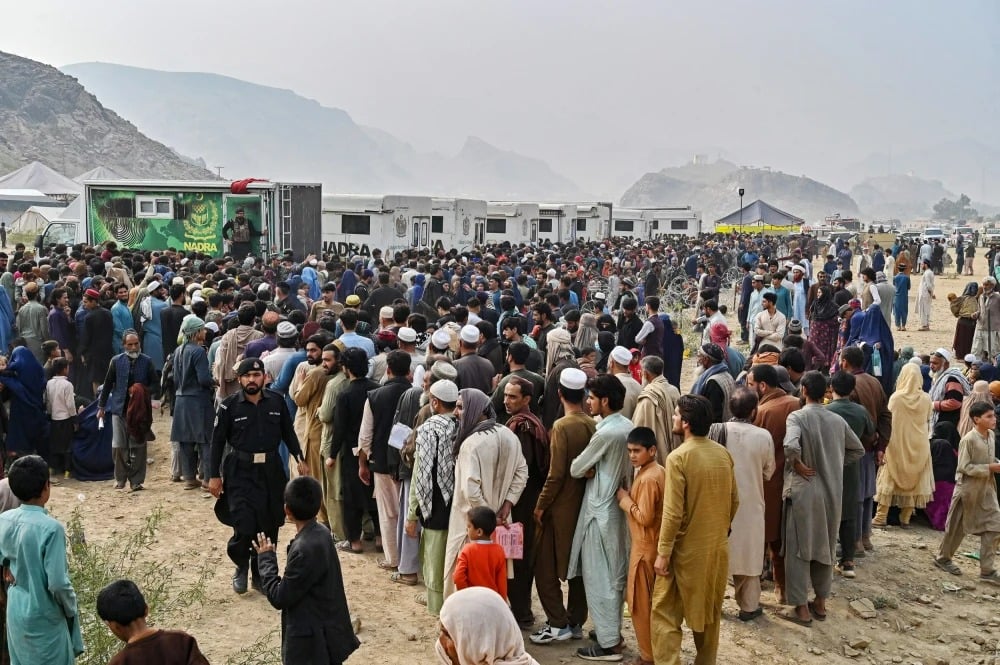
Following the Taliban’s takeover of Afghanistan, thousands of citizens who had cooperated with international organizations or worked in civil society and human rights institutions have been forced to leave the country. Due to delays in the processing of their cases, many have become stranded in neighboring countries, including Iran and Pakistan, where they are facing extremely difficult conditions. Pakistani police conduct round-the-clock raids on the homes of asylum seekers, breaking down their doors. Asylum seekers from Afghanistan in Pakistan say that in recent days the process of arrests and forced deportations has intensified, and all of them are at risk of forced return and threats of torture and retaliation by the Taliban. At the same time, asylum seekers in Iran are under pressure from both the public and the government. The Iranian government detains asylum seekers on accusations of participating in anti-government protests, while members of the public harass them on allegations of cooperating with the government. These actions have made the situation of asylum seekers from Afghanistan in Iran extremely difficult.
Asylum seekers from Afghanistan in Pakistan have expressed serious concern over the escalation of interrogations and arrests by Pakistani police. They say they fled to Pakistan due to Taliban threats and the risk of being killed by the group, but now face detention, forced deportation, and extortion by police. According to them, police raid their homes and break down doors, causing fear and panic among women and children.
Behrad (pseudonym), an exiled journalist in Pakistan, says: “In the area where we live, the police have conducted operations three times in less than a week. House-to-house searches are ongoing, and they force doors open.”
He adds, “On Thursday, out of fear that they would break down the door, we left the house. When I returned in the evening, the door was open, and the lights were on. I went downstairs and saw a police vehicle parked there. The police, along with the building caretaker, had searched the homes. For the past two days, due to fear of police presence, I have been spending the nights in a park. Another problem is that visa issuance has been suspended, and wherever I call or go to rent a place, they refuse to rent to me. I am in a very difficult situation.”
Meanwhile, many asylum seekers transferred to the forced deportation holding facility known as “Haji Camp” have expressed grave concern about the poor health conditions there. They say some individuals have been detained and deported despite holding valid exit documents. According to asylum seekers, Pakistani police release those with exit permits only in exchange for large sums of money; otherwise, even with exit documents, they are deported if they fail to pay bribes. Some asylum seekers who have left Pakistan confirmed to the Hasht-e Subh Daily that when they attempted to depart from Islamabad International Airport with legal documents, they encountered numerous obstacles and problems.
At the same time, video footage circulating on social media shows police breaking down the doors of asylum seekers’ homes during raids.
Asylum seekers from Afghanistan in Iran also describe their situation as extremely difficult and dire. They say that in addition to enduring severe restrictions, they are simultaneously grappling with pressure from both the public and the government. According to them, following recent protests in Iran, asylum seekers have come under suspicion by both authorities and the public and are caught between two intense pressures.
Afshid (pseudonym), an exiled journalist from Afghanistan in Iran, says: “The situation of asylum seekers in Iran has become more fragile than before and is accompanied by numerous restrictions. Especially after the recent protests, the situation has worsened significantly. Although asylum seekers played no role in these protests, they are under severe pressure from both the public and the Iranian government. Even those with residence documents are detained and transferred to camps, where they are released after paying money, while others are deported.”
He adds: “The situation of journalists, human rights activists, and protesting women is worse than that of other asylum seekers, and so far no institution has heard their voices. Every day, the situation becomes more critical, and they face broader restrictions. If their documents are not registered, landlords ruthlessly throw their belongings outside and evict them from their homes.”
This asylum seeker emphasizes that after the protests, strict restrictions were imposed on asylum seekers, and they are currently deprived of the right to obtain SIM cards. The Iranian government has also monitored and detained individuals who left their homes to meet essential needs using security cameras, even if they had no role in the demonstrations. For their release, in addition to proving innocence, landlords are required to pledge property deeds as collateral, and individuals are released only afterward, a measure that asylum seekers are often unable to fulfill.
Asylum seekers stranded in Iran and Pakistan say they have been abandoned by Western countries that had promised to accept them. They are calling for an acceleration in the processing of their cases and stress that they have no way to return to Afghanistan. They warn that if forcibly returned, they will be detained by the Taliban and killed. Over the past more than four years, many former military personnel, journalists, and human rights and civil society activists who were forcibly returned to Afghanistan have been detained by the Taliban, and in some cases killed.
Previously, the United Nations confirmed that the Taliban detain and torture some migrants deported from Iran and Pakistan due to their professional backgrounds, and that some are forced to live in hiding. In a report, the United Nations stated that after interviewing 49 returnees from Iran and Pakistan, it found that they had experienced “serious human rights violations” because of their specific characteristics. The organization added that these violations include “torture and ill-treatment, arbitrary arrest and detention, and threats to personal security” by the Taliban.
Whenever domestic dissatisfaction with the governments of Pakistan and Iran increases, or insecurity intensifies in those countries, pressure on asylum seekers also escalates. In addition, following tensions with the Taliban, Pakistan has intensified the process of forced deportation of asylum seekers.
You can read the Persian version of this report here:
بیپناه و بیصدا؛ پناهجویان افغانستان زیر تیغ بیرحم ایران و پاکستان