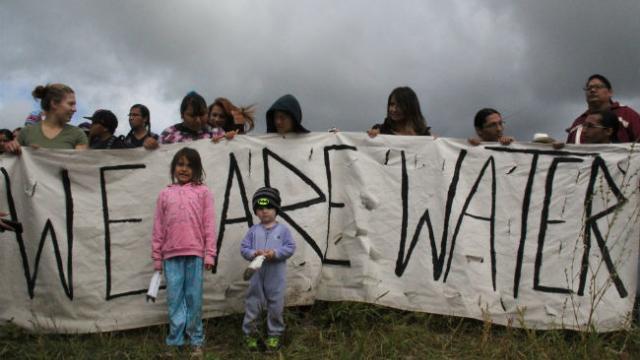
In early January, the U.S. Army Corps of Engineers announced that it would accept mail and messaging, and hold two online public virtual scoping meetings, for feedback on the Cascade Renewable Transmission project, a $1.5 billion project to run a 100-mile-long high-voltage power line under and through the Columbia River. In view of long-standing, wide-ranging opposition, and criticism that too little public information had been provided for proper assessment, the input was expected to focus on likely adverse impacts of the project —environmental, ecological, aesthetic, historical, cultural and social — and identify alternatives to the project,

The opponents are diverse.
In December, key shipping groups expressed alarm about a lack of information on the project’s potential impacts to routine barge shipments of crucial fuels from Portland to the Tri-Cities.
Environmental advocates and Native groups have also fought the project. They argue it may harm endangered species in the river and undermine Native nations’ treaty-reserved rights.
“It’s death by 1,000 cuts,” Julie Carter, a lawyer and longtime policy analyst for the Columbia River Inter-Tribal Fishing Commission, said last summer. “They want to dig into critical habitat — habitat that’s needed for … salmon and steelhead … Pacific lamprey” … a species Native nations in the Columbia Basin have worked hard to save … the project could [compound] significant harms caused by the federal hydropower dam system.
…the region faces [a transmission crisis from growing power consumption] — especially from power-hungry data centers [that] blows up old demand projections, threatening to take Washington and Oregon’s climate goals with them.
This project dates back to 2020, when east-coast-based renewable and high-voltage transmission developers Sun2o Partners and PowerBridge proposed the 100-mile line, about 90% of it to be trenched into the bottom of the Columbia River —right down the middle of the Columbia River Gorge National Scenic Area— an average of ten feet deep, using an Italy-developed Hydro Jet Cable Burial Machine, or “hydroplow”. which
temporarily emulsifies or “fluidizes” sediment in an approximately 18-inch-wide trench, places the cable in a trench and allows the sediment to settle back over the cable….
…Where the cable cannot be buried, a concrete mattress or a rock berm would be used to keep the cable weighted down and protected from damage….
As Harvey and Rock Creek Band Chief Bronsco Jim Jr. wrote in a Columbia Riverkeeper newsletter in 2021: “Ours is a living culture, and we are being cheated by progress—an unrelenting cultural extinction in the name of energy development.”…
When they say “living culture”, it includes in the specific context of this kind of project the tribes’ capacity to derive food supply and livelihood from their fishing rights, their ability to have clean water, where to live, unobstructed mobility, unfragmented community — all threatened by massive construction equipment, local destruction via the traverse of equipment and construction workers in and out, installation of permanent above-ground facilities and staff servicing and equipping high voltage electrical transmission lines…

Historically, the US Army Corps of Engineers’ track record across the country is not good, especially where the survival rights of indigenous and poor people are involved, e.g., NOLA, Puerto Rico, NoDAPL (some dk posts here and here among dk tag pages).
In December, Columbia Riverkeeper launched a lawsuit against the USACE on a related matter:
…illegal pollution of the Columbia River with hot water, oil, and toxic chemicals. Four dams operated by the Army Corps on the Columbia River between Portland, OR, and Tri-Cities, WA, discharge illegal pollution in violation of the Clean Water Act, as explained in today’s complaint….
Back in March, CR questioned
“…the short-term and long-term environmental impacts of dredging a giant trench through the river and how it will affect aquatic species and water quality.
“We have a laundry list of concerns. Impacts to salmon and other aquatic species. Concerns about the 40- to 50-year lifespan of the project without any clarity around project decommissioning, maintenance and repairs, especially maintenance or repairs in sensitive areas for species. Concerns about how the project will be impacted by potential seismic events or vessel strikes….”
First they came for indigenous Americans, but I wasn’t indigenous here, so I didn’t speak out…
The project is touted as sustainable in intending to route
mostly wind and solar power from eastern Washington and Oregon, Idaho and Montana, the windiest, sunniest places in the Pacific Northwest [because it might] help lower overall electricity prices, preserve tens of thousands of acres from the visual despoilment of wind turbines and solar panels and provide a needed boost to the region’s electricity transmission supply.
Why do it? Because the Columbia River Basin doesn’t have the capacity to transmit the oncoming avalanche of electricity demand needed to power data centers and high-tech businesses, while also meeting carbon-free power requirements enshrined in law in Oregon and Washington.
Given the way voracious end-users like those attract additional exploitive businesses that crush the local economies, marginalize and impoverish local people more than ever, and increase devastation of countless kinds — free to do it because they pick places where their own cost is least, their profitability maximal, the capacity of local communities to fight them off the lowest, and their pretense of green considerations superficially plausible —the term pseudo-sustainable more than applies.
Because of people, communities, economies, and environment destroyed on the claim of “preserving” a portion of visual landscape and supplying electricity to people and corporations unwilling to generate their own.
Results of the inputs from individuals and groups challenging this pseudo-sustainable project have yet to be published. Quite possibly, if the results are not to the liking of the USACE and it’s avaricious business partners, the results will simply disappear.