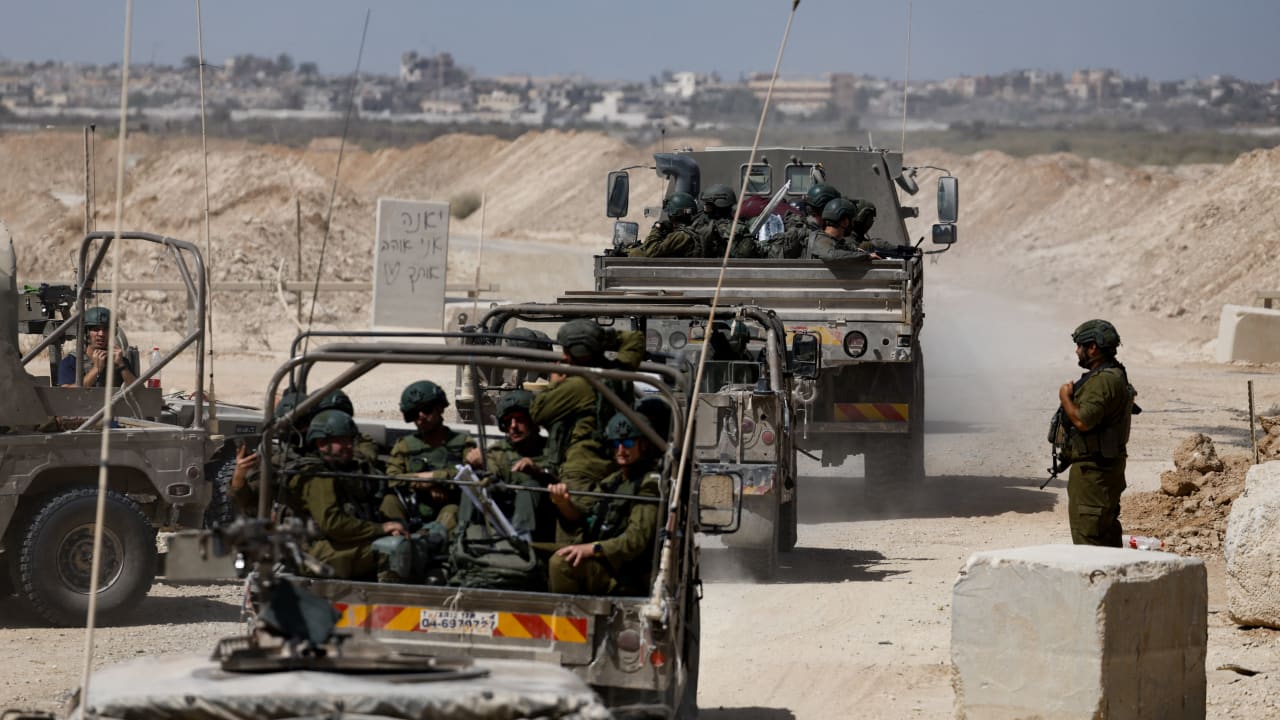
The IDF has closed dozens of alleged war crimes cases arising from the 2023-2024 period of the war, The Jerusalem Post can disclose exclusively for the time.
Publication of the details of the case closures has been extensively delayed by fears that the International Court of Justice (ICJ) and the International Criminal Court (ICC) will abuse any new information put out for a politicized anti-Israel agenda.
Generally, much more progress has been made for the 2023-2024 period than for more recent incidents, which only occurred in 2025.
The Sdei Teiman cases
Many of the cases that have been closed relate to the alleged deaths of as many as 98 detainees at the IDF’s Sdei Teiman detention facility or at other detention facilities earlier in the war.
These cases have also made up a significant group of the around 100 criminal probes (though not every death receives a probe, as many detainees were apparently mortally wounded on the battlefield and died of their wounds shortly after being brought to Sdei Teiman for medical attention), which the IDF legal division has opened into its own soldiers’ conduct.

That 100 number is only a drop in the pond of the up to 3,000 total preliminary reviews of alleged war crimes. At press time, the IDF had not provided a breakdown of which preliminary review cases had been referred for potential criminal consideration by the IDF legal division, which became full criminal cases, and which cases leapfrogged past the operational review stage directly into criminal probes.
It is also quite possible that several additional indictments will still be filed in the Sdei Teiman cases.
If so, it will be interesting to see how the complex domestic and international politics of the issue, which has already seen two indictments, one of which took Israel by storm, are impacted by the new developments.
Israel’s ICJ response
Regarding the ICJ, the Post has learned that Israel’s response, due March 12, to South Africa’s genocide claims against it is in the process of being detailed by an approximately 1,000-page legal brief, with another 4,000-plus pages of exhibits.
One of the largest, if not the largest, international law and war legal defense documents Israel has ever produced, the charges being confronted still relate only to 2023-2024.
South Africa has not yet provided a detailed critique of the IDF’s conduct in 2025.
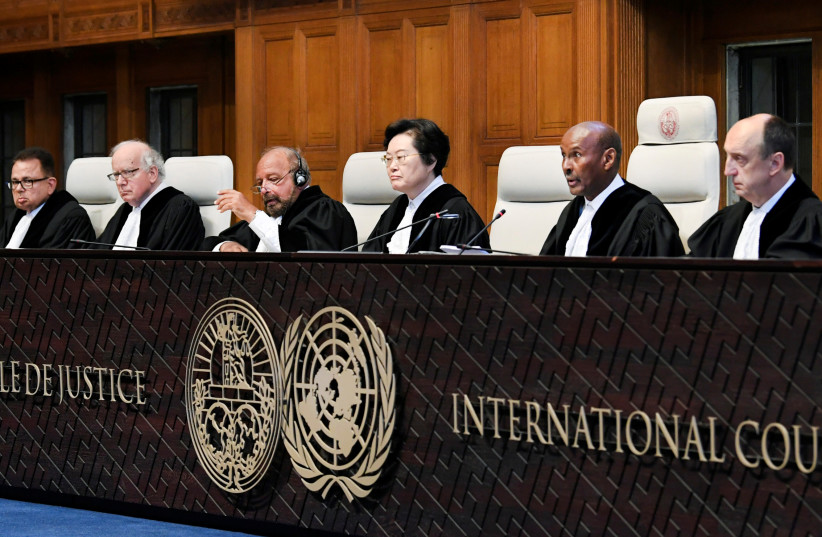
It is expected that South Africa will file an update in Spring-Summer 2026, to which Israel will likely need to respond by Spring 2027.
There are concerns among Israeli lawyers about the genocide charges due to exaggerated public statements made not only by National Security Minister Itamar Ben Gvir and Finance Minister Betzalel Smotrich, but also due to statements made near the start of the war by more authoritative defense figures.
The World Central Kitchen and Islamic Red Crescent case
Regarding the April 1, 2024, World Central Kitchen incident in which the IDF mistakenly killed seven humanitarian aid workers, although some senior IDF officers involved were immediately fired or censured as part of an operational probe, there has been an extensive delay in announcing the final criminal probe results.
Already in summer 2024, the Post was told by top IDF legal sources that a decision could be coming soon. This was repeated in January 2025 by sources, and once again last week. There is no question that, among the large, high-profile cases, this one is far along in the IDF legal division’s ability to render a legal decision.
Beyond that, though there are a number of purely legal reasons for the delay, there could also be greater diplomatic concerns about additional ICC warrants being issued against the soldiers involved, some of whom were publicly named by the IDF as being fired or censured.

Also, six different countries’ citizens were killed in the incident, with wider implications given that all of those countries have kept the issue alive as a serious problem in their diplomatic interactions with Israel.
Although the initial analysis of the incident by the operations probe portrayed it as a series of errors and certainly not intentional, there may also be concerns about lower levels of potential criminal culpability.
Regarding the March 23, 2025, Islamic Red Crescent incident in which the IDF mistakenly killed up to 15 humanitarian aid workers, this is one of the few 2025 cases that is very advanced in the probe process.
If many 2025 cases are still at the preliminary probe stage, this probe has already been sent to IDF Military Advocate General Maj. Gen. Itay Offir for a decision.
It is unclear when he will issue the decisions, given that he only took office on November 27, 2025, and that he has provided little advance notice after his predecessor abruptly resigned amid a separate scandal related to the Sdei Teiman cases.
The Gazan bakeries case
In October-November 2023, there was a series of IDF strikes that hit different Gazan bakeries, which are not only usually defined as civilian locations, but also were a major source of food for the wider public given the war situation.
Because of the ICJ’s secrecy rules, the IDF argues that it cannot yet publicize the specifics of its responses to the various incidents (though it could have provided a paraphrased summary).
But overall, the responses are expected to argue that in some cases the bakeries had been taken over by Hamas, and in light of terrorist-fighters being located there, had become legitimate military targets.
In other cases, the bakeries may not have been the target and may not have even been hit directly by the IDF. But there may have been a misjudgment by the IDF about how far the aftereffects of the strikes would spread, with unintended, indirect, but still deadly, effects on the bakeries.
Even in that situation, Israel would argue before the ICJ that the unintended and tragic harm to the bakeries and those potential civilians inside did not actually cause any kind of starvation in Gaza.
Prior to its October 7 invasion of Israel, Hamas had stocked up with food and supplies in Gaza in preparation for an expected Israeli counter-strike (though its preparations were for weeks or months and not two years).

In October 2023, the IDF allegedly killed up to 69 and 125 Palestinian civilians in multiple air strikes in Jabalia in northern Gaza. Some of the Jabalia incidents were among the first to be investigated by the operational preliminary probes early in the war.
Recent inquiries by the Post to the IDF about the status of the probes and why the results of such probes from so early in the war had not yielded any public information did not yield any new information.
However, previously, IDF sources had told the Post that the purpose of one operation was to kill a senior Hamas official, and it appears that the IDF had factored in a small number of civilian casualties from the one location he was inhabiting.
However, the struck house caused the tunnel beneath it to collapse, which in turn brought down a range of nearby structures.
In such cases, a senior IDF lawyer has previously told the Post that they would need to consider questions of proportionality based on what it could reasonably have been expected to know before the operation, not on the outcome that would follow from information it did not yet have.
From a military advantage perspective, since the goal was to take control of Gaza from Hamas, the value of eliminating Hamas tunnels was far higher than ever before. Eliminating tunnels was also important for ongoing force protection during maneuvering and operations, since there was an ongoing invasion, the IDF lawyer said.
The expected harm to civilians is notoriously hard to guess, but a senior IDF lawyer has previously admitted to the Post that the IDF had learned lessons from a May 2021 Gaza conflict disaster. In that incident, large numbers of civilians were killed by accident due to the unexpected collapse of a tunnel under a residence, causing the whole block of residences to collapse.
But even after learning the lessons, the tunnel’s height, length, and width may differ from intelligence estimates, said the IDF lawyer. The tunnel’s solidity or rickety nature, and the materials from which it was made, may also differ from IDF estimates.
In addition, the IDF legal advisor noted that if Hamas hides explosives around the tunnel to try to trap and kill IDF ground forces, which causes additional unexpected explosions and more residences nearby to collapse, the IDF cannot be held accountable for that.
Allegations of unnecessary building destruction
In September 2025, the IDF reinvaded Gaza City after having invaded it multiple times earlier in the war. However, this time, the IDF’s goal was to potentially permanently take over the area, and part of the strategy involved destroying areas where Hamas might hide out, including large buildings that had not been previously targeted.
In many cases, the IDF’s or the Defense Ministry’s public statements indicated skyscraper buildings that were destroyed allegedly because they contained Hamas surveillance equipment. These statements did not mention killing any imminent Hamas threats, nor whether ground troops could have destroyed the surveillance equipment without destroying the whole building.
The Post has not received a comprehensive answer explaining these issues. But one new possible answer suggested by sources has been that part of the broader operation involved clandestine movements to locate Israeli hostages. In that case, immediate maintenance of operational secrecy could have justified the need to quickly eliminate potential surveillance of Israeli forces.
Likewise, the Post did not receive a clear response regarding statistics provided by the IDF, which cumulatively appear to show a significantly worse ratio of killed Palestinian civilians compared to combatants in 2025 versus in 2023-2024, as well as similar allegations from some air force sources.
It was unclear whether the lack of response was due to the 2025 probes still being in the preliminary stages or to other reasons, including that some of the statistical data may be disputed.

There was a similar lack of information on the status of probes into the May – October 2025 incidents with Palestinians relating either to the Gaza Humanitarian Foundation (GHF) or to IDF soldiers supervising the nearby perimeter to the GHF food aid sites.
The Post has learned that the IDF’s view is that most of the incidents the IDF or GHF are accused of regarding Palestinian civilian deaths are manufactured by Hamas or exaggerated. However, the Post has also learned that there were a series of incidents, likely in the single digits, in which IDF soldiers probably did mistakenly kill single-digit numbers of Palestinian civilians.
Collectively, this would not leave the IDF responsible for the immense number claimed by UN agencies, some claiming over 800 and some far more, but possibly in the low dozens.
These probes, the Post understands, are still at the operational stage and have not yet reached the IDF legal division. This is because they occurred recently, in the second half of 2025, and because they are being reviewed as part of a more comprehensive review of the entire GHF-IDF saga, which includes additional layers of analysis beyond a single case evaluation.
ICC Chief Prosecutor’s potential comeback
Although ICC chief prosecutor Karim Khan has been suspended from his post since October 2024, IDF officials remain concerned that he may return, as he has not yet been formally required to resign.

Regardless of Khan’s fate, his deputy, Nazhat Shameem Khan (Fiji), has made it clear that she is pushing forward cases against Israelis at least as seriously as Khan did.
On January 31, the IDF allegedly killed dozens of Palestinian civilians in the process of assassinating a couple of Gazan terrorists despite the fact that Hamas had not succeeded in killing any Israeli soldiers, and had only possibly tried to when some of its fighters emerged from a tunnel.
IDF justification of the imbalances
The IDF said that even post-ceasefire, Israel and Hamas are locked in an armed conflict under the laws of war.
At a certain point, IDF operational commanders assess how important a target is militarily, even if it is not firing at the IDF at a given moment. This can make an attack legal even in the absence of an open broader war.
A separate question for the IDF, beyond whether its attack can be defended legally, is whether it could be argued to violate the ceasefire terms, which are a stricter standard than the minimum requirements of the laws of war.
This is less a legal question and more a matter of diplomacy among the US, Israel, and the other parties to the ceasefire.