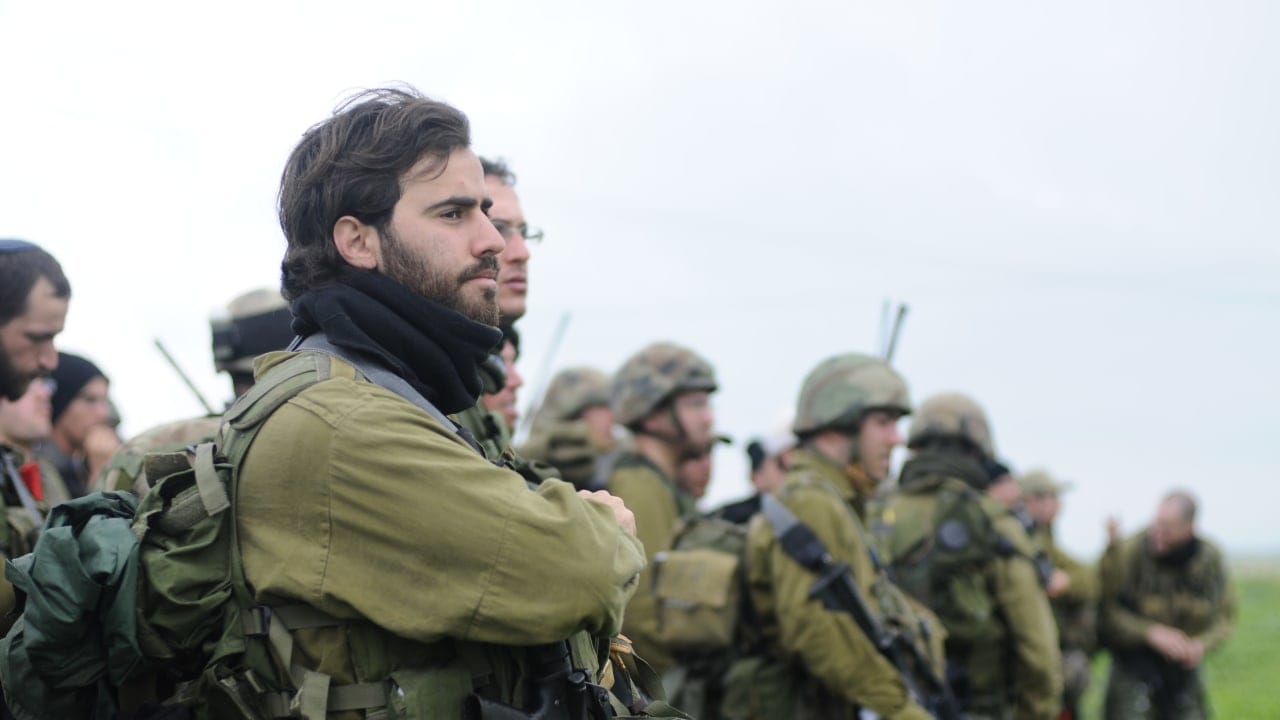
The IDF on Monday tried to douse a fire, and in some cases an almost-rebellion, by reservists against changes it has made to the terms of their service as part of pressure and a broader budget deal from and with the government.
Broadly speaking, the changes surround the agreement between the IDF and the Finance Ministry to reduce the number of standing reservists on duty on any given day from 60,000 to 40,000 as part of cutting back the standing army in the post-war era.
According to the IDF, reducing 10,000 reservists per day saves NIS 3.5 billion.
There was heavy pressure from the government and the Finance Ministry on the IDF to find some significant post-war savings in 2026 given the heavy deficit that extraordinary defense spending and harms to the economy caused in 2023-2025 and given major new spending in other areas, such as independent production of munitions, as part of the lessons of the war.
One of the unspoken points of anger in all of the debate is that reservists could be serving even fewer days if the government had not consciously avoided for two years putting pressure on the haredi community to boost its extremely low recruitment rate.

Between 8,000-10,000 haredi men are still avoiding the draft on a yearly basis and the government’s only efforts right now to address the issue are mostly viewed as broadening haredi exemptions from service than any real attempt to rein in the exemptions.
IDF struggles to contain reservist anger over duty changes
As part of the cuts in how many reservists serve per day, the IDF and the government reduced standard reserve duty in 2026 from 72 days to 55 days, and in certain aspects to 45 days.
While fewer days of duty per soldier can be seen as a positive and while a change in policy and law has allowed reservists to receive a special additional financial boost from serving only 45 days as opposed to the prior minimum “floor” of 60 days, other benefits for soldiers were reduced.
For example, the 45 days of reservist service will now include 42 days of full service, along with three days to train, as well as three paid off days to readjust to civilian life, and one to three calmer transition days for returning to military readiness.
Prior to the changes, soldiers received nine days to readjust to civilian life and an additional one to two days which could also be used to relax or transition.
Losing these days has reservists up in arms, especially after two years of unprecedented long service periods, as well as many soldiers losing their civilian jobs, falling behind in university classes, and finding their marriages broken and ending in divorce.
In addition, many reservists are up in arms that the IDF wants to change the model for their service of each two week period when they are serving to 10 days as soldiers and four days as civilians, from one week as soldiers and one week as civilians.
Although in a mathematical sense, the number of days the soldiers would serve would be identical, sociologically and professionally, it is much easier to slide in and out of family and work situations with a standard predictable full week on, full week off schedule, than it is an erratic 10 days and four days schedule which cuts randomly into the middle of the week and the weekends.
Next, reservists criticize the manner of the rollout, which they said occurred without a dialogue with them and their commanders about their practical needs.
Responding to these issues, IDF sources admitted that the transition to a post-war era will be difficult.
However, the IDF said that it could not justify such a large standing reservist army post-war and needed to find savings according to pressure from the government.
In addition, there are many parts of the IDF which military sources said are blatantly no longer necessary in peacetime, such as huge Home Front Command units, huge headquarters and regional command center staff units, and others.
Moreover, IDF sources said that certain reservists were so enthused with the army that they quit their jobs and have tried to navigate the IDF into being their new permanent job, even as they have not been offered a career track.
The IDF said that this phenomenon must be cut back so that the wider society realizes that most reservists must still work other main jobs, and that the vast majority of them will not be offered new career tracks in the IDF as a result of their wartime service.
Regarding the reduced number of personal and transition days, the IDF rejected reports that this meant cutting back mental health support.
Also, the IDF said that fewer such transition days are necessary for soldiers when they are not actively fighting as much as they were at the height of the war.
The IDF’s position regarding the week-on, week off issue was less coherent.
On one hand, the military said that it recognized the culture that has built up over the last two years of a week on and a week off to sustain longer periods of service.
On top of that, IDF sources openly said that for some indefinite period they would look the other way regarding this phenomenon.
On the other hand, the IDf said that it was important to start the process of returning the military to a more standard way of operating.
IDF sources said that even if it might take months or longer to return to a 10 day, four day rotation for reservists, that it was important to get the country to start shifting its mentality back to shi model of service.
According to IDF sources, the 10 day, four day service model is far superior from a professional military perspective in terms of commanders and soldiers getting to better know each other’s abilities, needs, and character as a team.
Another criticism of this process is that suddenly large portions, some say up to 50%, of IDF guards stationed at southern villages near Gaza disappeared over the last week.
Critics say that this has harmed the feeling of security of Israelis living near Gaza who had become accustomed to a larger military presence after October 7.
IDF sources said that the number of soldiers on the Gaza border is five to six times what it was before October 7, and that they could not heal all subjective feelings of insecurity.
Despite the statement of a larger group of forces, some of the numbers noted by IDF sources appeared to be only a small overall increase compared to the full Gaza border defense of 1,200 soldiers prior to October 7 (though specifically on October 7, only 600 were on duty due to the Jewish holiday.)
Pressed to clarify the numbers discrepancies, the IDf had not responded by press time.