On February 9, Saudi Arabia hosted a meeting of senior diplomatic and defense officials of the US-led Global Coalition to defeat ISIS. It is the latest meeting of the coalition, which now includes around 90 members. Syria is the latest country to join.
The meeting was important, and a statement noted that “participants welcomed the comprehensive agreement between the Government of Syria and the Syrian Democratic Forces, including the permanent ceasefire and arrangements for the civil and military integration of northeast Syria.”
The statement would appear to indicate that the SDF’s important role in the war against ISIS may be coming to an end. As Syria’s new transitional government takes the reins of the war on ISIS in Syria, the role of the SDF alongside the coalition is changing.
At the same time, the meeting in Saudi Arabia also “noted the Government of Syria’s stated intention to assume national leadership of counter-ISIS efforts and expressed appreciation for the sacrifices made by the Syrian Democratic Forces in the fight against ISIS/Daesh. Participants also thanked the Government of Iraq for its continued leadership in the Defeat ISIS campaign.”
Will Kurdish role in fight against ISIS be forgotten?
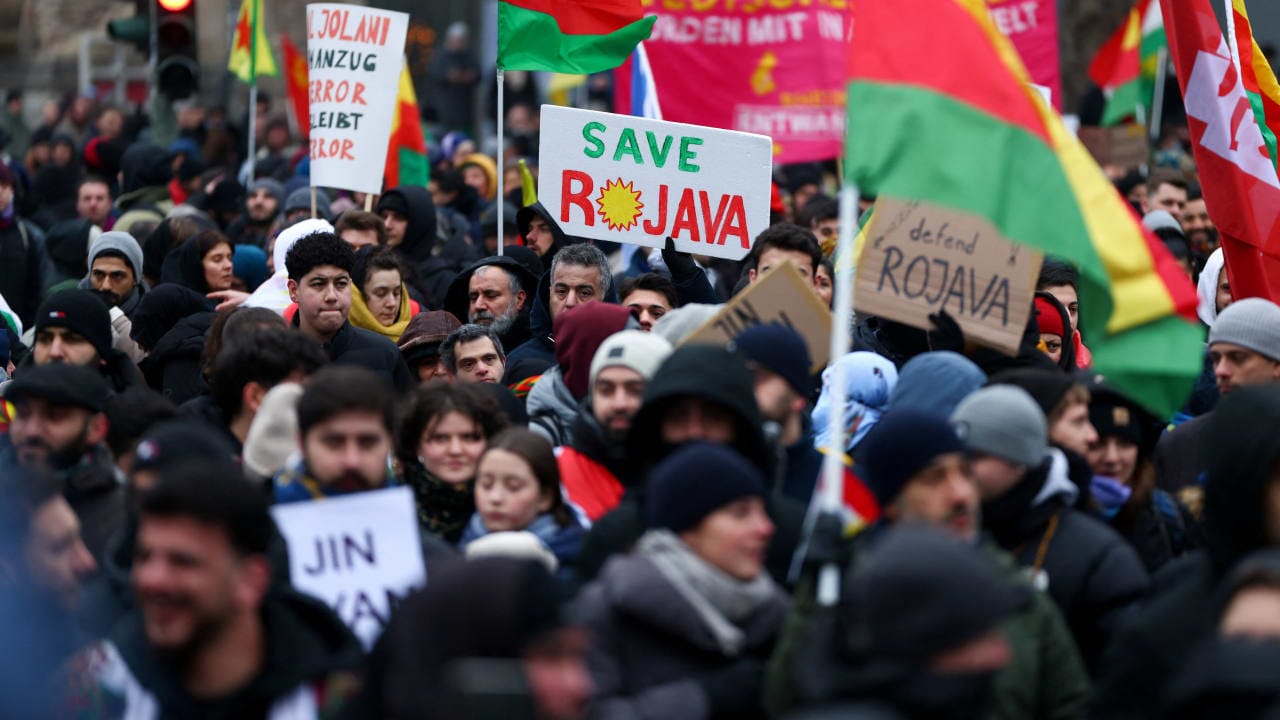
This raises a key question. As the coalition moves forward with the struggle against ISIS, one group that played a key role in this war may be forgotten. The Kurds in Iraq and Syria played a key role as a bulwark against ISIS and then in the operations to liberate areas from ISIS. The role of Kurds in Iraq and Syria was different.

In Iraq, the Kurds live in areas of the autonomous Kurdistan Regional Government. The KRG has its own armed forces called the Peshmerga. When ISIS invaded Iraq in 2014 and began capturing many large cities, such as Mosul and Fallujah, the Peshmerga assumed defensive positions. The KRG took in hundreds of thousands of displaced people fleeing ISIS. This included large numbers of Christians who fled Mosul.
Meanwhile, in Syria, the Kurds in eastern Syria lacked defenses and a state structure to defend against ISIS. The Syrian regime of Assad had oppressed Kurds and denied them resources. They found themselves up against a rising ISIS menace with only small arms. The People’s Defense Units (YPG) were the main Kurdish group standing against ISIS in Syria. In August 2014, ISIS attacked the Yazidis in Sinjar in northern Iraq. It began a genocide. The YPG helped Yazidis flee the genocide by crossing the border. The Peshmerga also found themselves on the defensive as ISIS headed towards Kurdish cities such as Dohuk and Erbil. This led to the US intervention to back Iraq against ISIS.
In Syria, the ISIS offensive led to the siege of the Kurdish city of Kobane. Now, both Kurdish regions were under threat. The KRG sought to support Kobane’s defenses. Within months, as the Kurds proved themselves capable of fighting ISIS in northern Iraq and Syria, the US-led Coalition began to work with Kurds in both countries.
In Syria, the US helped create the Syrian Democratic Forces. This group was intended to be a multi-ethnic partner force. Because of the YPG’s links to the Kurdistan Workers Party, it was viewed as a difficult partner for the US to work with directly. In addition, fighting in Turkey between the PKK and the government led to increased anger by Ankara at the US role in Syria alongside the Kurds. The SDF was supposed to help solve this.
Between 2015 and 2019, the SDF suffered around 11,000 deaths in the war against ISIS. By 2026, according to reports posted online, the total of SDF members killed fighting ISIS was 12,000, of which 5,821 were Arab fighters. This illustrates that while Kurds suffered heavily, the Arab members of the SDF fell in large numbers. Kurds are a relatively small minority group in Syria, around 2 million people out of 25 million Syrians. As such, the Kurds suffered disproportionate losses in the war against ISIS in Syria. Syrians as a whole suffered in the war, many of them at the hands of the Assad regime, which murdered hundreds of thousands of people and forced some 13 million Syrians to flee.
The SDF losses were heavy, and they deserve more than just a memorial for their losses. They were a unique and key partner force for the Coalition. In addition, they proved to be a huge success as a US partner, working alongside the US Central Command. They proved themselves in battle alongside US special forces for years. Today, things have changed in Syria. A new government has been formed, and the Coalition logically prefers to partner with a government rather than a “non-state actor” or “armed group.” This is the reality of international relations. The US had previously warned that the relationship with the SDF would be tactical, transactional, and temporary. However, that doesn’t mean the SDF and the Kurds in Syria don’t deserve more recognition.
In Iraq, the same issue exists. The Peshmerga remain key partners of the US and the Coalition. In the KRG, the Coalition helped work with the Kurdistan Training Coordination Center (KTCC). This eventually became an 8-country effort to train tens of thousands of Peshmerga. Numerous countries have partnered with the Peshmerga, from Americans, to Canadians, the British, the French, Hungarians, Italians, Germans, and others. A recent report at Kurdistan24 noted that “Germany’s Bundestag on Thursday approved extending the deployment of German troops in the Kurdistan Region and Iraq until Dec. 31, 2027, continuing Berlin’s contribution to international efforts aimed at preventing the resurgence of Islamic State (ISIS).” This shows the deep connection that many countries have with the Kurdistan region and the Peshmerga.
As the Coalition seeks to move to the next phase and work with the Syrian government, there are concerns that the Kurdish role in the war on ISIS may not receive the recognition it deserves. It’s not clear how the Coalition could best show recognition, but ceremonies that mention the SDF role, specifically the Kurdish role, would go a long way toward illustrating the partnership formed over the last decade.