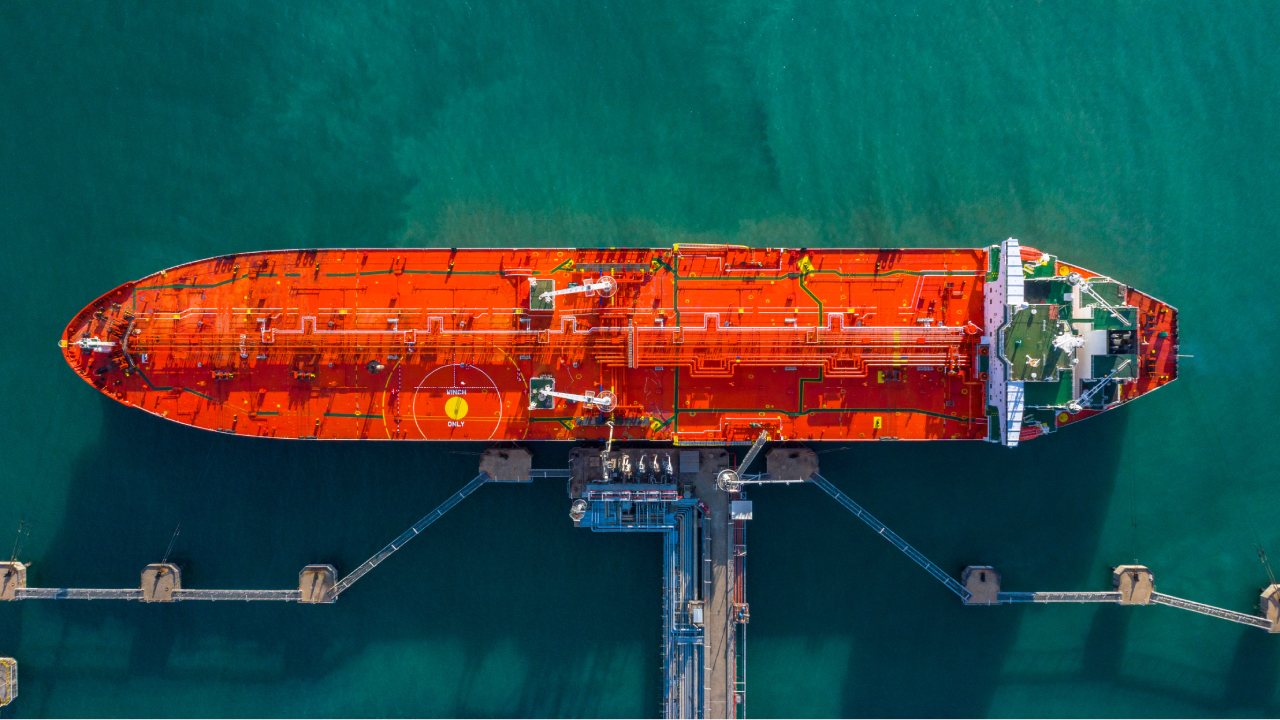
Share of G7-linked tankers in Russia’s crude export market fell to a four-month low last month, with ship operators finding lucrative business opportunities elsewhere amid a tightening sanctions regime.
Tankers flagged, owned or operated by companies based in G7 countries and their allies, or insured by Western protection and indemnity clubs, loaded 23% of Russia’s crude exports of 3.4 million b/d in January, according to data from S&P Global Commodities at Sea(opens in a new tab) and Maritime Intelligence Risk Suite.
The share was the lowest since October 2025 and down from 27.1% in December, when Russia exported 3.8 million-3.9 million b/d by sea.
G7-based maritime service firms are facing an increasingly complex regulatory regime for Russian trades, with some in the West taking a more aggressive stance to undermine Russia’s war chest against Ukraine.
The EU and the UK lowered the price cap for tanker firms and insurers to participate in Russian crude exports to $44.1/b in late-January/early-February, while Japan and Canada are keeping the threshold at $47.6/b, and the US at $60/b.
While Russia’s flagship crude, Urals, has been priced mostly below $40/b on a free-on-board Primorsk basis since early December, tanker operators experienced strong employment prospects in mainstream trades after the US took control of Venezuelan oil flows.
Venezuela, which relied on the shadow fleet for its crude exports, has turned to mainstream tankers since the US seizure of Venezuelan President Nicolas Maduro on Jan. 3, with CAS data showing its shipments reached 657,000 b/d last month.
Platts’ Global Aframax Index for non-scrubber, non-eco ships climbed from $47,836.02/d Jan. 8 to $83,136.24/d Jan 27 before easing back to $76,524.02/d Feb. 6, still a historically strong level.
Platts is part of S&P Global Energy.
More restrictions
The EU plans to have a full maritime services ban for Russian crude oil in coordination with G7 partners, which, if going ahead, would abolish the price cap system and further constrain Russia’s logistics capability.
The G7-linked fleet was responsible for shipping 778,000 b/d from Russia last month, of which 40% destined for India and 22% for Turkey, according to the CAS and MIRS data.
India, the No. 1 buyer of seaborne Russian crude in recent years, has been cutting imports since late 2025 amid tightening Western sanctions.
Earlier this month, US President Donald Trump said Washington and New Delhi reached a trade agreement where India agreed to suspend purchases of Russian oil, but New Delhi didn’t directly confirm this.
“It seems certain that India will further reduce Russian imports,” Gibson Shipbrokers said in a recent note. “Russia will also likely face growing logistical constraints.”
Tanker operators in Greece, Europe’s largest shipowning nation, were responsible for lifting 17.3 million barrels from Russia last month, down from 20.6 million barrels in December. Their position in the market fell to No. 3 from No. 1.
“The hundreds of millions of dollars earned by some of the biggest EU shipowners by participating in Russian oil shipping appears to be over,” said Michelle Wiese Bockmann, an analyst with risk consultancy Windward, in a LinkedIn post. “This will add additional pressure to the shadow fleet.”
Transshipment
Non-G7 tankers, mainly from the shadow fleet established to bypass sanctions and many of which were listed by Western authorities, lifted 2.6 million b/d from Russia in January, according to the CAS and MIRS data. Of them, 33% were destined for Egypt and Singapore — where offshore Russian oil transfers often take place — and 31% for China, while 17% didn’t have a known destination.
In past instances, sanctioned tankers would often lift oil from Russia before transferring the barrels to non-sanctioned ships, which would then embark on their voyages to non-sanctioned ports of importing countries. This maneuver keeps Russian oil on the water for longer but does not necessarily cut off the cargo flows.
CAS data shows the amount of Russian crude in transit and floating storage, when CPC Blend was excluded, reached 130 million barrels as of Feb. 8 — the highest in at least a decade. Meanwhile, China’s independent refineries imported a record level of 1.51 million b/d of Russian crude in January, according to data compiled by Platts.
“Longer journey times and difficulties selling have also raised costs” for Russia on the shipping side, according to Gibson. “If Russia struggles with a shortage of tonnage, it may eventually be forced to cut production or further expand its shadow fleet.”
Other brokers said shadow fleet operators have been seeking to replenish their shipping capacity in recent months, with non-sanctioned tankers aged between 17 and 19 years in demand.
Source: Platts