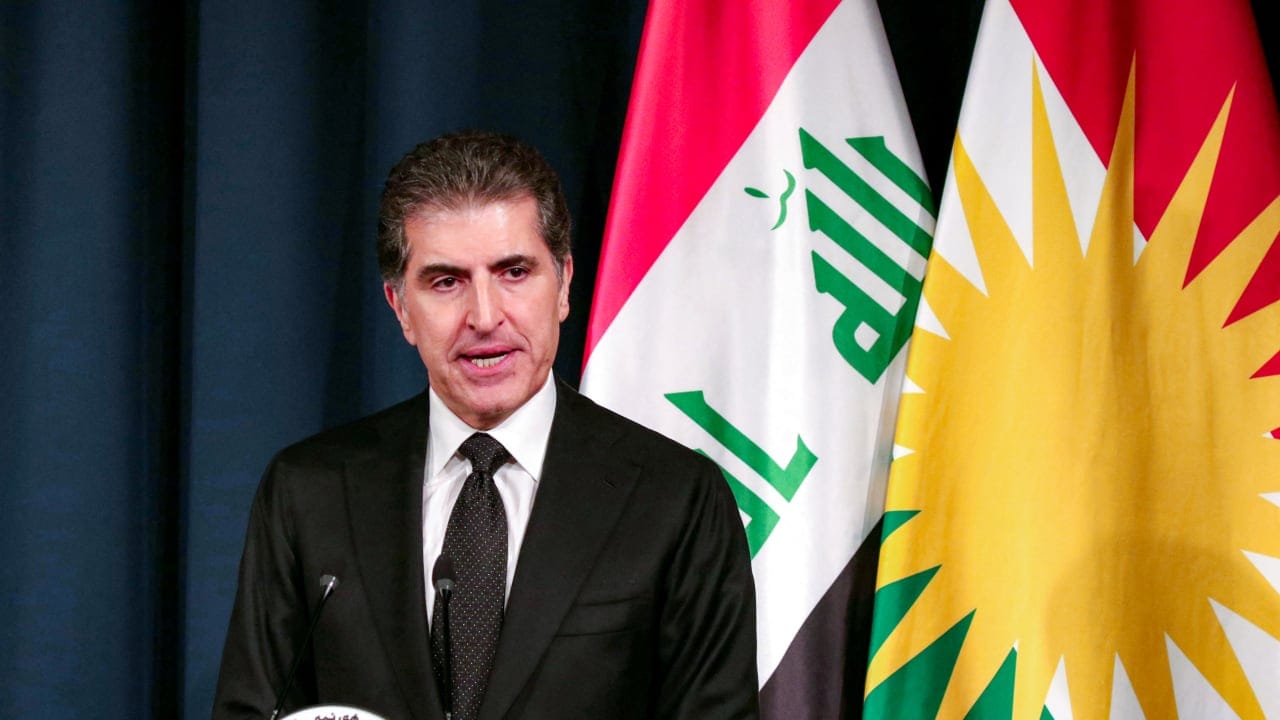
The Kurdistan Regional Government of Iraq (KRG) held high-level meetings at the Munich Security Conference on Saturday.
This matters because the European conference has become a place for countries to meet and discuss various trends. It also matters more this year because the KRG has become a major player in the region.
The KRG has helped smooth the transition in eastern Syria by working with Damascus and the Syrian Democratic Forces, also hosting US forces and other anti-ISIS coalition forces. It also maintains amicable ties with Turkey, Iran, the Gulf, and many other countries, placing the KRG at the crossroads of the Middle East. It is a geopolitical hinge on which the region turns.
Amid tensions in Iran, changes in Syria, and many concerns about regional integration and stability, the KRG is a symbol of success. This is interesting because the KRG is a regional autonomous government. However, its profile is often larger than that of Iraq, the state in which the KRG is located.
This is unusual in the Middle East and the world. There are not very many powerful autonomous regions in the world. Usually, autonomous regions are backwaters or don’t have much clout. The KRG is unique.

Kurdistan Region President Nechirvan Barzani met with US Secretary of State Marco Rubio on Saturday at the Munich Security Conference.
They discussed US-KRG cooperation and also Syria. The Kurdish leadership in the KRG, particularly the Barzanis, has been closely following developments in eastern Syria. The Kurdish leadership of the other major party in the KRG, the PUK, is also involved. The two leading Kurdish parties are dominated by two large families, the Barzanis and Talibanis.
Barzani said his talks focused on “US relations with Iraq and the Kurdistan Region, as well as the prospects for mutual cooperation,” a report in the Kurdish media outlet Rudaw noted.
Barzani also reiterated “his thanks and appreciation for US support for Iraq and the Kurdistan Region.”
Rubio was also positive about the meeting.
“Both sides emphasized the importance of protecting the rights of Kurds and all communities within a united Syria,” Barzani’s office stated, according to Rudaw Kurdish media in Erbil.
Other issues are being examined closely. Syria’s foreign minister said in Munich that there are no demands for Kurdish autonomy in Syria. This is a sensitive issue for Damascus. Syria’s leadership has rejected the kind of KRG model in Iraq being applied to Syria. This means that Kurdish rights will be secured, but that autonomy or decentralization apparently will not.
Barzani reportedly met with France, US congressional delegation
According to the reports, Barzani also held talks in Munich with a US congressional delegation.
“During the meeting, US relations with Iraq and the Kurdistan Region, as well as the development of joint cooperation between them, were discussed,” Barzani’s office said, according to Rudaw.
The report went on to say that the US delegation emphasized “the importance of the Kurdistan Region’s role as a factor of stability in the region.”
Barzani also met with France’s President Emmanuel Macron. Macron has been a key supporter of Kurdish rights in the region. France also played an important role in the war against ISIS. France was also a former colonial power in Syria.
The Kurdistan region sees the Barzani meetings as important. The region places a major emphasis on attending events such as Munich or Davos. It believes this helps the region secure the financial and geopolitical policies important to Erbil.
Today, Erbil continues to play a key role in the region and is developing economically, becoming one of the major success stories in the Middle East. Its work at brokering deals in Syria and other countries is important.