
The third year of Wall Street’s bull market rally didn’t disappoint. When the curtain closed last year, the S&P 500 (SNPINDEX: ^GSPC) had risen 16%, marking its third consecutive year of gains totaling at least 16%. Meanwhile, the Dow Jones Industrial Average (DJINDICES: ^DJI) and Nasdaq Composite (NASDAQINDEX: ^IXIC) both rallied by double digits and leaped to several record-closing highs.
Though catalysts have been bountiful for stocks — looking at you, artificial intelligence (AI) — this historically pricey market is also rife with potential red flags. Stock market corrections are the price of admission to the greatest wealth creator on the planet, and several headwinds are mounting that threaten to pull the rug out from beneath Wall Street.
Will AI create the world’s first trillionaire? Our team just released a report on the one little-known company, called an “Indispensable Monopoly” providing the critical technology Nvidia and Intel both need. Continue »
A lot of attention is currently being paid to President Donald Trump’s tariff and trade policy and its effect on corporate America. While historic stock market volatility stemming from Trump’s tariff unveiling in early April underscores the uncertainty surrounding this issue, there’s a far more sinister worry for Wall Street and investors: earnings quality.
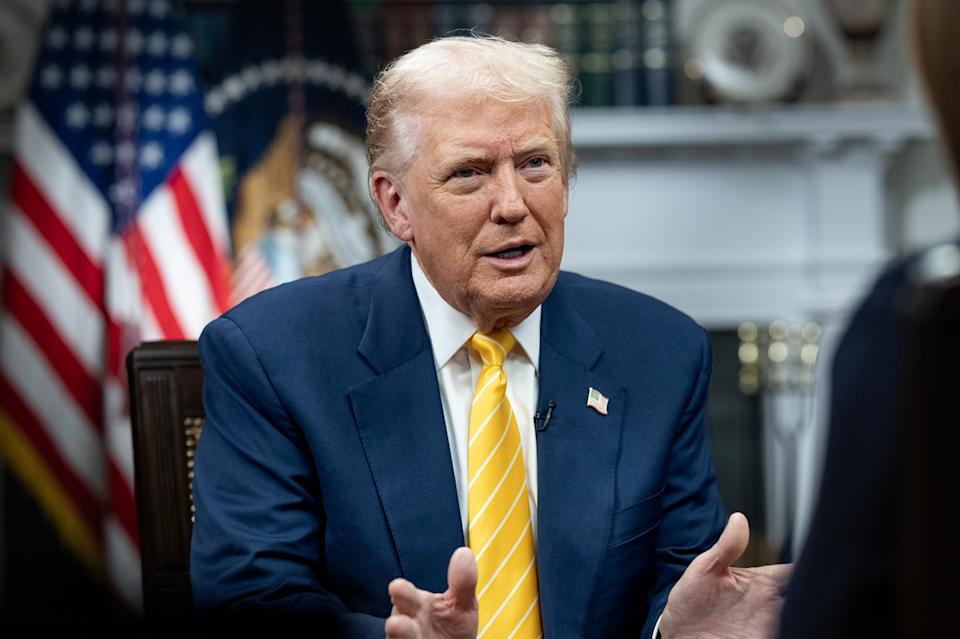
President Trump conducting an interview. Image source: Official White House Photo by Joyce N. Boghosian.
In the two days following the reveal of the president’s tariff and trade policy on April 2, the benchmark S&P 500 lost 10.5% of its value. This marked its fifth-steepest two-day decline since 1950.
Initially, Trump introduced a 10% global tariff rate, as well as higher “reciprocal tariffs” on dozens of countries that were deemed to have adverse trade imbalances with the U.S.
Since introducing this tariff and trade policy over 10 months ago, several changes have been made to the original reciprocal tariff rates due to dealmaking and/or implementation pauses. However, the threat of President Trump imposing new or higher tariffs on select countries has persisted since April 2025.
Aside from the uncertainty about when tariffs may be implemented, there’s concern about how these import taxes can impact American businesses and jobs. For this, I’ll turn to an analysis (“Do Import Tariffs Protect U.S. Firms?”) from four New York Federal Reserve economists, writing for Liberty Street Economics.
According to the contributing authors, Trump’s China tariffs in 2018-2019 had a lasting impact on public companies long after their initial implementation. U.S. companies affected by these tariffs, on average, saw their labor productivity, employment, sales, and profits decline from 2019 to 2021. That’s clearly not good news for corporate earnings if history were to repeat with the latest round of Trump tariffs.
