Veteran commercial fisherman Phil de Grauw is not used to spending so much time on land.
After more than four decades on the water supplying fresh fish to restaurants across Western Australia, his boat has hardly left the harbour of Kalbarri in the past two months.
That is because it is now illegal for commercial fishers like him to catch and keep demersal species in the West Coast fishery zone — an 800-kilometre stretch of coast from Kalbarri to Augusta in the south.
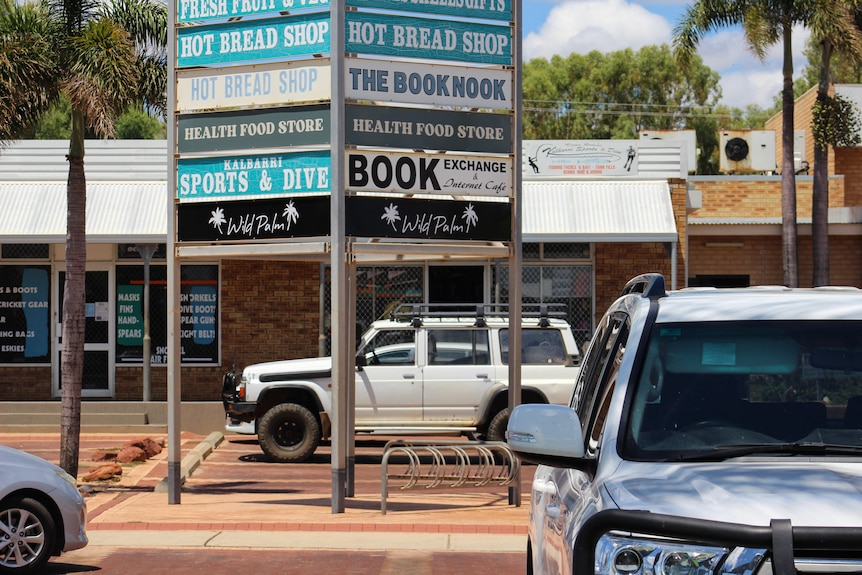
Kalbarri, which thrives off tourism and fishing, has been hard hit by WA’s demersal fishing ban. (ABC News: Bridget McArthur)
The government said the ban was essential to helping rebuild severely depleted fish stocks, with dhufish and pink snapper among the species under threat.
“We knew there were going to be some major changes, but we didn’t envisage that the commercial fishing sector would be totally removed, and a compulsory buyout [of commercial fishing licences],” Mr de Grauw said.
“We just did a refit on the boat in December, took time off to do it, spent money. If I knew this was coming I would’ve delayed that work.”

Phil de Grauw has been hit hard by the demersal fishing ban. (ABC News: Bridget McArthur)
He is maintaining his boat not just out of hope the government will change its mind — a dream he still holds — but because Kalbarri is slated to be carved out of the current ban zone, and moved into the Gascoyne fishery zone to the north, where the restrictions do not apply.
But that is unlikely to happen until at least 2028, leaving Mr de Grauw in limbo.
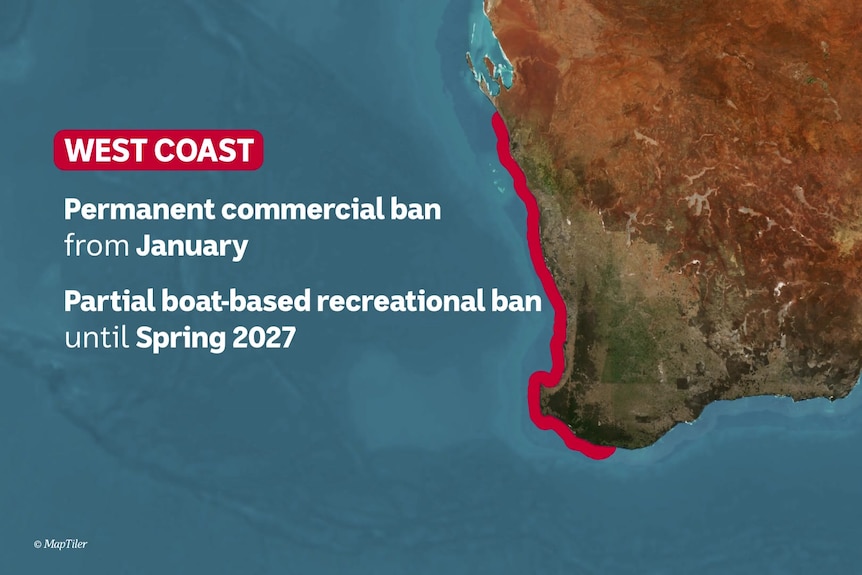
Demersal fish in the West Coast fishing region are marked as being at a “severe” risk of collapse. (ABC News)
“The financial crunch is starting to come,” he said.
Loading…
A long-time Kalbarri resident, Mr de Grauw said the ban had created a domino effect in town, which had built its economy around fishing.
He said the local businesses he sold to — restaurants, bait and ice suppliers and freight companies — were suffering downstream impacts.

Phil de Grauw’s boat has become a meeting place for local swallows. (ABC News: Bridget McArthur)
Mr de Grauw said tourist numbers were also being hurt by a temporary ban on boat-based recreational fishing until spring next year.
Family business worried
The fishing ban has proven to be an emotive topic — none more so than for Steve Eley, who staked his family’s future on Kalbarri’s local tackle shop.
The 34-year-old took ownership of the business just a couple of hours before the ban was announced — something they were not expecting.
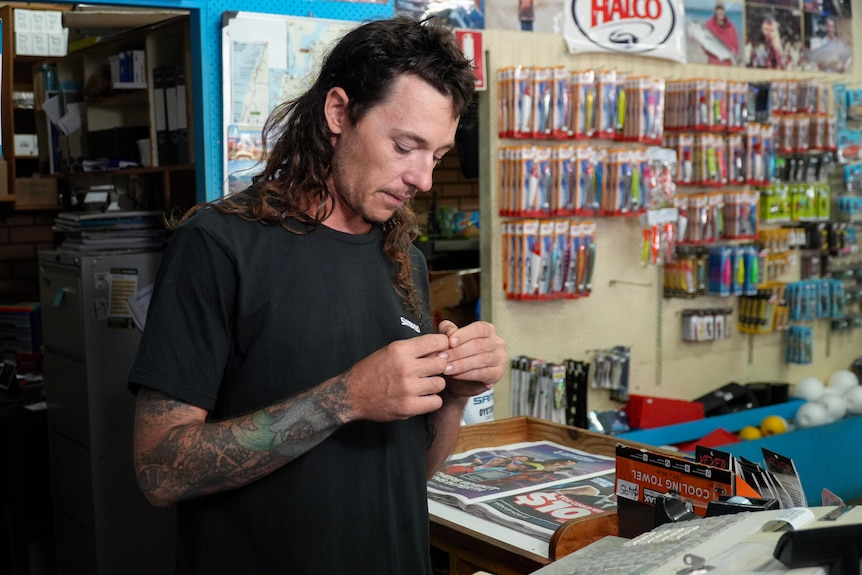
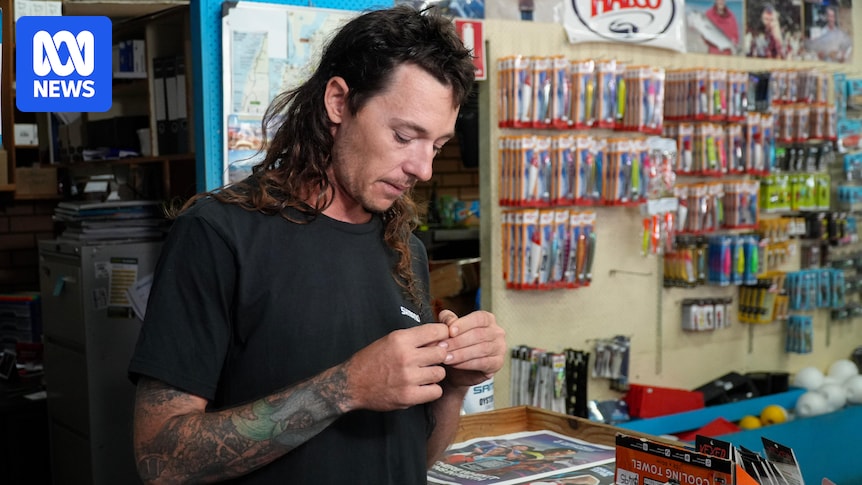
Steve Eley runs the town’s tackle shop. (ABC News: Bridget McArthur)
“That morning was an interesting one,” he said.
“[There were] a few tears … to have that just ripped out from underneath you … it sinks us, that’s it, catch you later.

Cheryl Eley works in the tackle shop her family took ownership of the day the ban was announced. (ABC News: Bridget McArthur)
Mr Eley said fishers felt they were being punished for years of failures in government policy to manage WA’s fisheries — and now 34,000 people have signed a petition calling for a parliamentary inquiry into what has happened.
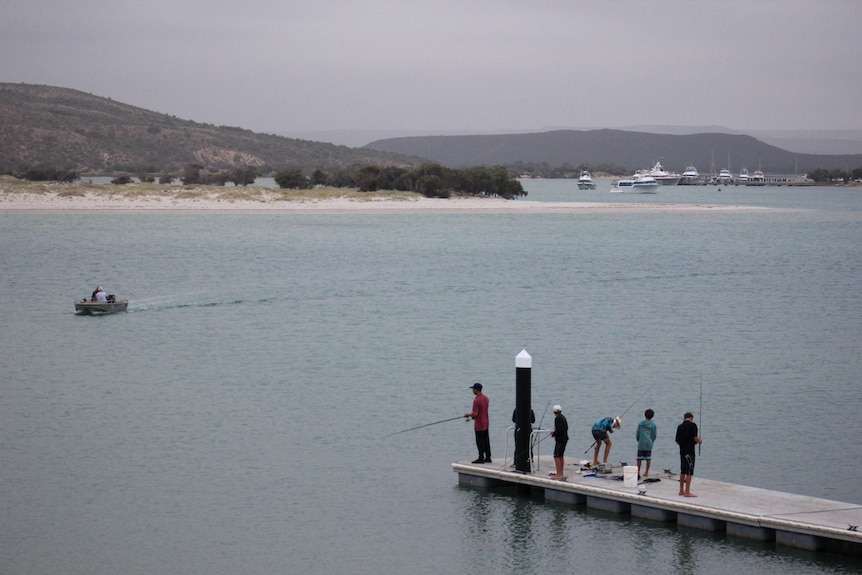
The Eleys are encouraging more people to take up land-based fishing. (ABC News: Bridget McArthur)
In recent years, some of the state’s leading scientists have been warning the health of demersal fish stocks were not improving, and dhufish populations had actually declined.
Mr Eley said he shared their concerns, particularly after the state government increased bag limits and removed size restrictions for dhufish in 2021.
He said he was aware further restrictions were on their way, but never expected a blanket ban, and that it felt like fishers were “left to pick up the pieces” of the government’s own mismanagement.
“Work with the industries. Don’t go against us because at the end of the day, if this is managed properly, I think there’s enough for everyone,” he said.
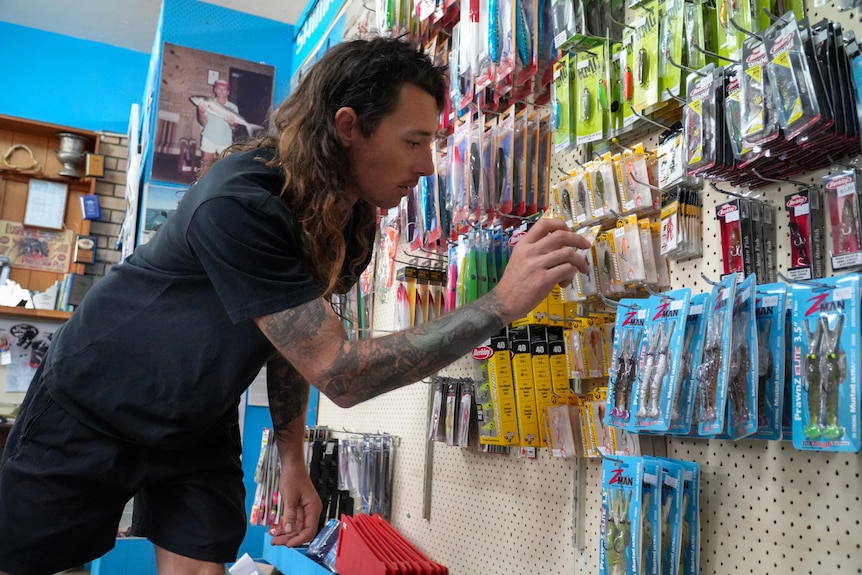
Steve Eley said he knew something had to change, but did not expect a blanket ban. (ABC News: Bridget McArthur)
According to Mr Eley, a lack of communication has also been a major source of frustration for tackle shop owners, who were fielding questions about the new rules every day.
Fisherman mounts rooftop protest over WA demersal fishing bans
The Department of Primary Industries and Regional Development told the ABC it was continuing to visit and engage with tackle shops across WA, including providing education materials.
It said resources were also available online.
Fisheries minister Jackie Jarvis said on Tuesday morning she was open to an inquiry into the management of the state’s fisheries, but did not support a pause of the ban as the state’s opposition had called for.
The ABC has also spoken to several Kalbarri businesses that claim they had bookings cancelled immediately after the ban was announced.

Signs have been placed around town notifying people of the fishing ban. (ABC News: Bridget McArthur)
Some had only recently recovered from damage sustained from a destructive cyclone that swept through the town in 2021.
Murchison Boat Hire, which rents out boats to fishers, said it had lost thousands of dollars in cancelled bookings and was not eligible for government compensation.
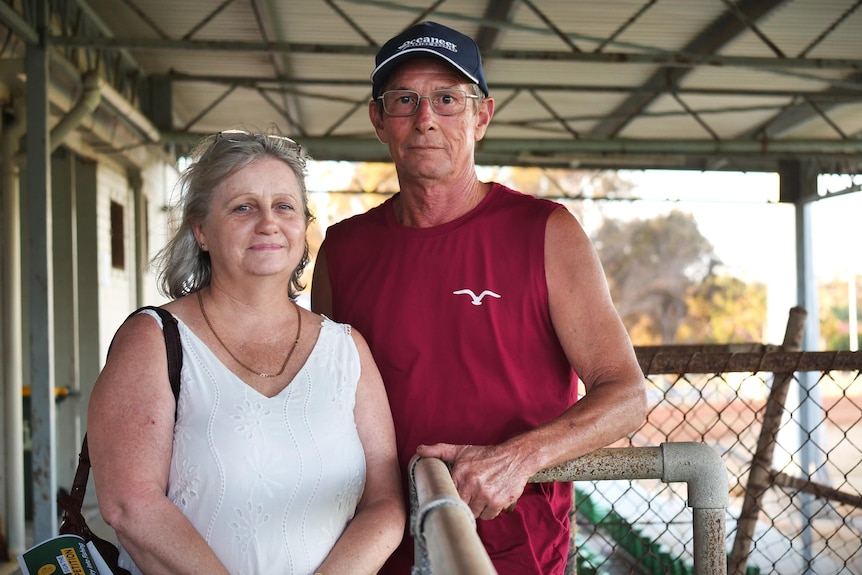
Raelene Leatham and her husband, Paul, say they have lost thousands of dollars in cancelled bookings. (ABC News: Piper Duffy)
“We’re not sure what we’re going to do,” Raelene Leatham, who runs the business with her husband Paul, said.
The local Chamber of Commerce said Kalbarri was one of several small coastal towns in the Mid West region to have experienced immediate repercussions following the ban.

Kalbarri sees thousands of tourists visit every year for its rugged natural landmarks. (ABC News: Gian De Poloni)
The government has promised almost $30 million in support, including $20 million to buy out commercial fisheries and about $3 million in rebates for tackle shops.
Ms Jarvis said the government had bought out 18 commercial licences so far, totalling around $1.1 million.
She said “act of grace” payments had been offered to all 41 operators, amounting to about 70 commercial licences, but not all of them had accepted.
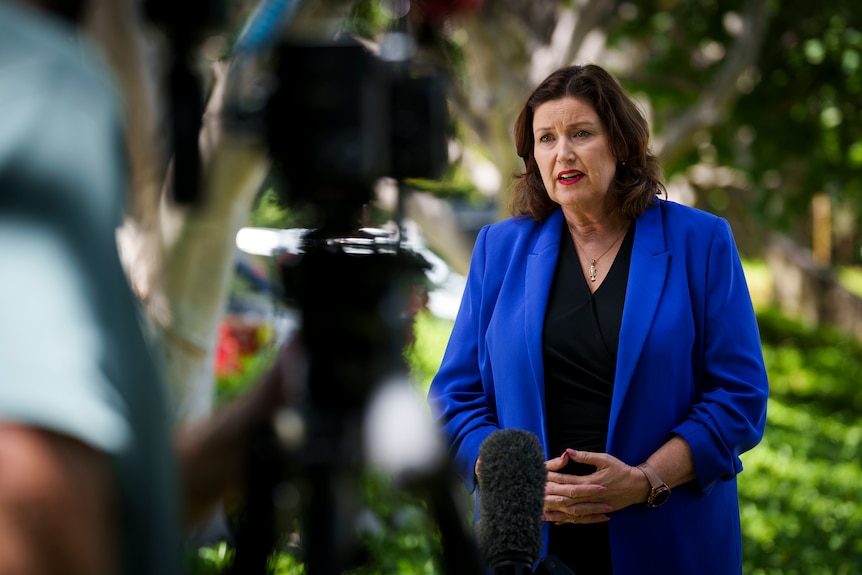
Jackie Jarvis speaks to media about the demersal fishing ban. (ABC News: Jake Sturmer)
As for tackle shops, she said the impact would not be too severe as people could still fish for other species.
“There is a suspension of fishing for a very small number of species, deep, deep water species that are at risk,” she said.
Ms Jarvis said a new advisory committee would shape what the support package for tackle shops would look like, which she was hopeful could be rolled out before the April school holidays.
In the meantime, the Elsey’s said they were doing their best to pivot towards pushing land-based and pelagic fishing products, and diving gear.
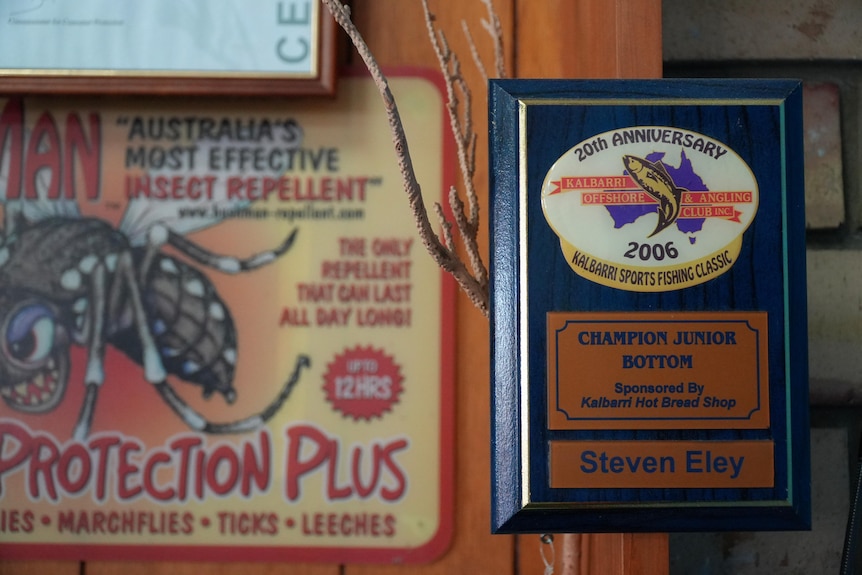
A fishing award won by Steven Eley 20 years ago. (ABC News: Bridget McArthur)
“You can trip over your bottom lip or you can just get on with it,” Mr Eley said.
“At the end of the day, you fork out all this money on a business, you don’t just roll over, you go and have a crack.”

Tourists from Australia and internationally flock to the Kalbarri region for its unique Pink Lake. (ABC News: Gian De Poloni)
ABC Radio Perth’s Nadia Mitsopoulos is hosting a Spotlight Forum on the demersal fishing ban on Wednesday February 18 from 10am to 11am, at the ABC Perth Studios. Fisheries Minister Jackie Jarvis will be among several guests on the panel.
ABC Regional WA will also be broadcasting a special Drive show with Andrew Collins from the Fisherman’s Wharf in Geraldton at 3pm on February 18 to discussing the demersal fishing ban.
Loading