
Norway is strengthening its presence in Moldova and will upgrade the embassy office in Chișinău to a fully-fledged embassy from the autumn.
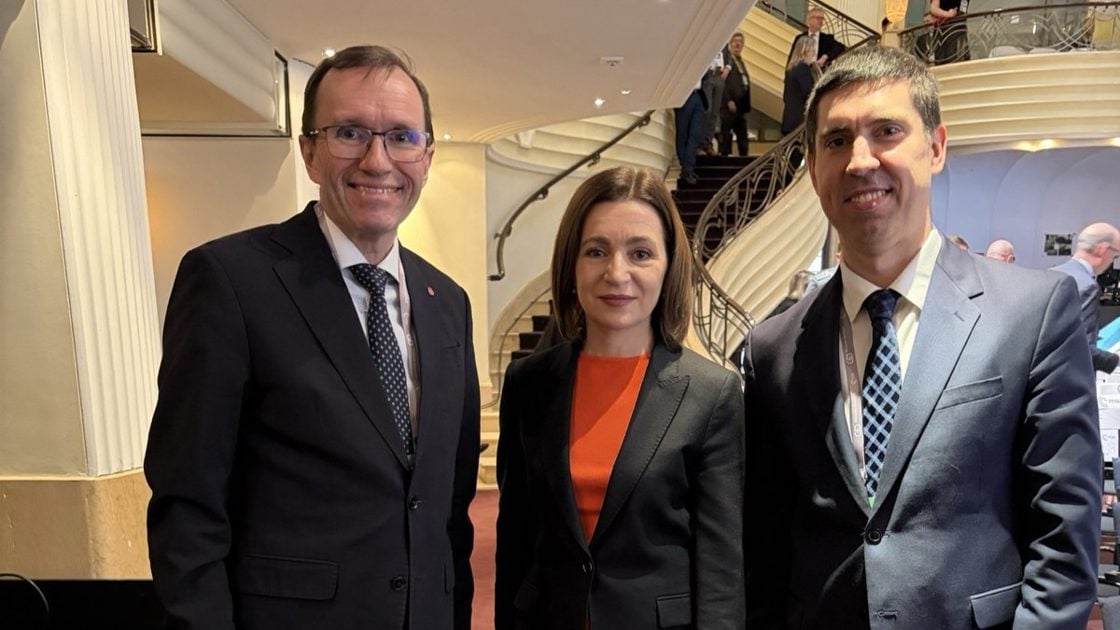
Norwegian Minister of Foreign Affairs Espen Barth Eide met with President Maia Sandu and Moldova’s Minister of Foreign Affairs, Mihai Popșoi.
Credit: Norwegian MFA
In autumn 2024, Norway opened an embassy office in Chișinău to support a stable, secure, and democratic Moldova, and to follow-up on Norway’s substantial support to the country under the Nansen Support Programme. Now, Norway has decided to upgrade its diplomatic presence in Chisinau to a fully-fledged embassy with a resident ambassador and reinforced team from autumn 2026.
‘Upgrading to a full embassy in Chișinău will strengthen our capacity to follow-up the Norwegian economic support to Moldova and reinforce our political commitment to the country,’ said Minister of Foreign Affairs Espen Barth Eide.
Norwegian support strengthens Moldova’s resilience
Since Russia’s full-scale invasion of Ukraine in 2022, Moldova has been among the European countries most affected by the repercussions of the war. Moldova has faced a large influx of refugees, a severe energy crisis and a difficult economic situation, while also dealing with an extremely challenging security environment. The country has been heavily targeted by Russian influence operations and attempts to undermine democratic processes.
Moldova is therefore a priority neighbouring country under the Nansen Support Programme for Ukraine. In the period 2022–2025, Norway allocated approximately NOK 2.1 billion to Moldova to strengthen its energy security, civil resilience, European integration and good governance. This includes NOK 760 million in humanitarian assistance for Ukrainian refugees and vulnerable Moldovans.
‘Moldova has made significant progress in strengthening its energy security and achieving energy independence from Russia. The country has also shown remarkable resilience in the face of Russian influence operations and disinformation. This is due in part to support from European partners, including Norway,’ said Mr Eide.
The EU accession negotiations have also prompted the country to initiate major reforms aimed at strengthening the rule of law and good governance.
‘It is important for European security to continue supporting the Moldovan authorities’ efforts to secure a safe, stable and democratic Moldova, and to help advance the country’s European integration. This is why the Government has now decided to strengthen Norway’s presence in Moldova,’ the Minister said.
Norway’s support to Moldova
Norwegian support during 2022–2025 has been particularly important in strengthening Moldova’s energy independence and protecting vulnerable households from high energy prices. In cooperation with the EBRD, Norway supported a major gas purchase in 2023 that ensured stable heating supplies and eased price pressures during a critical period. Norway is also supporting energy efficiency measures in homes, public buildings and infrastructure. Around 150 000 households have received compensation for electricity and heating costs, and many vulnerable households have received support to purchase energy-efficient appliances.
Norway has also helped strengthen Moldova’s democratic institutions, respect for rule of law and EU integration by supporting reforms, free and fair elections, independent media, and civil society. Norwegian election support has contributed to improved electoral commission oversight of party financing, advanced voter education, improved digital security, and police capacity to detect vote buying. Cooperation with independent media and local organisations has helped counter disinformation and maintain access to facts, even in periods with heightened Russian influence campaigns. Norway also supports modernising five schools, upgrading curricula and teacher training, and improving learning environments for children and youth.
Norway has earmarked NOK 350 million in long-term support to Moldova in 2026, which will largely be directed towards the same priority areas as before. Additional humanitarian support will come on top of this.