
Dear readers,
This just in! U.S. President Donald Trump announced on Friday that his administration is planning on releasing the government’s extensive files on aliens, UFO sightings and extraterrestrials. Soon, the entire world will be able to read about the goings on in Area 51 – and all the aliens in the top echelons of governments around the world will be unmasked! How exciting!
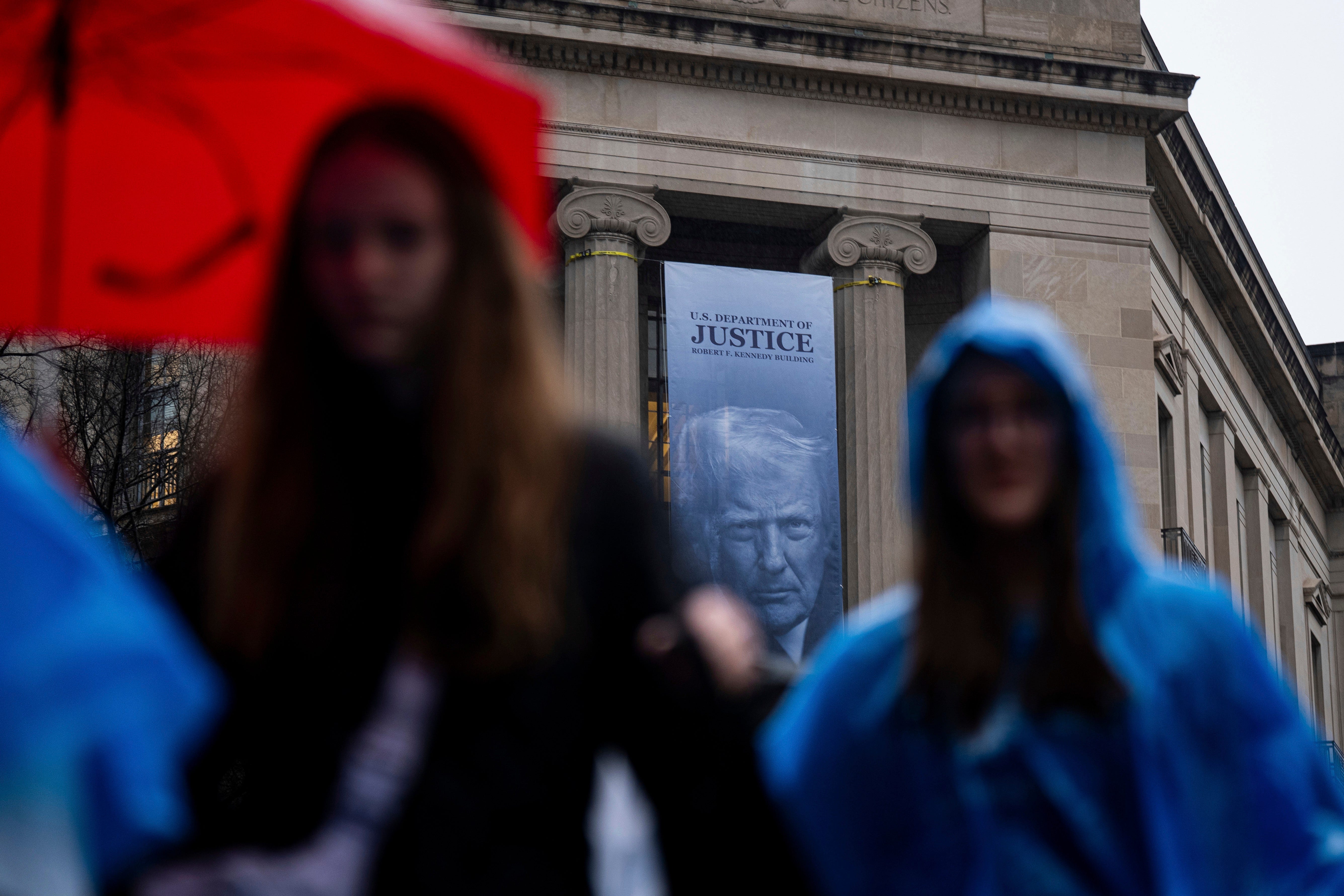
The story deserves a mention because it capped off a week in which Trump didn’t actually break the news cycle. Sure, he ramped up the threats against Iran, inaugurated his so-called “Board of Peace� in a transparent effort to replace the United Nations and draped a banner of himself across the Department of Justice, but checklist items from chapter one of the “Idiot’s Guide to Installing an Imperialist Dictatorship� are no longer quite enough to attract the world’s attention.
Still, the earth did not stop turning. Here are the …
The German Firewall
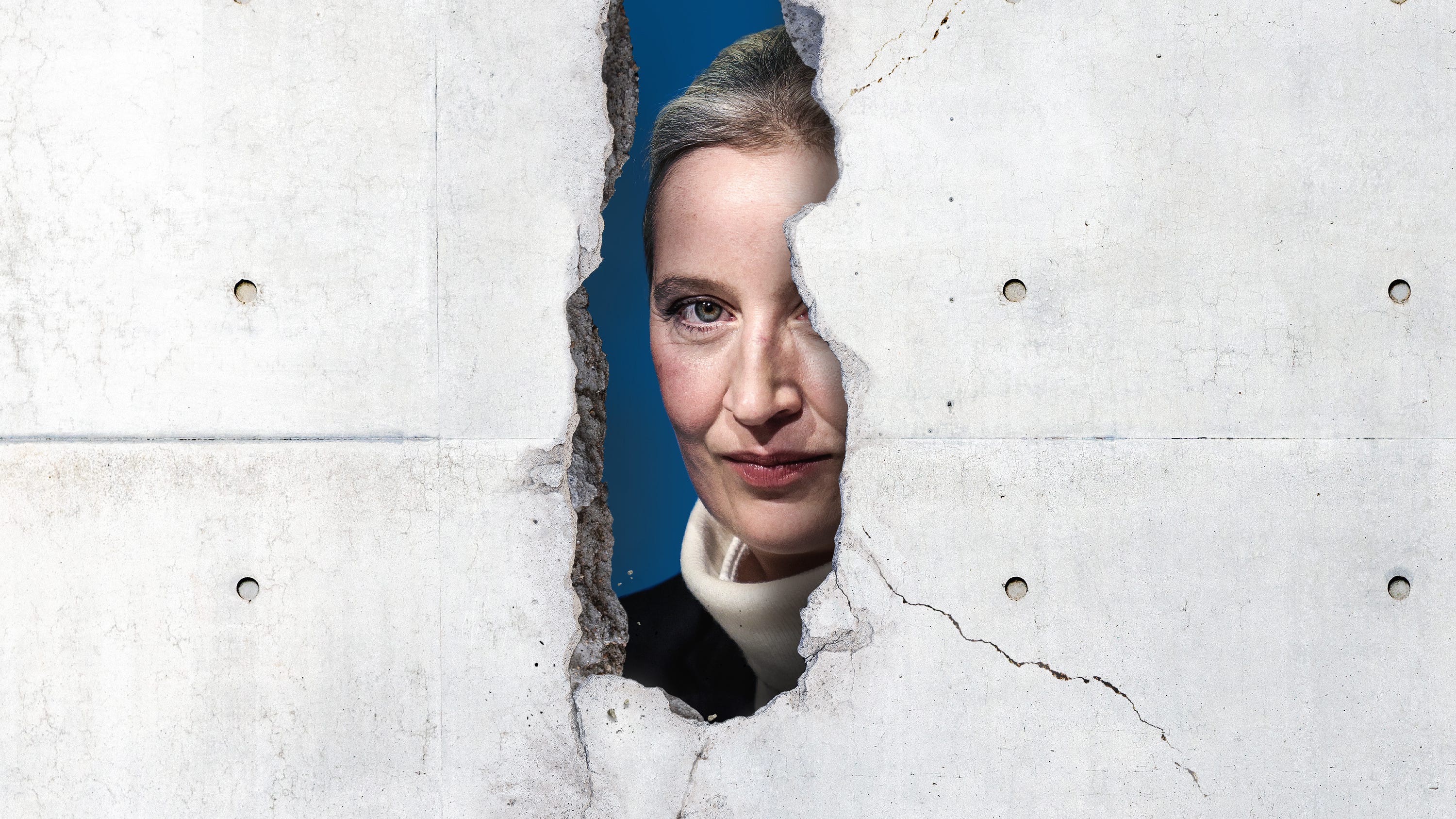
The German media – well, DER SPIEGEL – took advantage of the brief respite from the trans-Atlantic train wreck to focus in its cover story on a dumpster fire closer to home. Germany’s political establishment has long maintained a strict policy prohibiting any cooperation with the right-wing extremist Alternative for Germany (AfD) party. German Chancellor Friedrich Merz of the center-right Christian Democrats has publicly declared the AfD his party’s “main opponent� and ruled out coalition with them “100 percent.�
As the story points out, that might be workable – so far – at the federal level. But at the local level, with national support for the AfD surging toward 25 percent, the firewall is crumbling. A recent political science study of over 11,000 local council sessions in Germany between 2019 and 2024 found that in more than 20 percent of cases, some form of cooperation with the AfD took place – a trend that has only accelerated in recent months.
Beyond that, the upcoming state elections in Saxony-Anhalt (in September) highlight an additional problem. As is the case in many eastern German states, the AfD is strong in Saxony-Anhalt, polling at fully 40 percent. The CDU is at 26 percent, the Social Democrats are at 8 percent, and the Left Party has 11 percent support, according to recent polls. No other party looks likely to clear the 5 percent hurdle required for representation in state parliament. The math to form a coalition could be rather dicey. It might be time – at least according to one conclusion arrived at in the piece – to examine other models than a strict firewall.
What else might help?
DER SPIEGEL’s Maria Fiedler took a stab at answering that question:
“It is time to talk to one another more again – especially about politics. And to not shy away from the difficult topics. In situations where you are not facing extremists or blinkered ideologues, it can be worth talking. The goal should not be to convince others of your own opinion. What matters is understanding the other person’s reality – and explaining your own. Questioning and challenging the other person’s convictions. Enduring conflict when it gets uncomfortable.�
“Studies show that such conversations work. In 2023, researchers in Germany brought strangers together in pairs for face-to-face meetings. They were asked to talk explicitly about polarizing political issues such as migration or climate. The result: When like-minded people meet, they tend to reinforce one another, and their positions even became more extreme. Conversations between people of differing views, though, served to reduce prejudice and negative feelings towards the other political camp.�
“Especially in rural areas, there is a need for far more places where people can come together and talk. These could be community centers hosting moderated discussions, but also offering entirely non-political activities: gardening, creative pursuits, cooking together. Places where people can meet and engage with one another. Politicians should make funding available for this.�
“A willingness to engage with uncomfortable topics is also needed in private life: in the family, at the football club, over an after-work beer with colleagues. I won’t exempt myself from this: Instead of skillfully steering around every sensitive subject at Christmas back home and then congratulating myself on successfully avoiding conflict, maybe next time I should just have the conversation.�
“The future of democracy in this country will not be decided solely in parliament and on the question of whether the firewall against the AfD holds. It will be decided in everyday life, where dealing with the party’s voters is far more complex. Here the message is: Don’t cut off contact, but don’t shy away from contradiction either. Listen, but don’t agree. Endure differences and seek common ground.�
Is It Time for a Woman to Be President of Germany?
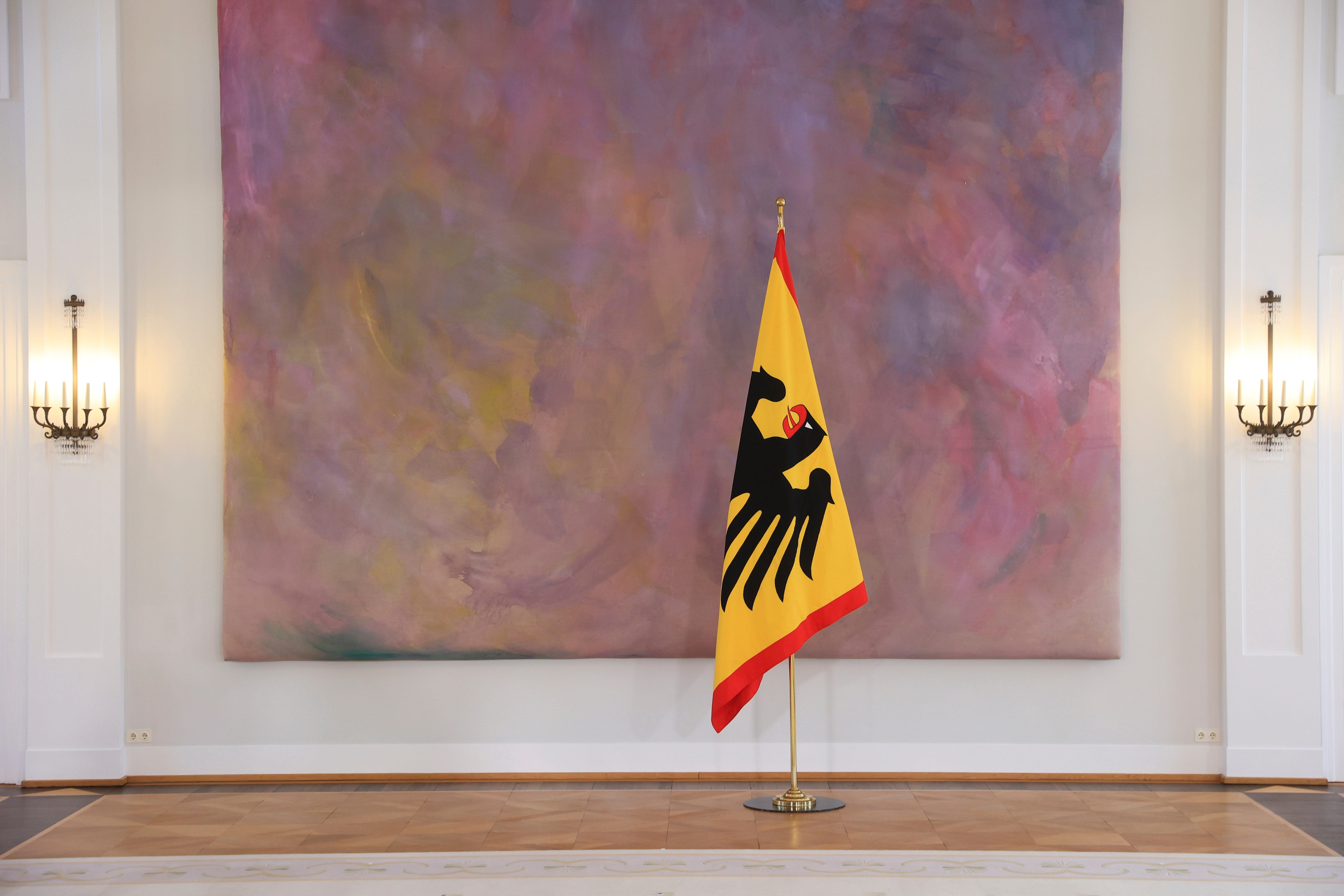
Trivia question of the day: Who is Germany’s president? Readers of this particular newsletter, to be sure, are certainly a bit more likely to correctly guess Frank-Walter Steinmeier than the population at large, but it doesn’t change the question’s rather trivial nature. After all, the president of Germany doesn’t actually do much. He – and it has always been a he – makes frequent public appearances, issues the occasional warning about the state of democracy, and makes the odd trip to foreign countries as Germany’s head of state.
But with Steinmeier’s second term coming to an end next year, and term limitations mandating that he vacate Schloss Bellevue (the palace in Berlin where the president hangs out), the search has begun for a new candidate. Chancellor Merz, whose party, as the largest in parliament, has a significant say in who the candidate will be, has said it would like to see a woman in the office – and this week, the tabloid Bild reported that there was a movement afoot to nominate Germany’s best-known unemployed woman, former Chancellor Angela Merkel. Her office issued a quick rebuttal, calling the speculation “absurd.�
What is undeniable, however, is the fact that a number of prominent women’s names are being tossed around – and that the mere exercise of coming up with a suitable candidate, as DER SPIEGEL’s Sophie Garbe writes, has revealed a deplorable shortage of women in top political posts in post-Merkel Germany.
“It is good news that a woman is soon to become head of state. But it is also telling that politicians are choosing precisely this office to unite behind a female candidate. For while the German president may have an important representative function, the office plays little role in the day-to-day business of politics.�
“The debate about a female Federal President should therefore not obscure the real state of affairs: German politics is becoming increasingly male-dominated again. The chancellor, his deputy, the secretary-generals of the three coalition parties, the parliamentary group leaders of the conservatives and the SPD, the chief whips: all men. Barely a single woman holds one of the most important positions in this coalition. This is also reflected in the coalition committee, which decides on the central direction of the governing alliance. In this legislative term it consists of eleven people. Ten men and one woman, SPD leader Bärbel Bas.�
“Calling for women in politics while letting little come of it? That is male virtue signaling. Clearing the way for a woman to become president after almost 80 years, celebrating yourself for it, and then handing the key positions in the governing coalition to men anyway? That is just cheap.�
The Trans-Atlantic Report
This newsletter obviously wouldn’t be this newsletter if we didn’t briefly touch on the rapidly eroding relationship between Europe and the United States. But it is important to emphasize just how disorienting the last 13 months have been for a continent that has relied so heavily on the United States for the past several decades. And just how difficult it has been for many in Europe to read the signs. Which perhaps explains some of the reactions to U.S. Secretary of State Marco Rubio’s speech last weekend at the Munich Security Conference.
“I was very much reassured by the speech of the Secretary of State. We know him. He’s a good friend, a strong ally.� European Commission President Ursula von der Leyen.
“That is the speech I expected from Secretary Rubio. We know he is a true partner.� German Foreign Minister Johann Wadephul
“I am very satisfied with the tone, and I also think that the content was largely what we here in Europe expected.� Finnish Foreign Minister Elina Valtonen
Rubio even received a standing ovation. Just a few weeks after his boss, Trump, threatened to take Greenland from Denmark by force.
DER SPIEGEL’s René Pfister wasn’t impressed.
“Should Donald Trump have followed his Secretary of State’s speech and the reaction to it, he must have died laughing. How naive can one be? In Munich, Rubio resembled the assistant of a torturer who hands the victim a glass of water after they have been chased across hot coals.�
“Rubio did not retreat one millimeter from Trump’s policies on any substantive point. He defended Trump’s tariff policy and imperialism. He advocated, without ifs or buts, a policy oriented solely around national interests, and he called the ‘rules-based world order’ an overused term. Rubio made unmistakably clear that Europeans can only be partners of the United States if they follow Trump’s ‘America First’ ideology.�
“Munich was a good barometer of Europe’s condition. One could witness senior representatives of US tech companies speaking with a mixture of horror and pity about how badly the old continent has missed the boat on the AI revolution. A Ukrainian president spoke, one who must now rely entirely on European support in his fight against Putin.�
“U.S. Democrats took to the stage and painted, in the most vivid colors, a picture for their friends in Munich of how Trump is undermining American democracy. Seen in this light, the security conference was a moment of clarity. Europeans should make use of it. And not believe the fairy tale that Rubio’s speech marked a return to normality.�
Good: In Germany, the Federal Office for the Protection of the Constitution (BfV) is basically the country’s FBI. It is responsible for counterterrorism, counterespionage and cyberattacks. And monitoring political extremism. State offices do the same at the state level. And this week, the State Office for the Protection of the Constitution in Lower Saxony took the step of classifying the Alternative for Germany (AfD) as a right-wing extremist party. Clearing the way for surveillance.
Bad: The banner of Donald Trump that has been unfurled from the U.S. Department of Justice is not a good look. Similar banners have been hung from other ministries in Washington, but there is supposed to be a strict dividing line between the White House and the Department of Justice. This banner is symbolic of just how far that line has eroded in recent months.
Thank you so much for your support. We would greatly appreciate it if you would consider signing up for a paid subscription to DER SPIEGEL on Substack. We invest a lot of time and effort in bringing you a clear-eyed view of the world from a country that knows what it means to lose grip on democracy. Because of our location in the heart of Europe, we are uniquely positioned to provide a complementary view of the trans-Atlantic relationship – and shine a spotlight on the damage currently being done to those ties.
Have a great week!
Your SPIEGEL Substack Team
Compiled, edited and translated by Charles Hawley with a helping hand from AI 🤖.