In August 2025, President Donald Trump’s administration introduced a new rule limiting how long students, professors, physicians and other visa holders can remain in the United States.
On April 10, an email to Lehigh’s community said “a few” Lehigh-sponsored student visas had been revoked.
Since then, Lehigh’s Office of International Students and Scholars has worked to support international students and scholars by hosting information sessions to help them navigate immigration law.
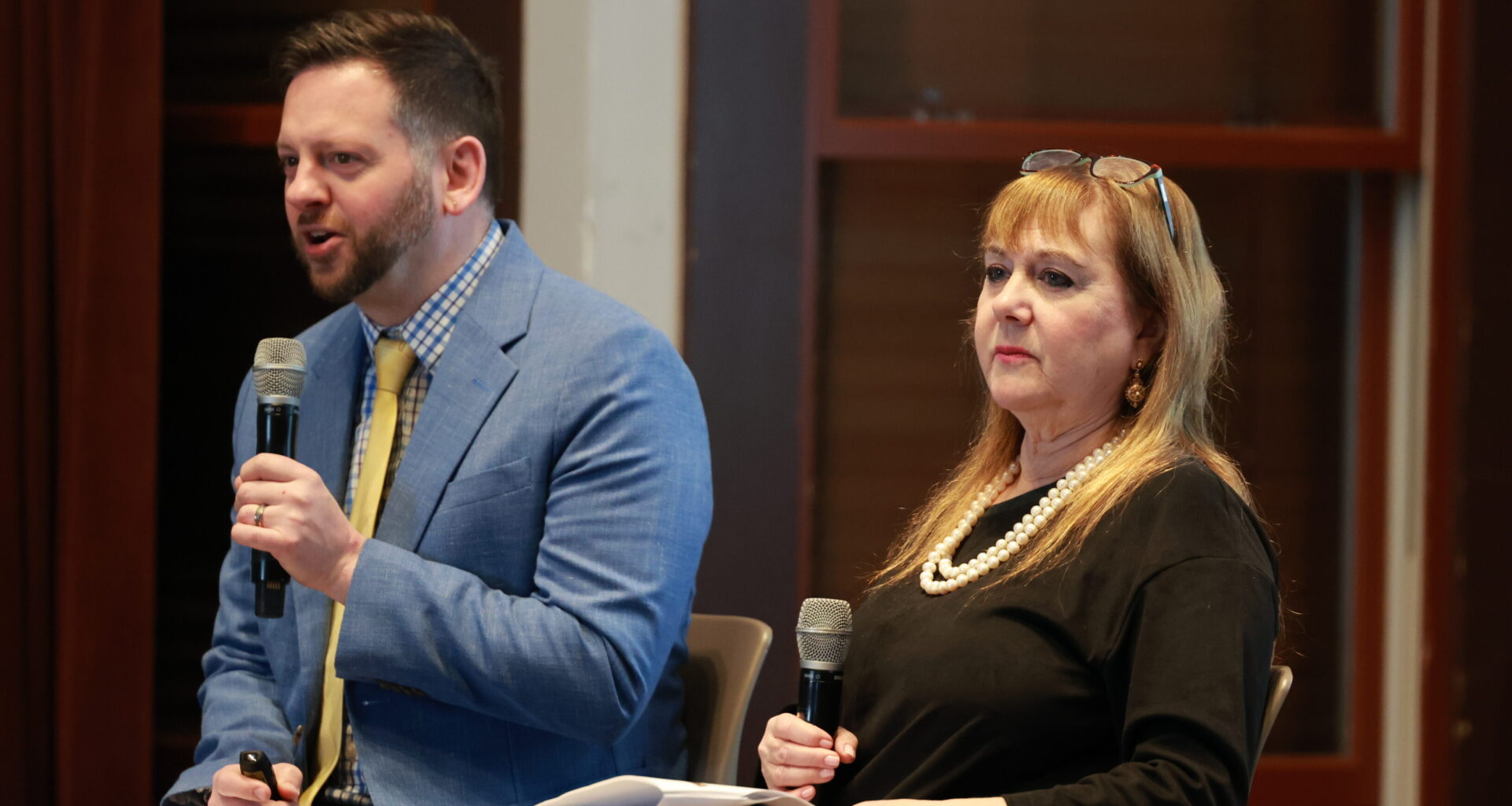
On Wednesday afternoon, two immigration attorneys — Wendy Hess and Andrew Fuller of Green and Spiegel LLC — spoke with international students on F-1 status and exchange visitors on J-1 status about the current immigration landscape. The two focus on helping students understand student visas, new policies and status maintenance.
Hess said her responsibility as a general attorney is to oversee risks, but as an immigration attorney, it’s to help international students maintain their status. She said another part of her job is ensuring F-1 students can earn degrees from top-accredited universities in the U.S.
“We’re here to make sure that (students) understand the very shifting immigration landscape,” she said.
Fuller said he became a lawyer during the first Trump administration, when immigration was a political issue discussed daily. He said it felt like an important topic to become involved in professionally.
Eve Ngwenya, ‘27G, is from Zimbabwe and said she attended the presentation because her country was listed on a travel ban. She said it can be difficult to stay up to date on immigration policies, but she wants to understand what they say and mean.
“(Lehigh) should keep doing these types of events,” Ngwenya said. “If (Lehigh) keeps on doing these events, then (international students) will be up to date with what’s going on.”
Hess said the goal of her presentation was to help international students understand the rapidly shifting U.S. immigration landscape, including both written laws and unwritten norms. She said her personal advice for international students is to avoid protests because facial recognition technology makes it easy to identify individuals.
Fuller said there have been high-profile detentions of students expressing their views.
Hess also said international students need to be cautious and aware of their social media presence, the protests they attend and even the editorials they write.
Rumeysa Ozturk, a Tufts University Ph.D. student, was detained by the U.S. Immigration and Customs Enforcement in March 2025, seemingly over an op-ed piece she wrote in a student publication.
Fuller said Ozturk was released in December 2025 after winning a case in which a federal judge determined her Student and Exchange Visitor Information System record had been wrongly terminated. The court ruled that detaining Ozturk based on her speech violated her First Amendment rights, and immigration court proceedings were terminated.
“This is not the end of the road for her battles,” Fuller said. “There will likely be appeals, there will likely be more details that will come out.”
He said Ozturk’s case illustrates how the immigration justice process can take time to unfold.
He also encouraged people to stay informed about developments in immigration policy. He said there are still avenues to challenge unjust actions and seek justice.
“The end of the story has probably not been written,” Fuller said.
For more information on immigration regulations, contact the Office of International Students and Scholars.